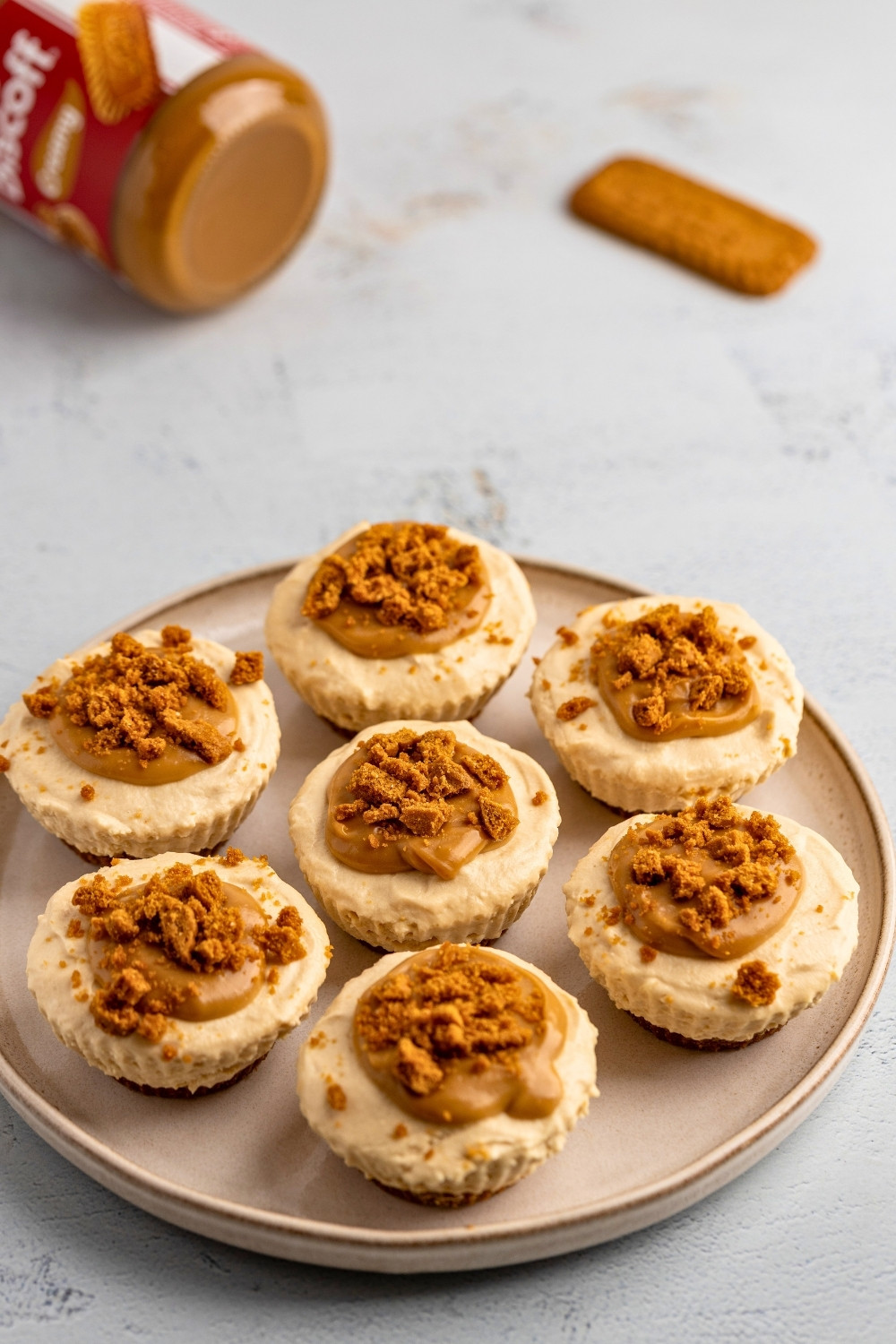
Servings: 8 mini cheesecakes
Calories: 296.8kcal
Ingredients
Crust
- 3 oz Biscoff cookies, crushed 85 g
- 2.5 tbsp unsalted butter, melted 35 g
Filling
- 8 oz full-fat cream cheese, block-style, room temperature 226 g (1 brick)
- 1/3 cup Biscoff spread, smooth 80 g
- 20 g powdered sugar, sifted
- 1 tsp vanilla bean paste or vanilla extract
- 1 tsp lemon juice
- 1 pinch salt
- 1/2 cup cold heavy cream 120 g
Instructions
Crust
- Crush the cookies. Pulse the Biscoff cookies in a food processor until you have fine, even crumbs. No food processor? Put them in a zip-top bag and crush with a rolling pin until uniformly fine.3 oz Biscoff cookies, crushed
- Mix with butter. Stir the crumbs and melted butter together in a small bowl until evenly damp and sandy. Squeeze a small handful in your palm — if it holds shape, you're good. No extra salt needed; Biscoff cookies bring their own.2.5 tbsp unsalted butter, melted
- Press into liners. Line a standard muffin tin with 8 paper liners. Divide the mixture evenly between them (about 15g per liner) and press down firmly with the back of a spoon. Firm pressure here matters — loose crusts crumble when you peel the liner. Chill while you make the filling.
Filling
- Soften the Biscoff. Set up a small double boiler — a heatproof bowl over a saucepan with an inch of simmering water, bowl not touching the water. Add the Biscoff spread and stir constantly. As soon as it's about halfway melted, take the bowl off the heat. Keep stirring off the heat — residual warmth finishes melting the rest. Target: soft and pourable, but barely warm to the touch.1/3 cup Biscoff spread, smooth
- Beat the cream cheese. In a medium bowl, beat the room-temperature cream cheese with the powdered sugar, vanilla, lemon juice, and salt until completely smooth, about 1 minute. Scrape down the sides.8 oz full-fat cream cheese, block-style, room temperature, 20 g powdered sugar, sifted, 1 tsp vanilla bean paste, 1 tsp lemon juice, 1 pinch salt
- Add the Biscoff. Pour in the softened Biscoff spread and beat again until uniform and lump-free. Scrape down once more.
- Whip the cream. In a separate bowl, whip the cold heavy cream to soft-medium peaks — peaks that hold but gently flop over at the tip. Don't overwhip; stiff cream folds in patchy.1/2 cup cold heavy cream
- Lighten the base. Stir about a third of the whipped cream into the Biscoff cream cheese mixture to loosen it.
- Fold in the rest. Add the remaining whipped cream and fold gently with a spatula until no white streaks remain. The mixture should be smooth and pipeable.
- Fill the liners. Spoon or pipe the filling over the chilled crusts, dividing evenly between the 8 liners. Smooth the tops or leave them swirled.
- Chill. Refrigerate for at least 6 hours so the filling firms up and the flavors come together. Overnight is better — the texture sets more cleanly and you can peel the liners without dragging the crust.
- Top and serve. Finish with crushed Biscoff cookies, a thin drizzle of warmed Biscoff spread, a swirl of dark chocolate ganache, or a dollop of whipped cream.
Notes
- Makes 8 muffin-sized mini cheesecakes.
- The filling is fairly soft, so if these are going to sit at room temperature for a longer period, it's best to leave them in liners and let your eaters eat straight from liners or unmold themselves.
- Macros calculated without toppings.
Nutrition
Calories: 296.8kcal | Carbohydrates: 17.3g | Protein: 2.9g | Fat: 24g | Fiber: 0.3g
Tried this recipe?Comment below or tag your snaps @definitelynotachefblog or #madewithdnac!