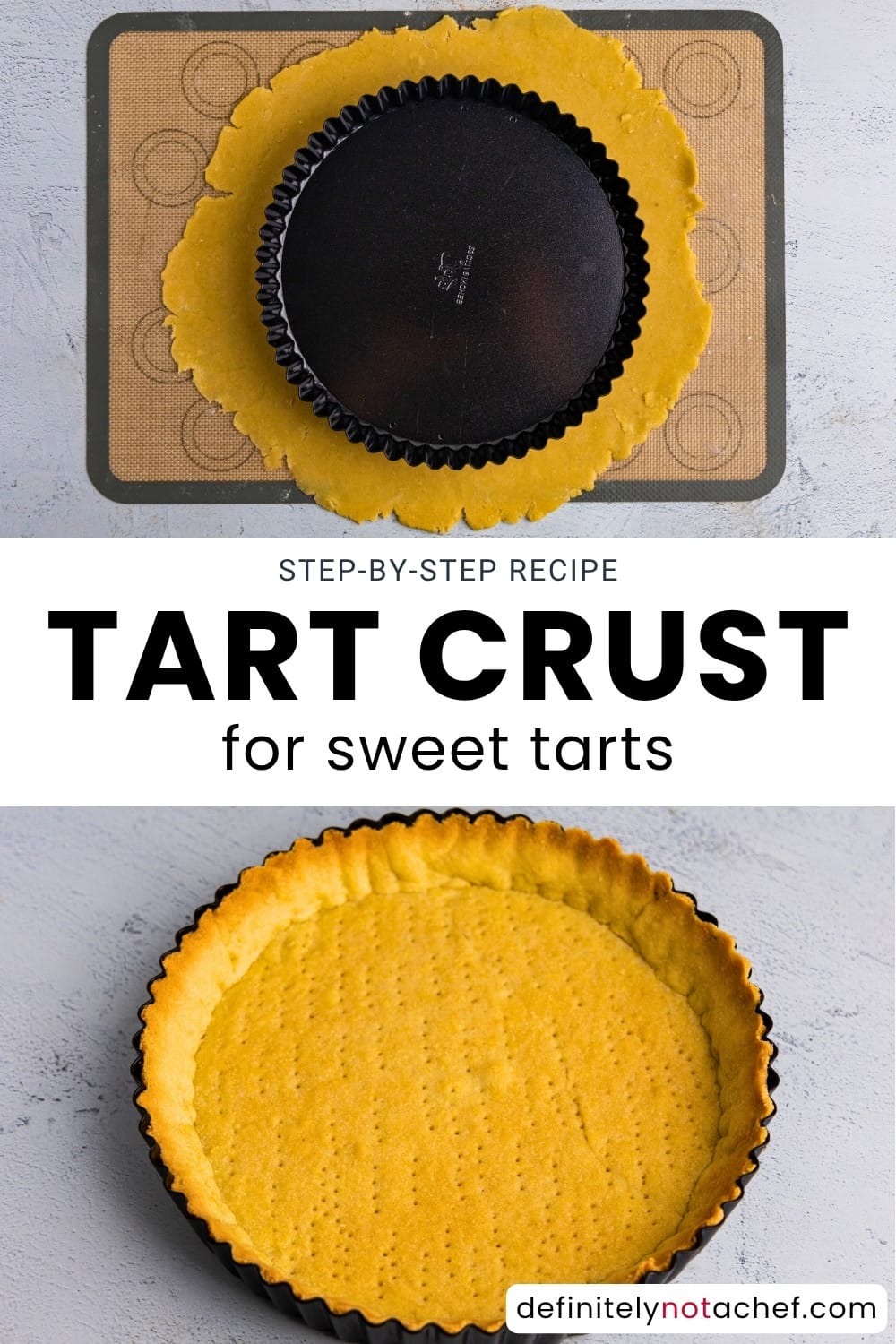
Easy Tart Shell Recipe (Buttery Tart Crust for Tarts, Tartlets, and Mini Tarts)
A simple homemade tart crust that bakes crisp and buttery—perfect for fruit tarts, tartlets, and mini tarts.
This tart shell recipe makes a crisp, buttery tart crust that works for full-size tarts, tartlets, and mini tarts. The dough is easy to mix in a food processor and rolls out smoothly after chilling.
Use it for fruit tarts, chocolate tarts, or any recipe that needs a reliable homemade tart shell.
Why You’ll Love This Recipe
- Crisp, buttery tart crust. Bakes into a sturdy shell that holds creamy, fruity, or chocolate fillings without getting soggy.
- Easy food processor method. The dough comes together in just a few pulses, so there’s no complicated mixing or kneading.
- Rolls out smoothly. Chilling the dough makes it easy to roll thin and transfer to the tart pan without tearing.
Ingredients and Substitutes
- All-Purpose Flour. Forms the base of the tart shell and gives the crust structure. Regular all-purpose flour works best here, but cake flour should do in a pinch.
- Almond Flour. Adds a subtle nutty flavor and helps create a more tender, crumbly tart crust. If you don’t have almond flour, try my pate sucree recipe instead (no almond flour).
- Powdered Sugar. Sweetens the dough and helps keep the texture fine and tender. Powdered sugar blends more easily into the dough than granulated sugar so it’s the best option.
- Salt. Balances the sweetness and enhances the buttery flavor of the tart shell.
- Cold Unsalted Butter. Creates the buttery flavor and flaky texture. The butter should be cold and cut into small cubes so it blends evenly when pulsed in the food processor. Skip the salt if using salted butter.
- Egg. Egg binds the dough and helps the crust hold together when rolled out and baked. Whisk the egg first and measure the amount needed.
Step-by-Step: How to Make a Tart Shell
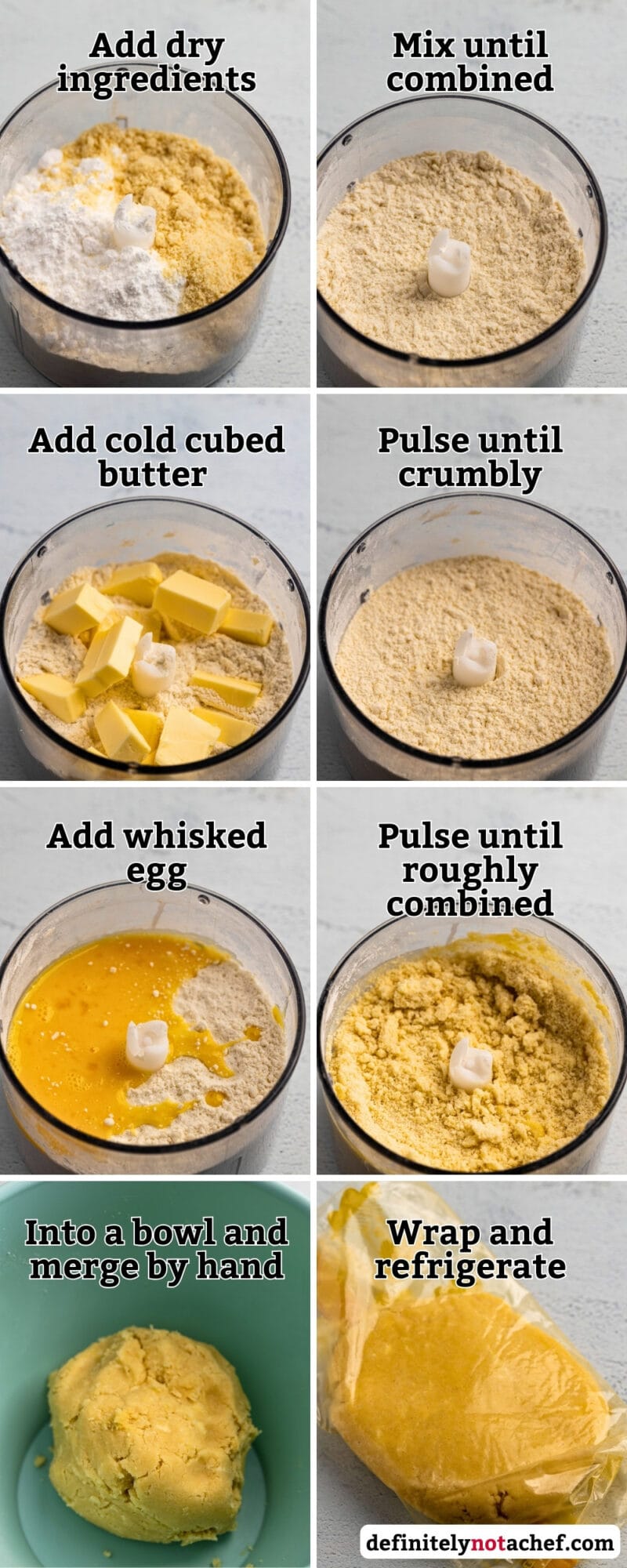
- Mix the dry ingredients. Add the all-purpose flour, almond flour, powdered sugar, and salt to a food processor. Pulse a couple of times to combine.
- Cut in the butter. Add the cold cubed butter and pulse a few times until the mixture looks sandy, with tiny specks of butter throughout.
- Add the egg. Pour in the whisked egg and pulse a few times until the dough looks roughly combined. It should still look uneven and crumbly at this stage.
- Finish the dough by hand. Transfer the mixture to a bowl or clean work surface. Quickly press it together by hand until it forms a dough. Work fast so the butter stays cold.
- Chill the dough. Wrap the dough in plastic wrap or place it in a plastic bag. Flatten it slightly into a disk so it chills faster and hydrates evenly. Refrigerate for at least 1 hour, or ideally overnight.
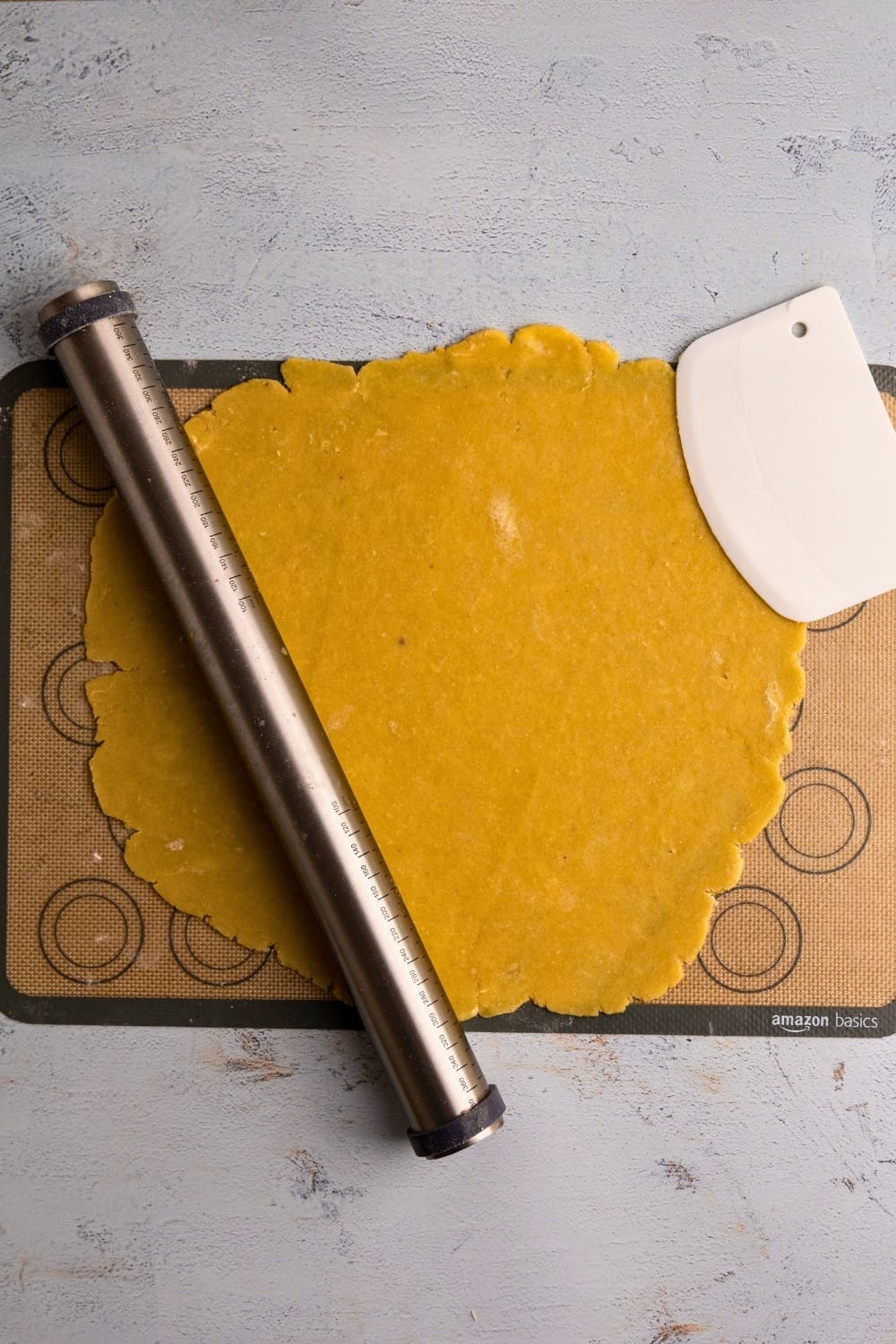
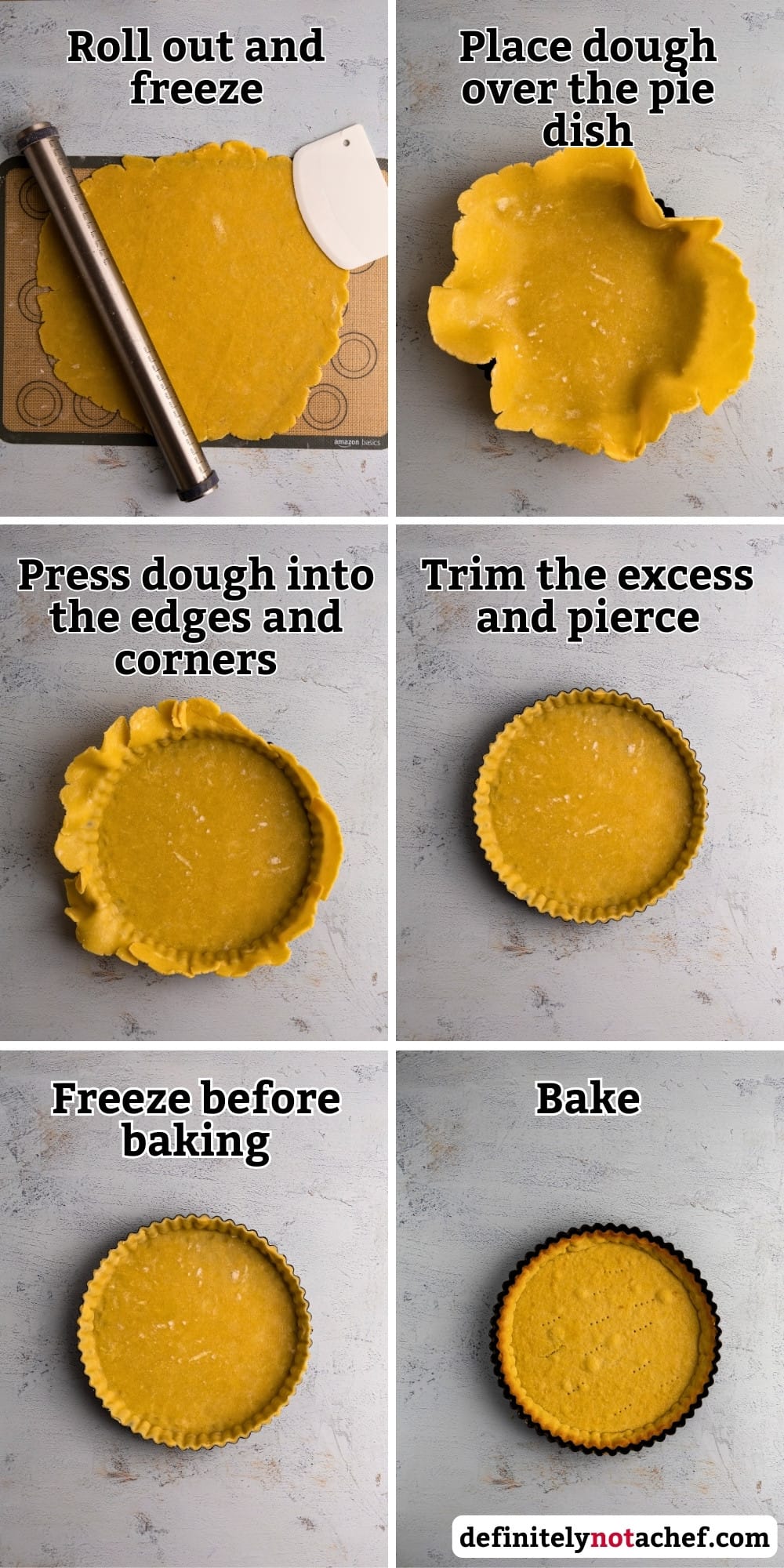
- Roll out and chill again. Roll the dough out to about 3 mm thickness on lightly floured parchment paper or a silicone mat. Turn the dough every couple of passes and add a little flour if it starts sticking. Try to handle the dough as little as possible so it doesn’t warm up. Once rolled out, freeze it for 15 to 30 minutes until slightly firm but still flexible.
- Transfer to the tart pan. Lightly butter your tart pan or pie dish if it isn’t non-stick. Place the chilled dough over the pan.
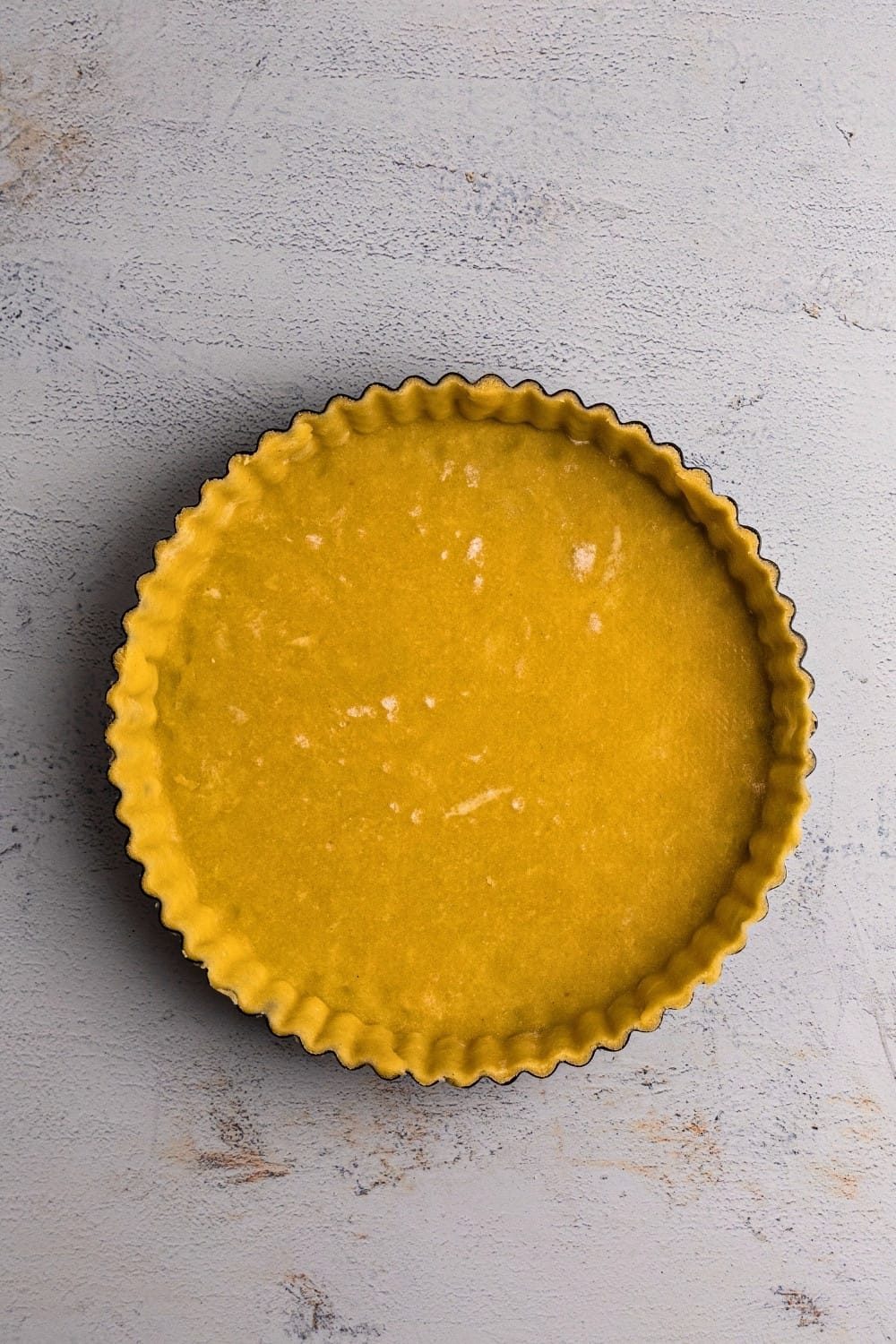
- Press the dough into the pan. As the dough warms slightly, gently press it into the bottom and sides of the pan. Make sure it fits into all the corners, especially where the base meets the sides.
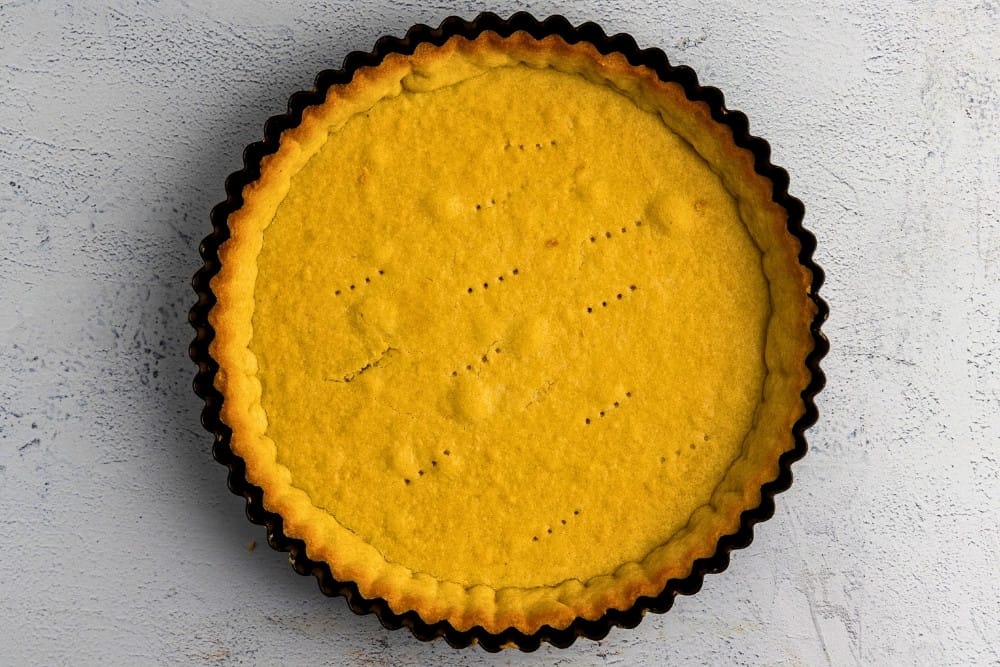
- Trim and dock the crust. Trim the excess dough by pressing a sharp knife from the inside of the pan outward. Press the edges again so the dough sticks well to the pan, then prick the bottom with a fork.
- Freeze before baking. Freeze the shaped tart shell for about 30 minutes. This helps the crust hold its shape during baking.
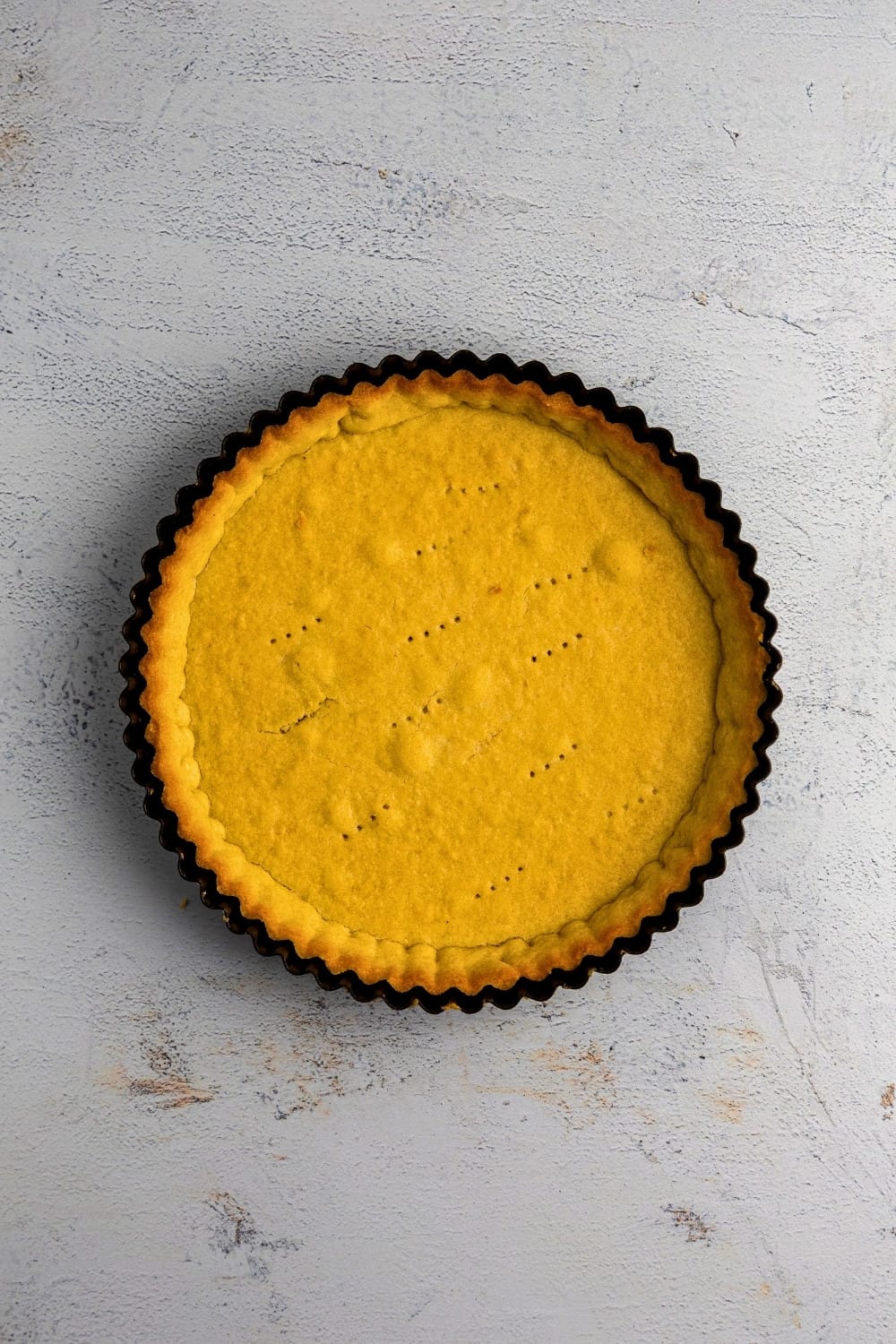
- Bake. Bake at 180°C (355°F) for 15–18 minutes, or until the edges are lightly golden.
- Cool before filling. Let the tart shell cool completely in the pan before adding any fillings.
Tips
- Keep the dough cold. If the dough starts tearing while rolling it out, it’s likely too warm. Freeze it for about 10 minutes so the butter firms up and the dough stiffens slightly.
- Handle the dough as little as possible. Warm hands soften the butter quickly. Use a bench scraper to move or lift the dough when rolling to keep it cool and intact.
- Patch small tears easily. If the dough tears while pressing it into the pan, patch small holes with trimmed excess dough. For larger tears, it’s better to chill the dough again, reroll it, and transfer it to the pan once more.
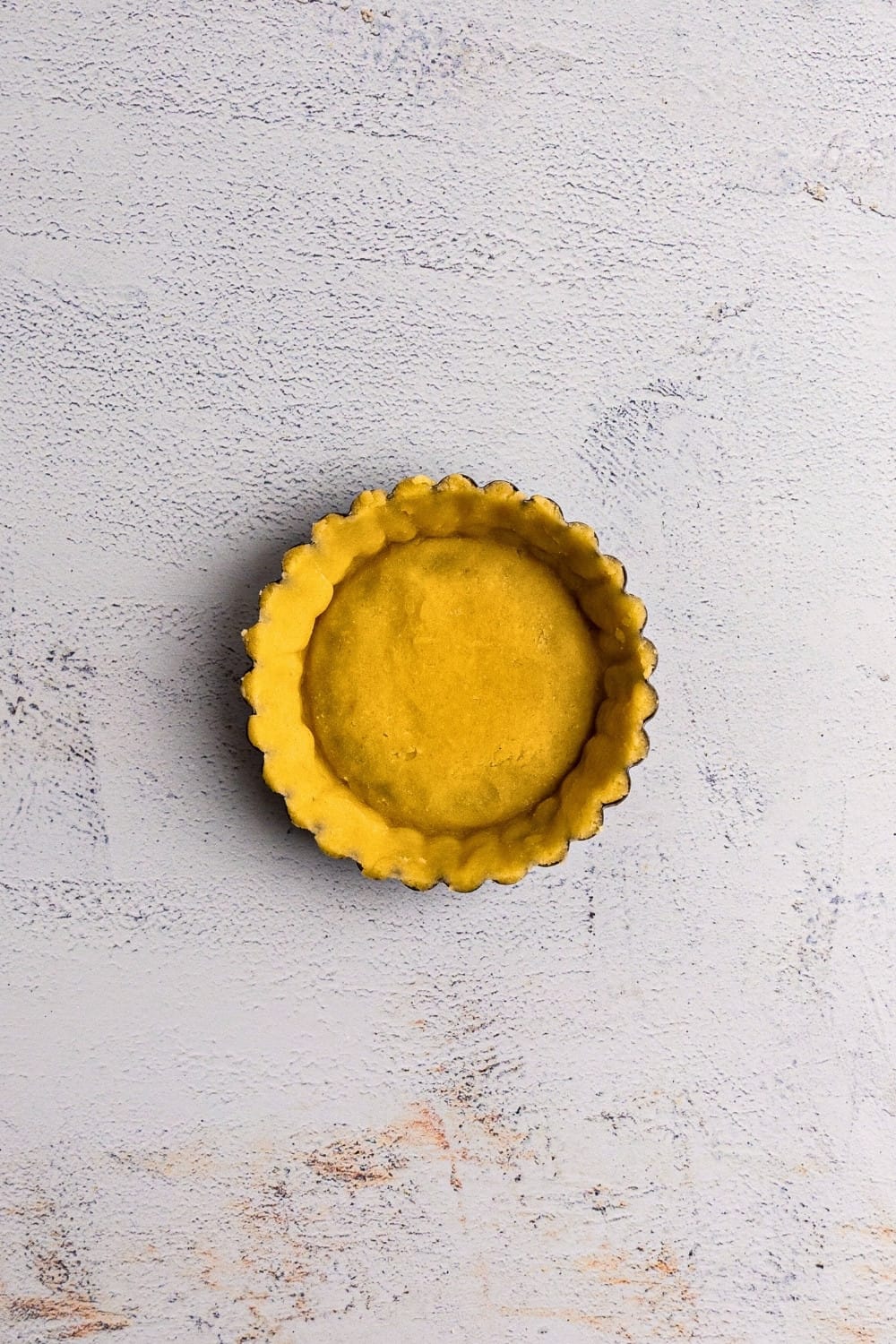
- Use leftover dough. Extra dough doesn’t go to waste. Roll it out, cut cookie shapes, and bake for 8–12 minutes until lightly golden. You can also press it into small molds to make mini tartlets.
- Clean up the edges after baking. If you want perfectly clean tart edges, lightly run a microplane or fine zester along the rim of the baked tart shell. It removes small irregularities and crumbs, giving the crust a smooth, professional look.
Ways to Use This Tart Shell
Once you’ve got this tart shell down, you can turn it into dozens of desserts depending on what you fill it with. Some examples:
- Dubai Chocolate Tart. Tart shell filled with pistachio cream mixed with kataifi, topped with milk chocolate ganache and chopped pistachios. Simple and delicious.
- Strawberry Pistachio Tart. Shell filled with pistachio frangipane cream (you’ll need roasted pistachios or pistachio flour) and baked, then topped with white chocolate mascarpone cream and a simple strawberry compote.
How to Store a Tart Shell
Tart Dough
You can store the tart dough in the refrigerator for up to 2-3 days. Wrap it tightly in plastic wrap or keep it in a sealed bag so it doesn’t dry out. You can also freeze it for up to 2 months (for best quality). Thaw it overnight in the refrigerator before rolling it out.
You can also freeze the shaped tart shell and bake it straight from the freezer. Just make sure it’s well wrapped.
Baked Tart Shell
You can store a baked tart shell at room temperature for up to 4 days. Let it cool completely, then keep it in an airtight container so it stays crisp.
For longer storage, you can freeze the baked shell for up to 2-3 months (for best quality). Wrap it well and thaw it at room temperature before filling.
Ingredients
- 1 cup all-purpose flour 120 g
- 3 tablespoons almond flour 18 g
- ½ cup powdered sugar 56 g
- ⅛ teaspoon salt
- 4 ½ tablespoons unsalted butter cold, cubed, 64 g
- ½ large egg whisked, 25 g
Instructions
- Mix Dry Ingredients: Add the all-purpose flour, almond flour, powdered sugar, and salt to a food processor. Pulse a couple of times just to combine the dry ingredients evenly.1 cup all-purpose flour, 3 tablespoons almond flour, ½ cup powdered sugar, ⅛ teaspoon salt
- Cut In Butter: Add the cold, cubed unsalted butter and pulse a few times until the mixture looks sandy and you can see tiny specks of butter throughout.4 ½ tablespoons unsalted butter
- Add The Egg: Pour in the whisked egg and pulse a few times until the dough looks roughly combined. It should still be uneven and crumbly at this stage.½ large egg
- Finish Dough By Hand: Transfer the mixture to a bowl or a clean work surface and quickly press it together by hand until it forms a dough. Work fast so the butter stays cold.
- Chill The Dough: Wrap the dough in plastic wrap or place it in a plastic bag and flatten slightly into a disk so it chills faster and hydrates evenly. Refrigerate for at least 1 hour, or ideally overnight.
- Roll And Chill: Roll the dough out to about 3 mm thickness on lightly floured parchment paper or a silicone mat. Turn the dough every couple of passes and add a little flour if it starts sticking. Use you hands as little as possible so it doesn't warm up. Once rolled, freeze for 15 to 30 minutes until slightly firm but still flexible.
- Transfer To Pan: Lightly butter your tart pan or pie dish if it isn’t non-stick, then place the chilled dough over the pan.
- Press Into Pan: As the dough warms slightly, gently press it into the bottom and sides of the pan. Make sure it fits into all the corners, especially where the base meets the sides.
- Trim And Dock: Trim the excess dough by pressing a sharp knife from the inside of the pan outward. Press the edges again so the dough sticks well to the pan, then prick the bottom with a fork to dock.
- Freeze Before Baking: Freeze the shaped tart shell for about 30 minutes to help the crust hold its shape during baking.
- Bake The Shell: Bake at 180°C (355°F) for 15–18 minutes, or until the edges are lightly golden.
- Cool Before Filling: Let the tart shell cool completely in the pan before adding any fillings.
Notes
- Makes one 9-inch (23-cm) tart shell
- Use a kitchen scale when measuring for best results.
Nutrition