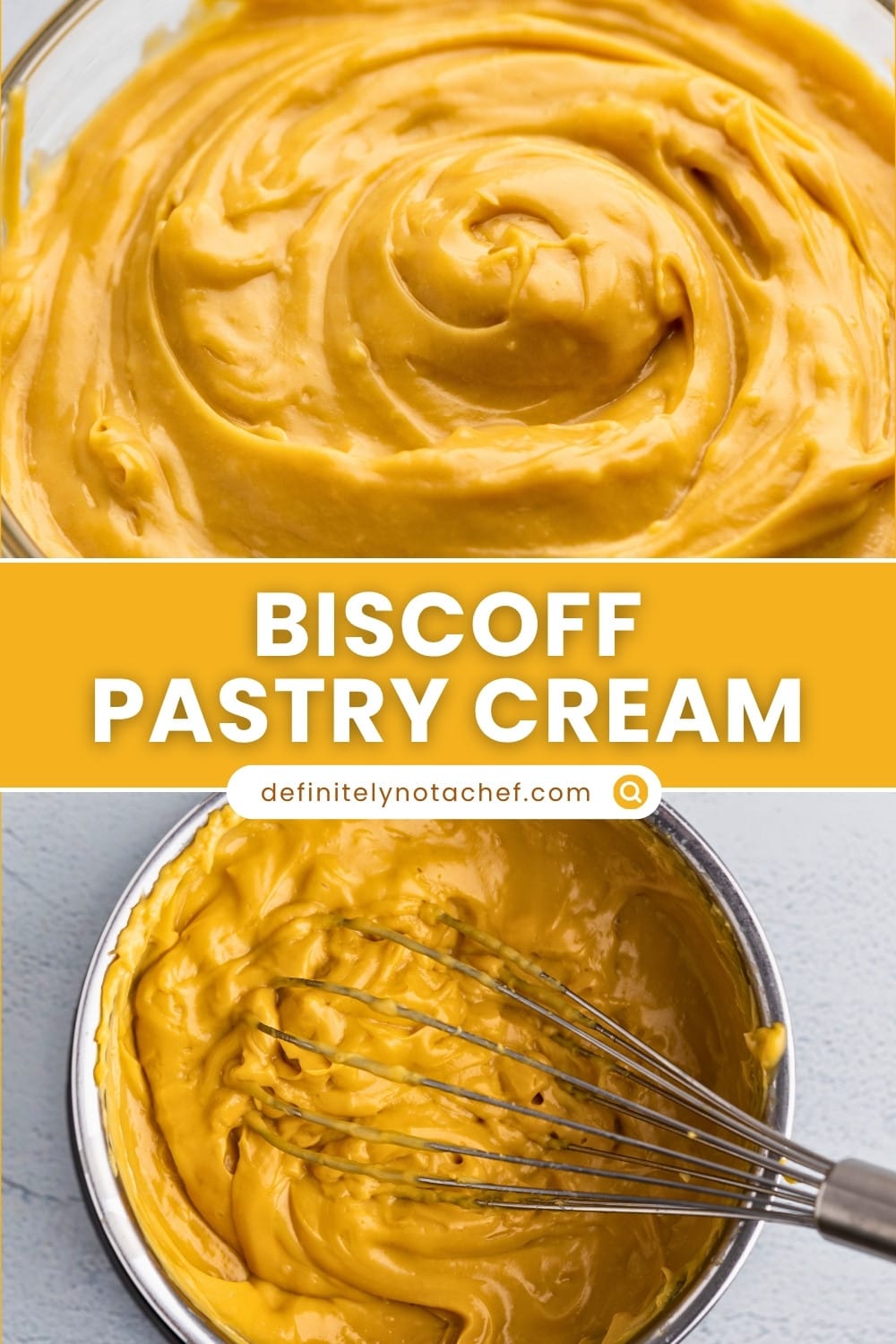
Biscoff Pastry Cream (Crème Pâtissière with Biscoff Spread)
A silky, Biscoff-spiked custard that works as a tart filling, cake filling, or just eaten by the spoon.
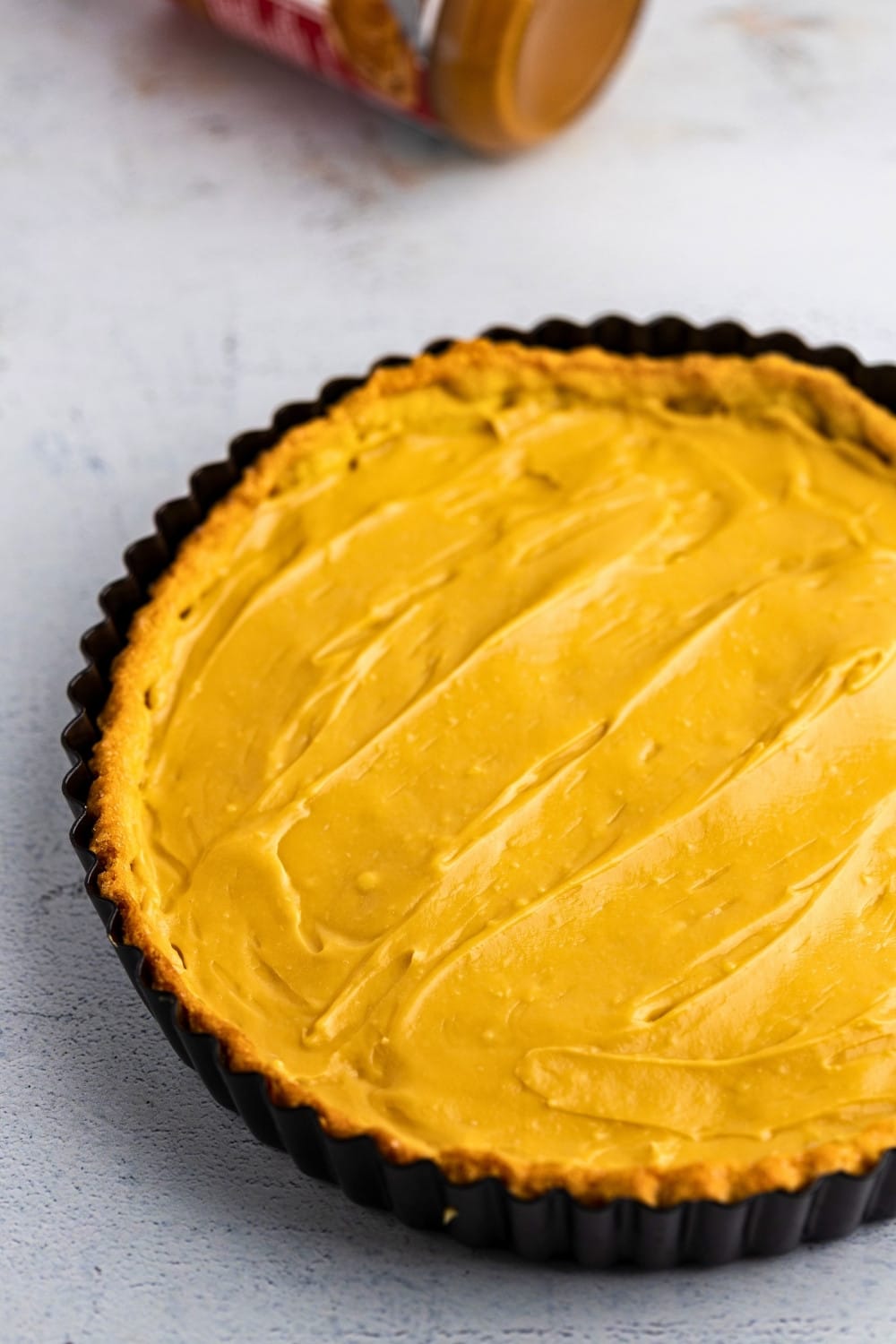
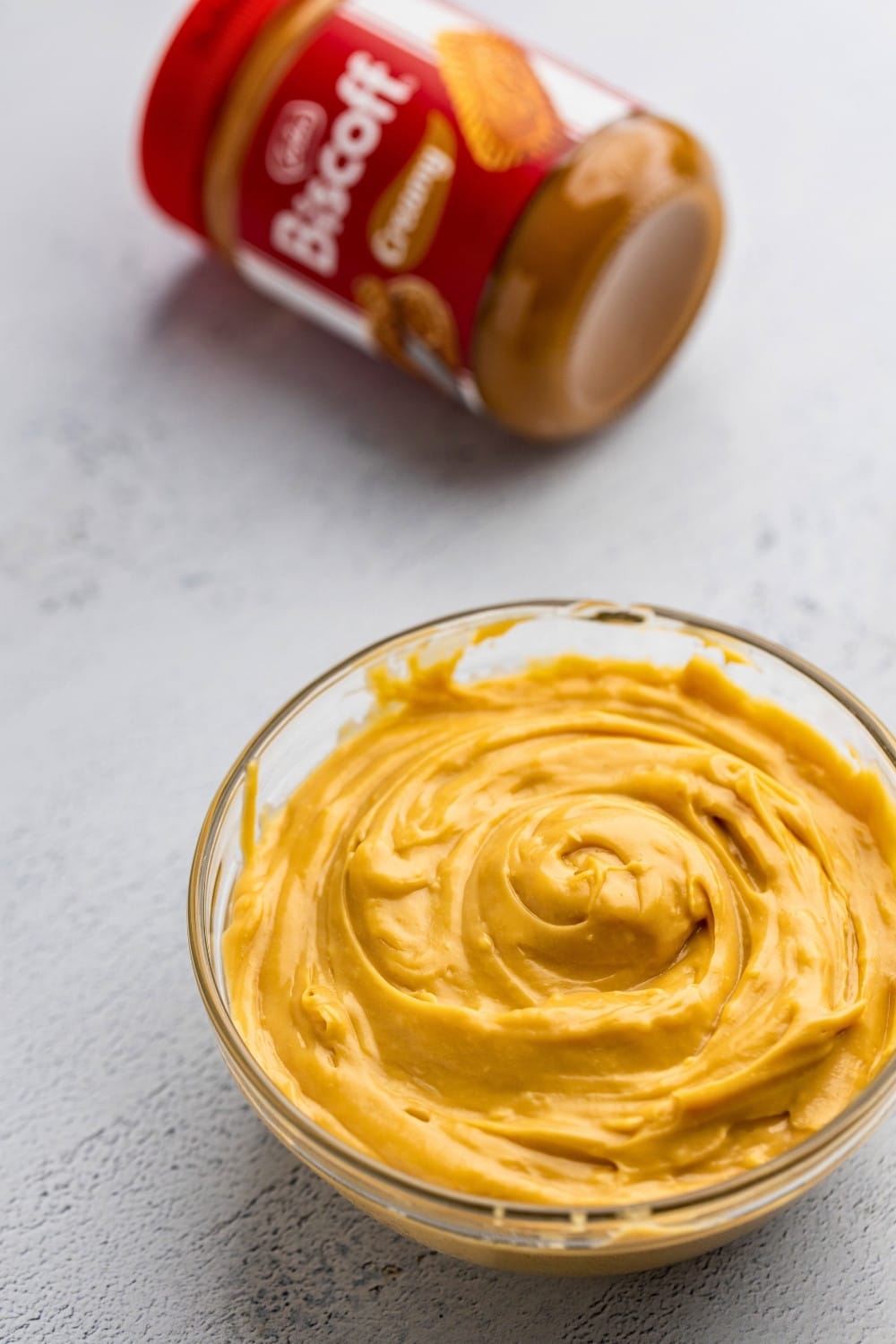
This Biscoff pastry cream takes classic crème pâtissière and stirs in Biscoff spread for a custard filling that’s rich, smooth, and loaded with that signature caramelized cookie flavor. It sets firm enough to hold its shape in a tart shell or between cake layers, but stays silky and creamy throughout.
It’s a stovetop recipe — no oven, no fuss. You heat the milk, temper the eggs, cook it until thick and bubbling, then whisk in butter and Biscoff off the heat. The whole process takes about 15 minutes, plus chilling time.
Use it anywhere you’d use regular pastry cream: as a tart filling, cake filling, éclair filling, or as a base for a layered dessert. The Biscoff flavor is present but not overwhelming at the base ratio — bump it up by 10–30% if you want it more pronounced.
Why You’ll Love This Recipe
- Pure Biscoff flavor. The spread melts directly into the warm custard, giving you that caramelized, spiced cookie taste in every bite — no extracts, no shortcuts.
- Versatile filling. Works as a tart filling, cake filling, éclair filling, or layered into a trifle or mille-feuille. If it needs custard, this fits.
- Quick stovetop recipe. The active cooking time is about 15 minutes. The rest is just chilling time.
Ingredients and Substitutes
- Milk. The base of the custard — whole milk gives the richest result. Non-dairy milks (oat, almond) work in a pinch, though the texture may be slightly thinner.
- Egg yolks. Provide richness, color, and structure.
- Cornstarch. The thickener. The amount in this recipe produces a firm, stable custard — ideal for tarts, cakes, and éclairs. If you’re making a softer, spoonable custard for layered desserts or dessert glasses, cut it by 25–50% for a looser set.
- Sugar. Sweetens and balances the Biscoff. Split between the milk and yolks as written — it helps both stages along. Reduce slightly if you’re planning to add extra Biscoff spread.
- Vanilla extract. Optional, but rounds out the flavor. A half teaspoon of vanilla bean paste works well too.
- Unsalted butter. Stirred in off the heat for a smooth, glossy finish. Don’t skip it — it also improves the texture as the cream chills.
- Biscoff spread. The star. Use the smooth version for the cleanest texture. Add it while the cream is still warm so it melts in easily. Increase by 10–30% for a stronger flavor, and reduce the sugar slightly to compensate.
Step-by-Step: How to Make Biscoff Pastry Cream
👉 Read my in-depth guide to pastry cream if this is your first time making one.
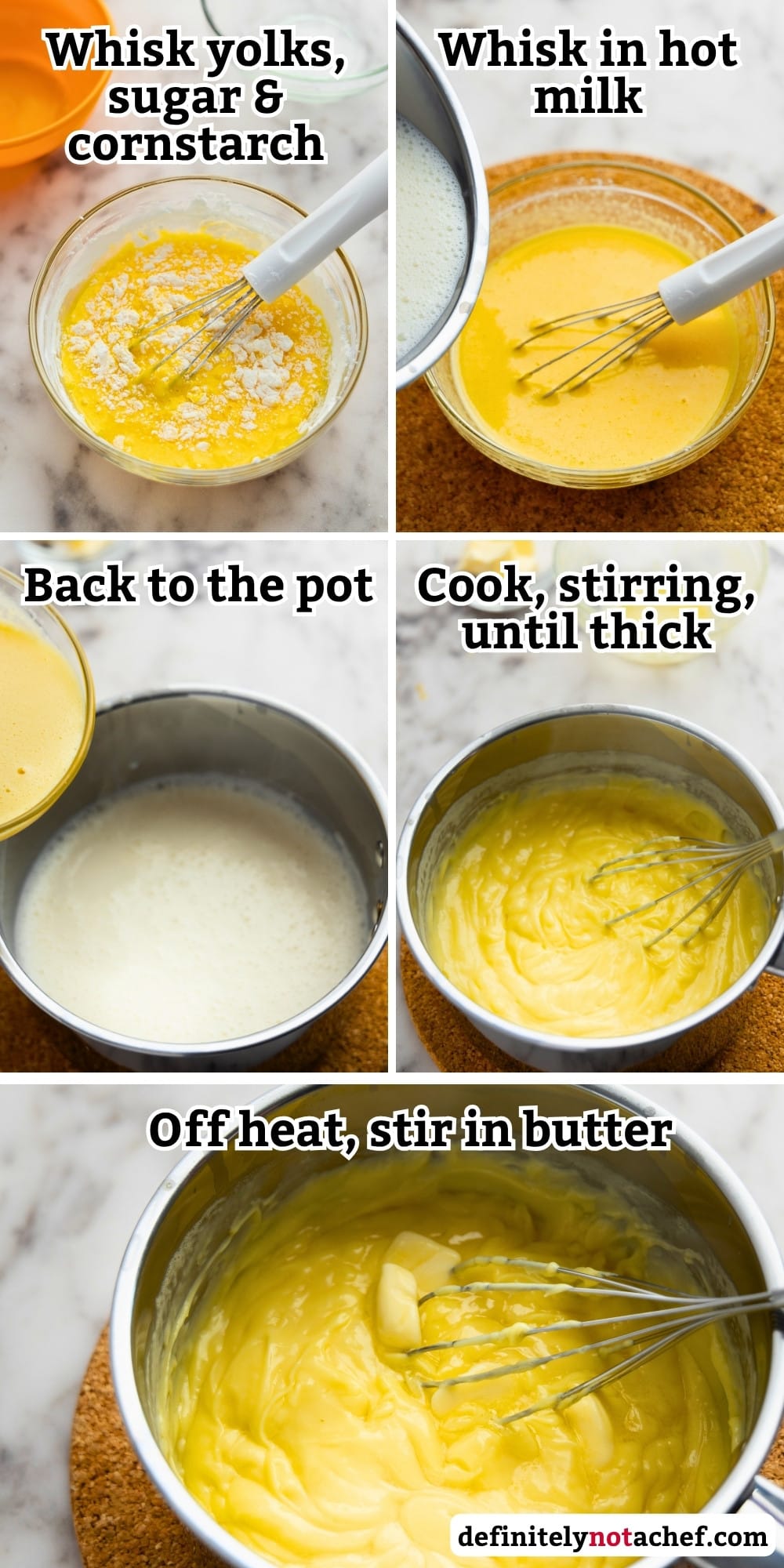
- Heat the milk. Add the milk, half the sugar, and vanilla extract (if using) to a saucepan. Heat over medium until it just begins to steam and is close to a boil.
- Prepare the yolks. While the milk heats, whisk the egg yolks, remaining sugar, and cornstarch in a large heatproof bowl until smooth and pale. Add a small splash of the warm milk and whisk until fully combined — this loosens the mixture and makes tempering easier.
- Temper the eggs. Remove the milk from the heat. Slowly pour it into the yolk mixture in a steady stream, whisking constantly. Don’t rush this — pouring too fast can scramble the eggs.
- Cook until thick and bubbling. Return the mixture to the saucepan. Cook over medium heat, whisking constantly, until it thickens and begins to bubble. Once bubbling, lower the heat and keep whisking for 30–60 seconds to cook out any raw starch taste.
- Whisk off heat. Remove from heat and continue whisking for another 30–60 seconds. This slightly loosens the cream so it sets smooth and firm, not stiff or lumpy.
- Add the butter. Stir in the butter until fully melted and incorporated.
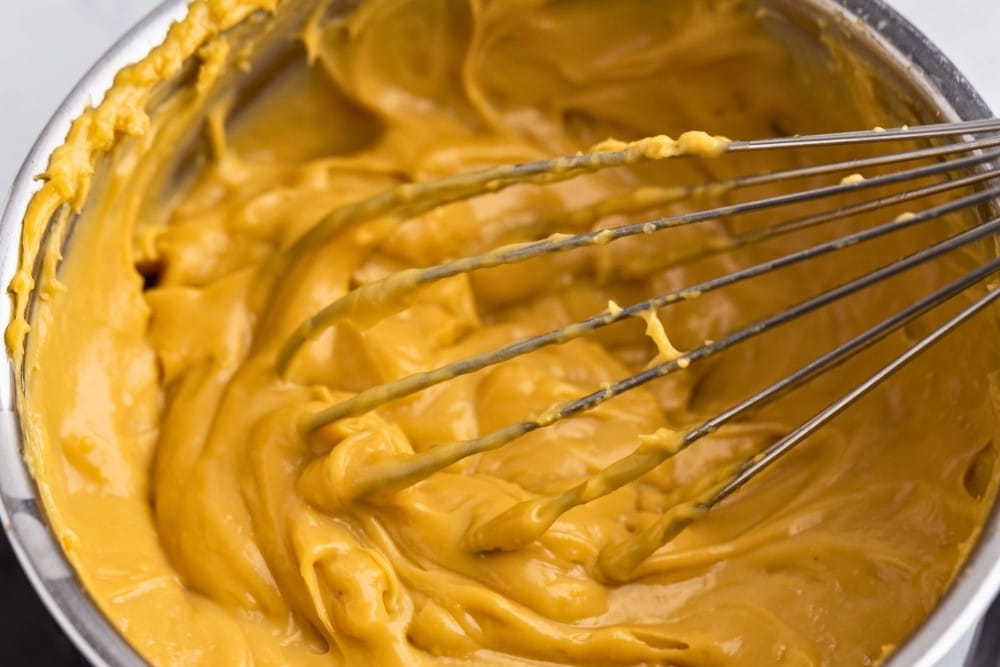
- Add the Biscoff. Add the Biscoff spread and give it 1 minute to warm up from the residual heat, then stir until fully incorporated and smooth.
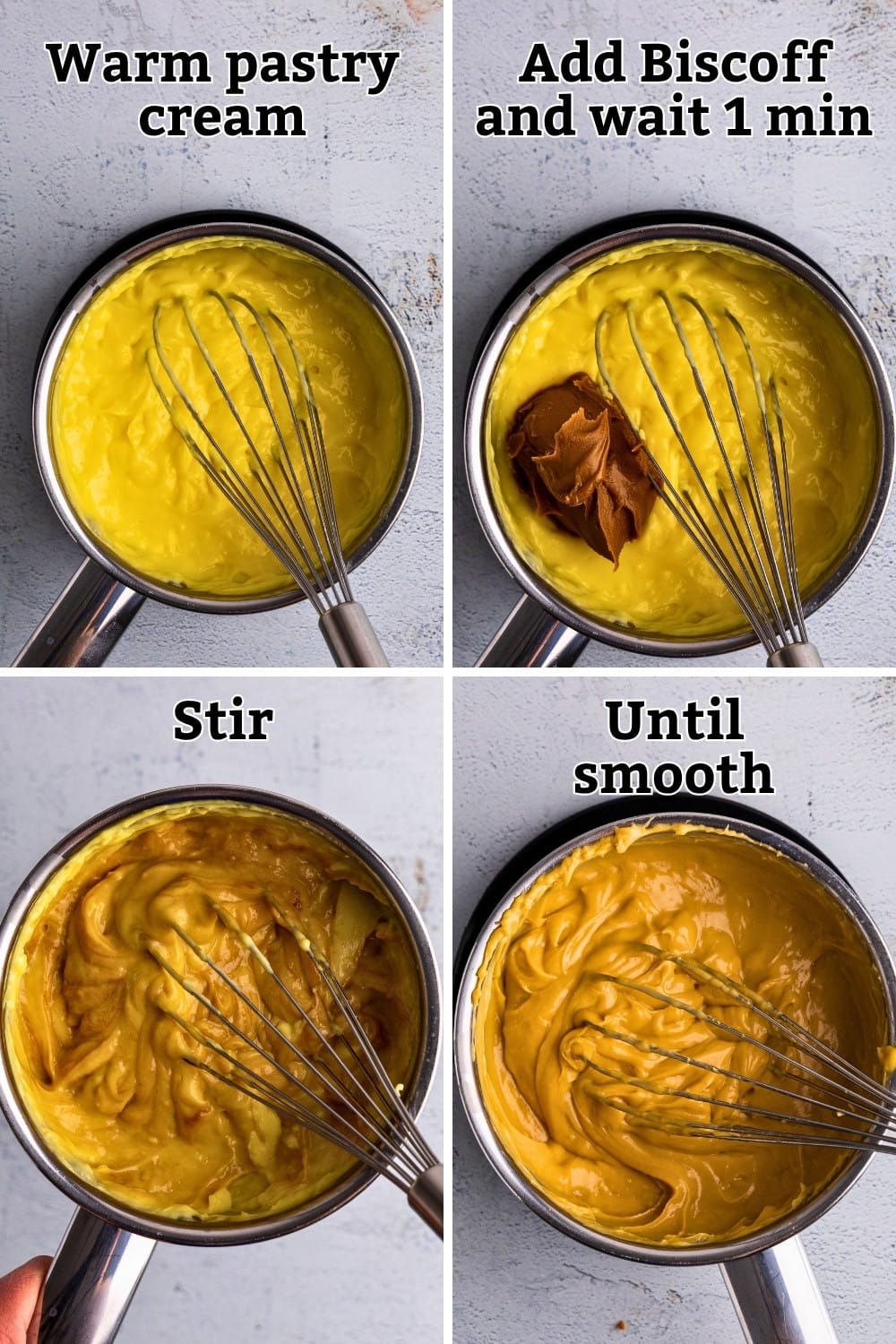
- Taste and adjust. Taste and add more sugar or a pinch of salt if needed.
- Cool properly. Transfer to a bowl and press plastic wrap directly onto the surface to prevent a skin from forming. Let cool slightly at room temperature, then refrigerate until fully chilled.

Tips
- Don’t stop whisking once it’s back on the heat. Pastry cream can scorch or turn lumpy fast. Keep the whisk moving the entire time, especially around the edges of the pan.
- The bubbling step matters. It might look done before it starts bubbling — it’s not. You need some bubbling to properly cook out the cornstarch and get a clean, non-starchy flavor.
- Add Biscoff while the cream is still hot. If it cools too much before you stir in the spread, it won’t incorporate smoothly. Stir it in right off the heat.
Storage
After cooking, press plastic wrap directly onto the surface and let it cool to room temperature. Then move it to the fridge and seal tightly — you can remove the plastic wrap at this point or leave it on, it makes little difference. Keeps for 3–4 days.
Biscoff pastry cream doesn’t freeze well — the texture turns grainy and weepy after thawing. Make it fresh when you need it.
Ingredients
- 2 cups Milk ~480g, whole milk recommended
- 4 Egg yolks ~70–80g
- 5 tbsp Cornstarch 35g
- 1/3 cup Sugar ~67g
- 1 tsp Vanilla extract optional
- 1 tbsp Unsalted butter 14g
- 1/2 cup Biscoff spread ~120g, room temperature, smooth
Instructions
- Heat the milk. Add the milk, half the sugar, and vanilla extract (if using) to a saucepan. Heat over medium until it just begins to steam and is close to a boil.2 cups Milk, 1/3 cup Sugar, 1 tsp Vanilla extract
- Prepare the yolks. While the milk heats, whisk the egg yolks, remaining sugar, and cornstarch in a large heatproof bowl until smooth and pale. Add a small splash of the warm milk and whisk until fully combined — this loosens the mixture and makes tempering easier.4 Egg yolks, 5 tbsp Cornstarch
- Temper the eggs. Remove the milk from the heat. Slowly pour it into the yolk mixture in a steady stream, whisking constantly. Don’t rush this — pouring too fast can scramble the eggs.
- Cook until thick and bubbling. Return the mixture to the saucepan. Cook over medium heat, whisking constantly, until it thickens and begins to bubble. Once bubbling, lower the heat and keep whisking for 30–60 seconds to cook out any raw starch taste.
- Whisk off heat. Remove from heat and continue whisking for another 30–60 seconds. This slightly loosens the cream so it sets smooth and firm, not stiff or lumpy.
- Add the butter. Stir in the butter until fully melted and incorporated.1 tbsp Unsalted butter
- Add the Biscoff. Add the Biscoff spread and give it a minute to warm up from the residual heat, then stir until fully incorporated and smooth.1/2 cup Biscoff spread
- Taste and adjust. Taste and add more sugar or a pinch of salt if needed.
- Cool properly. Transfer to a bowl and press plastic wrap directly onto the surface. Let cool to room temperature, then move to the fridge and seal tightly. You can remove the plastic wrap at this point or leave it on. Keeps for 3–4 days.
Notes
- This recipe yields approximately 2.5 cups of pastry cream.
- You can increase the Biscoff spread by 10–30% for a more pronounced flavor — if you do, reduce the sugar slightly and fine-tune after stirring in the spread.
- To make a softer, spoonable custard for layered desserts or dessert glasses, reduce the cornstarch by 25–50%.
- Macros calculated for full batch excluding vanilla extract, using whole milk and Lotus Biscoff spread standard values.
Nutrition
Recipes You Might Like
- How to Make Vanilla Pastry Cream (Crème Pâtissière). The classic base this recipe builds on. Rich, silky custard made with egg yolks, milk, and cornstarch — the foundation of French pastry.
- 15+ Pastry Cream Flavors. A full roundup of pastry cream variations, from fruit to chocolate to spiced. Good starting point if you want to explore beyond Biscoff.
- Eclair Fillings. Roundup of all eclair fillings I cover on the site, pastry creams included.
- Cream Puff Fillings. One more roundup, this time for those looking for cream puff fillings.
- Biscoff glaze. A quick 2-ingredient topping made with Biscoff spread and cream — good for finishing a tart or cake once the pastry cream is set.