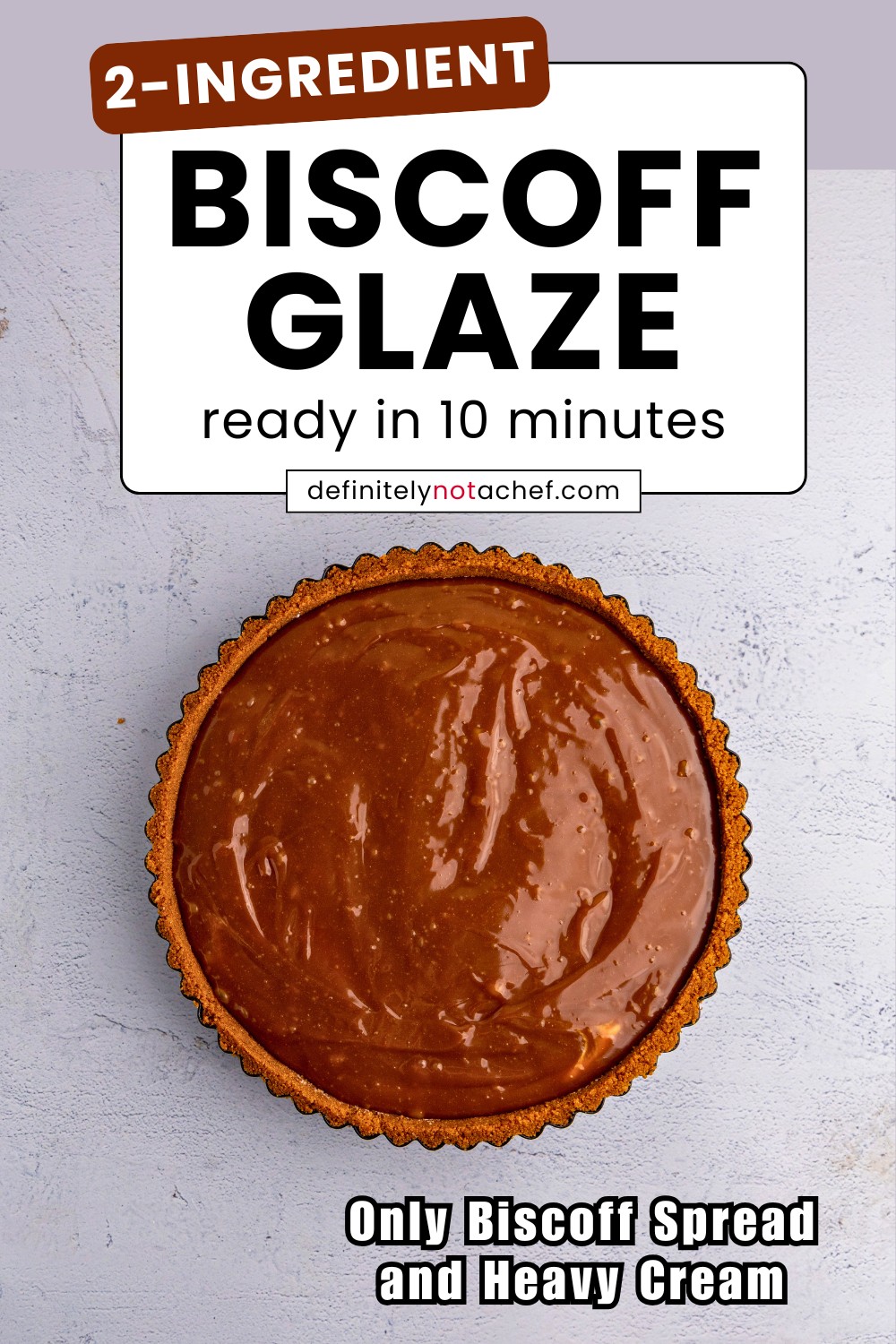
Easy Biscoff Glaze (2 Ingredients)
A rich, pourable Biscoff topping for cakes and tarts, ready in minutes.
This Biscoff glaze is the easiest way to finish a tart or cake. Two ingredients, five minutes, and you get a smooth, glossy topping with that deep, caramelised lotus biscuit flavour everyone loves.
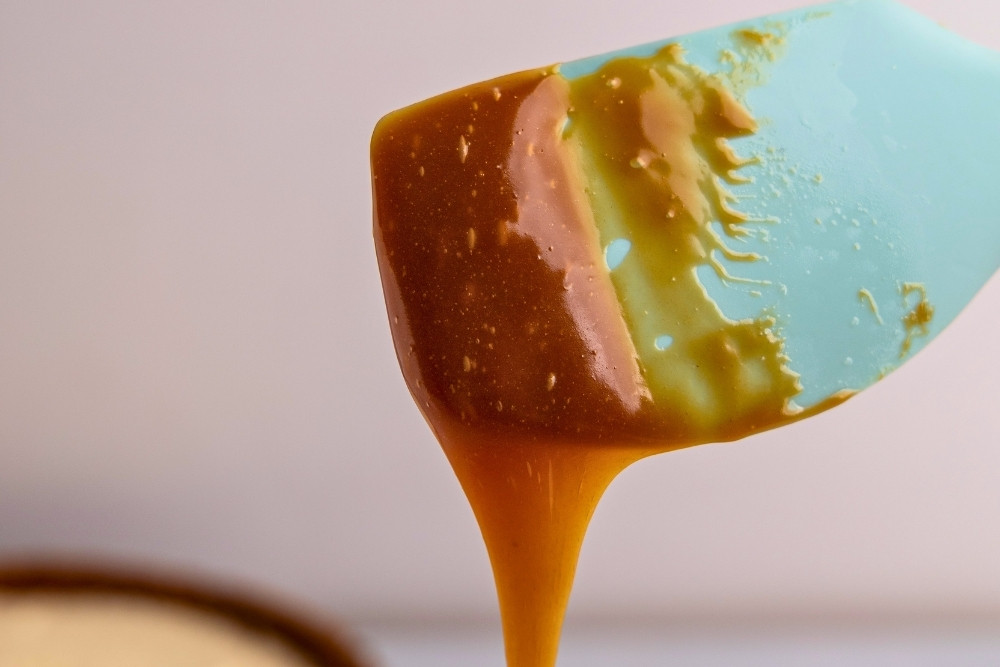
It’s made with Biscoff spread — also known as cookie butter — melted gently and stirred together with warm cream. The result is rich, pourable, and sets to a soft finish that cuts cleanly. It works on anything from a no-bake tart to a simple layer cake.
If you’ve been sitting on a jar of Biscoff spread and looking for Biscoff spread recipes beyond just eating it off a spoon, this is a great place to start. It also pairs well with other Biscoff dessert components — a Biscoff tart base, a vanilla cream filling, or even a plain cheesecake that needs a little something on top.
Why You’ll Love This Recipe
- Just two ingredients. Biscoff spread and heavy cream — that’s it. No special equipment, no complicated technique.
- Ready in five minutes. You can make this while your tart is chilling or your cake is cooling — it comes together that fast.
- Works on almost anything. Tarts, cakes, cheesecakes, brownies — if it needs a finishing layer, this glaze delivers.
Ingredients
- Biscoff spread. The base of the glaze — gives it that signature caramelised, spiced flavour. Use the smooth variety for the cleanest finish. Both the creamy and original versions work.
- Heavy cream. Loosens the spread into a pourable consistency and adds richness. Don’t substitute with milk or a lighter cream — you need the fat content for the glaze to set properly.
- Salt. Just a pinch, but it makes a difference — rounds out the sweetness and brings the Biscoff flavour forward.
Step-by-Step: How to Make Biscoff Glaze
- Melt the Biscoff spread. Gently melt the Biscoff spread in the microwave in short bursts, or over a double boiler on low heat. As soon as you notice it starting to melt, take it off the heat and stir until fully melted and smooth. Don’t overheat it — too much heat can cause it to separate.
- Warm the cream. Heat the heavy cream in a small saucepan or microwave until hot but not boiling.
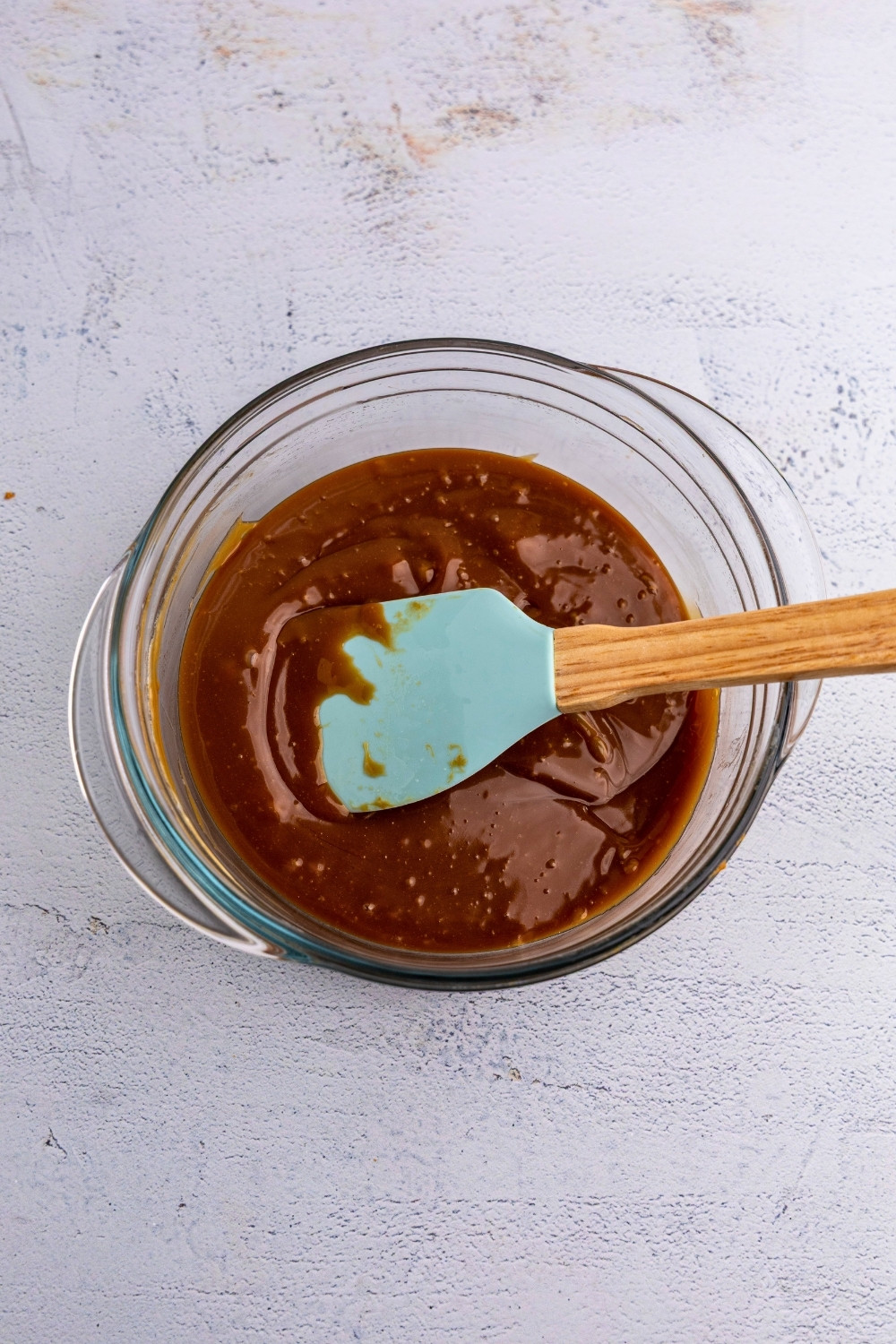
- Combine. Pour the warm cream into the melted Biscoff spread. Leave it for a minute or two, then stir together until fully combined and glossy.
- Season. Add a pinch of salt, stir, and taste. Add a little more if needed.
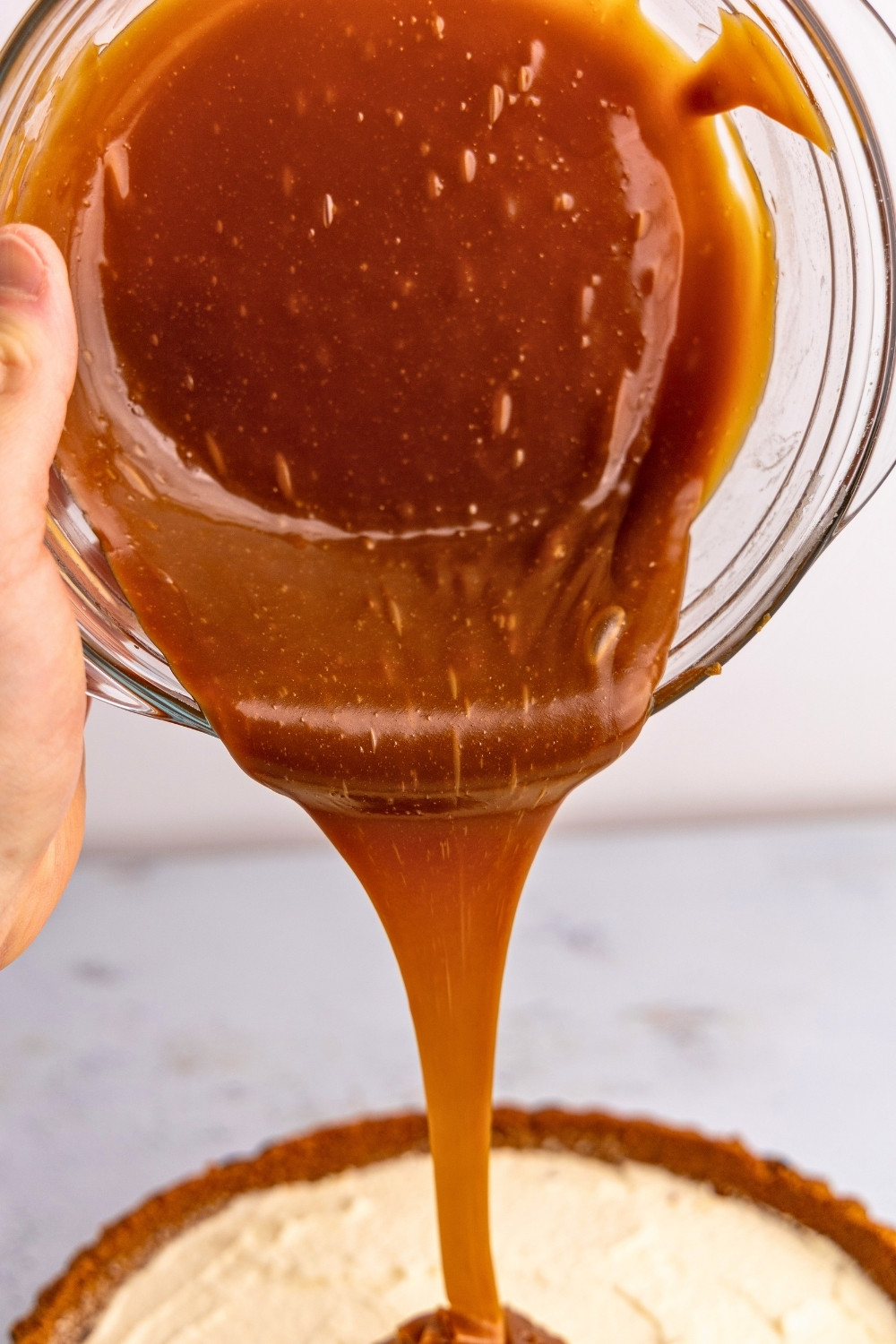
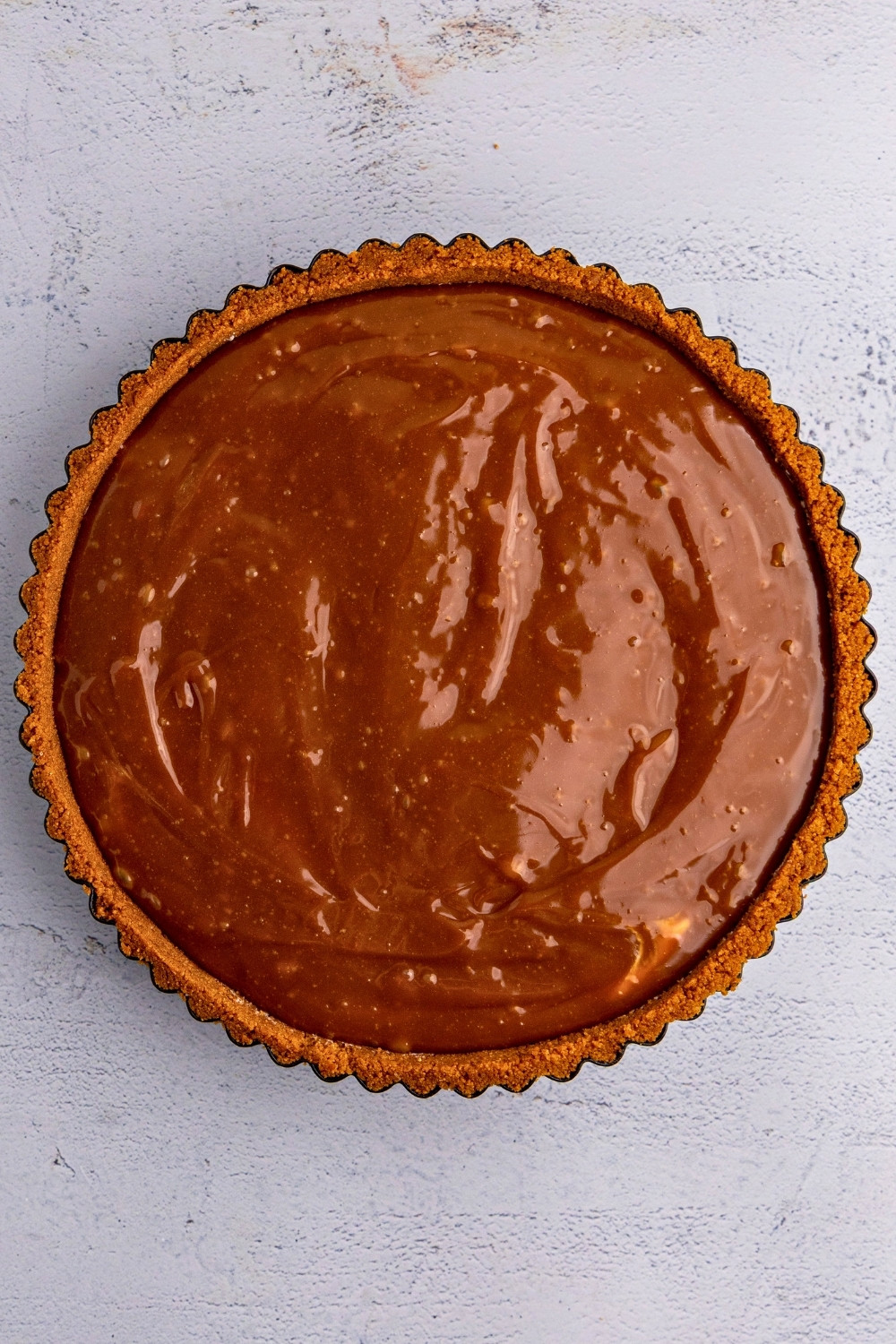
- Glaze. Once the mixture is warm but no longer hot — still pourable but starting to thicken slightly — pour it over your tart or cake. Tilt the dish to spread it evenly, or use a spatula to guide it to the edges.
Tips
- Don’t overheat the Biscoff spread. If it separates and you see oil pooling, don’t panic — it’s usually salvageable. Take it off the heat, let it cool for a few minutes, then stir firmly. Most of the oil should come back in. If it doesn’t fully come together, add a small splash of warm heavy cream, let it rest for a minute, then stir again. The cream helps emulsify everything and pulls the oil back into the mixture.
- Test the consistency before glazing. If you want a precise result, spoon a small amount onto a cold plate or into a bowl and refrigerate for a couple of minutes. That’ll show you exactly how it sets. Too thick — add a splash more cream. Not thick enough — melt in a little more Biscoff spread.
- Glaze at the right moment. Pour it when it’s warm but no longer hot — it should still flow easily but have lost that just-made runniness. Too hot and it spreads too quickly and might ruin what’s underneath; too cool and it won’t spread.
Storage
Store the glaze in an airtight container in the fridge for up to 3 to 4 days. It will firm up when cold — to bring it back to a pourable consistency, either warm it gently in the microwave in short bursts, stirring between each, or place the container in a bowl of hot water and stir until it loosens up.
Ingredients
- ⅔ cup Biscoff spread ~160 g
- ⅓ cup heavy cream 80 g
- 1 pinch salt
Instructions
- Melt the Biscoff spread. Gently melt the Biscoff spread in the microwave in short bursts, or over a double boiler on low heat. As soon as you notice it starting to melt, take it off the heat and stir until fully melted and smooth. Don’t overheat it — too much heat can cause it to separate.⅔ cup Biscoff spread
- Warm the cream. Heat the heavy cream in a small saucepan or microwave until hot but not boiling.⅓ cup heavy cream
- Combine. Pour the warm cream into the melted Biscoff spread. Leave it for a minute or two, then stir together until fully combined and glossy.
- Season. Add a pinch of salt, stir, and taste. Add a little more if needed.1 pinch salt
- Glaze. Once the mixture is warm but no longer hot — still pourable but starting to thicken slightly — pour it over your tart or cake. Tilt the dish to spread it evenly, or use a spatula to guide it to the edges.
Notes
Nutrition
- No-bake Biscoff tart. This glaze is what finishes it, poured over a lemon white chocolate cream filling in a Biscoff cookie crust.
- Biscoff pastry cream. The next step if you want to go deeper with Biscoff. A silky stovetop custard that works as a tart filling, cake layer, or éclair filling.
- More quick glazes. Same five-minute idea, different flavor: cinnamon, pumpkin spice, or brown butter when you want richness without the Biscoff sweetness.