
Frangipane Guide: Base Formula, Nut Variations, and How It Works
A rich, versatile nut-based filling for tarts, galettes, and pastries. Ready in 5 minutes with pantry staples.
This post may contain affiliate links. Read our privacy policy.
Frangipane looks almost too simple — just butter, sugar, eggs, and ground nuts — but how you balance and combine those ingredients determines everything from texture to how it bakes once set.
This guide focuses on the core frangipane formula and what actually influences the final result. You’ll learn how the classic almond version works, how different nut flours behave, when adding flour helps, and how small tweaks change texture. There’s also a tested pistachio variation included, built on the same base.
Here for the technique? Start from the top.
Looking for specific recipes? Jump straight to the flavors section.
Editor’s note: I spent 2+ hours building this guide. My goal is to make this your go-to resource for understanding and confidently using frangipane in your baking. I’ll keep expanding it as new variations and use cases come up — and if there’s something you’d like to see added, let me know.
What Is Frangipane (in under 60 seconds)
Traditionally, frangipane refers to a mixture of almond cream and pastry cream.
In classic French pastry, almond cream (butter, sugar, eggs, and ground almonds) is lightened and softened by folding in pastry cream — a custard made from milk, eggs, sugar, vanilla, and a starch like cornstarch. That combination is what you’ll often see in old-school pâtisserie books labeled as frangipane.
In modern home baking, though, the word is used much more loosely. Today, frangipane almost always means almond cream on its own, without any pastry cream added. That’s the version you’ll find in most tarts, galettes, croissants, and everyday recipes — and that’s exactly how we’ll use the term in this guide.
And while frangipane is traditionally almond-based, a similar formula works beautifully with other nuts and ingredients. Pistachio, coconut, and other variations all follow a similar basic structure, just with tiny changes in ingredients and proportions.

Ingredients

Butter
Use unsalted butter at room temperature. Soft butter mixes easily with sugar and helps create a smooth, lump-free cream. If the butter is too cold, the mixture will be harder to combine.
Nut Flour (Almond, Pistachio, and More)
Almond flour is the default and traditional choice for frangipane, which is why it’s the base version used in this guide. That said, a similar formula works with other nut flours — pistachio, hazelnut, or walnut — usually with small proportion tweaks to account for differences in fat and moisture.
Super-fine nut flour isn’t required here: we’re not making macarons. Any standard nut flour or nut meal works well.
No nut flour? Grind your own

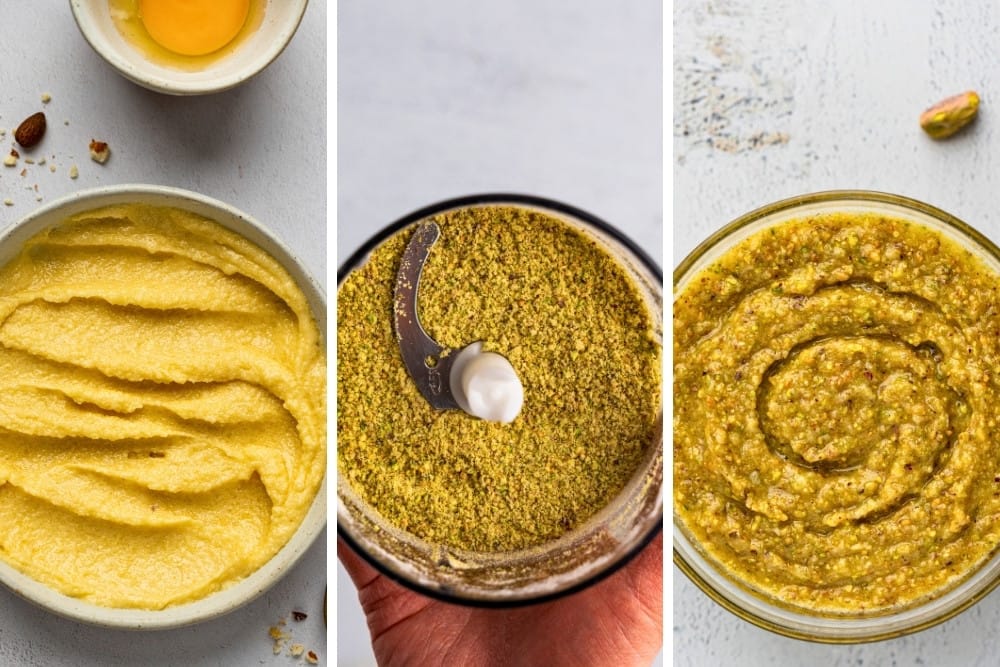
If you don’t have nut flour on hand, you can easily make it yourself using a blender or food processor. Add nuts in their edible form (the way you’d prepare them for eating, so almonds peeled but pistachios only shelled, etc.) and pulse until finely ground.
Work in short pulses and scrape down the bowl as needed — over-processing can cause the nuts to release oil and turn into nut butter (we’re not making nut butter here). A slightly coarser grind is perfectly fine for frangipane and won’t hurt the final texture.
All-Purpose Flour (Optional)
A small amount of all-purpose flour is sometimes added to frangipane to firm up the structure after baking. This is especially useful when:
- Baking with juicy fruit (pears, plums) or fruit fillings like compote
- Using oily nut flours, like pistachio or walnut
As a general guideline, adding 10–30% all-purpose flour relative to the weight of the nut flour will make the frangipane more cake-like and less fragile once baked. The exact amount depends on the nut you’re using and the final texture you’re aiming for — check the individual flavor recipes in this guide for specific ratios.
Adding flour strengthens the bake without noticeably changing the flavor. Just don’t go overboard with it.
Eggs
Whole eggs provide structure and moisture. The amount of egg affects the final texture: less egg yields a denser filling, while more egg creates a softer, more custardy bake.
Sugar
Powdered sugar is ideal for a smooth, refined texture, but granulated sugar works just fine if that’s what you have on hand. Granulated sugar will give the baked frangipane a slightly more rustic crumb (that’s not a big deal to most).
Core Frangipane Formula (1:1:1:1)
At its core, frangipane follows a simple 1:1:1:1 ratio by weight: butter, sugar, egg, and nut flour.
Each component plays a specific role. Butter provides richness and structure, sugar adds sweetness and tenderness, eggs bind everything together, and nut flour gives frangipane its body and flavor.
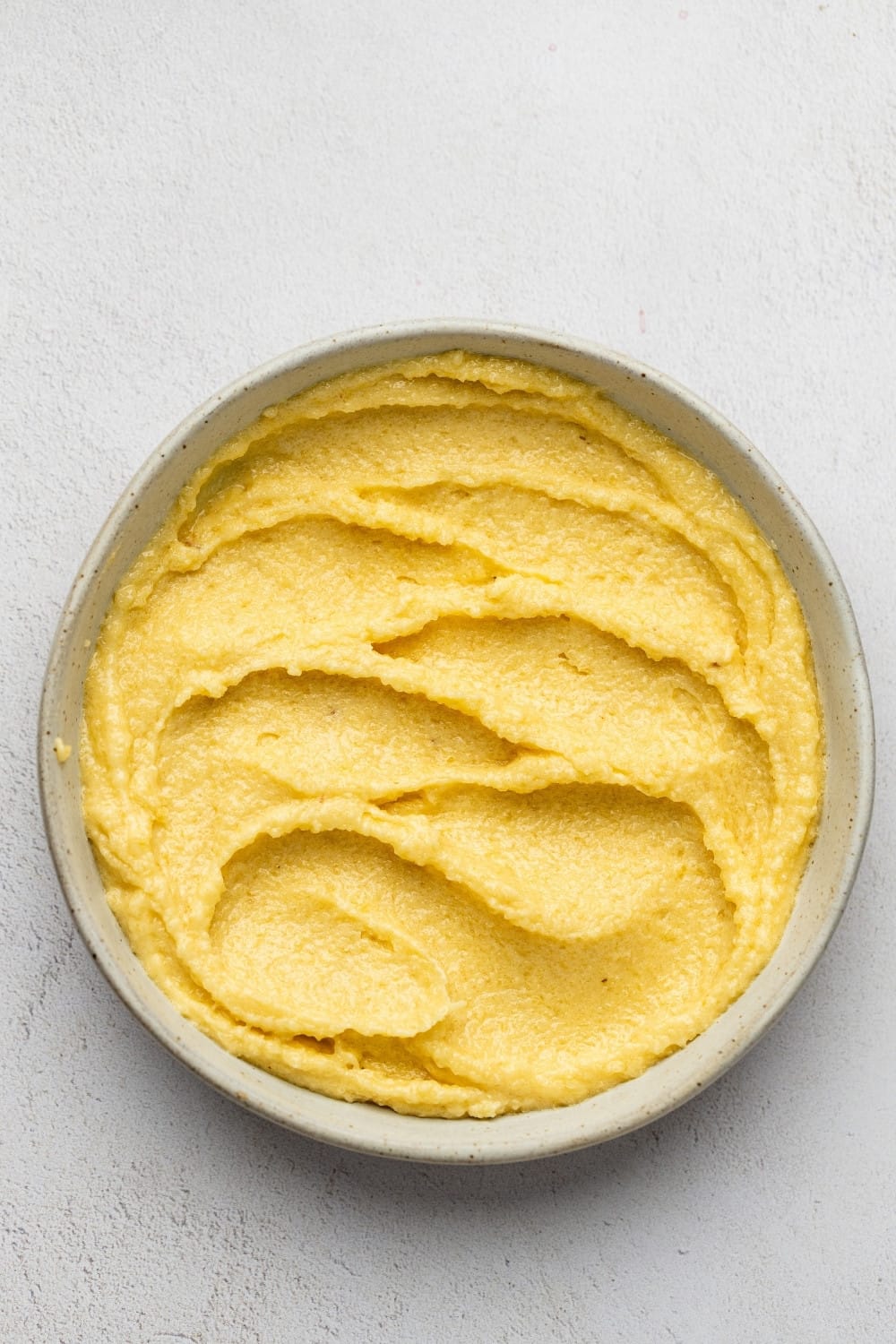
When these four ingredients are kept in balance, the result is a smooth, spreadable filling that bakes up soft and cohesive.
This 1:1:1:1 ratio is the reference point used throughout this guide. The classic almond version sticks to it exactly, while other nut-based variations stay close to the same formula, with small adjustments when needed to account for differences in fat content, moisture, or structure.
How to Make Frangipane Cream Video
Note: I’ve adjusted the order of adding ingredients since publishing the video above. See below.
How to Make Frangipane
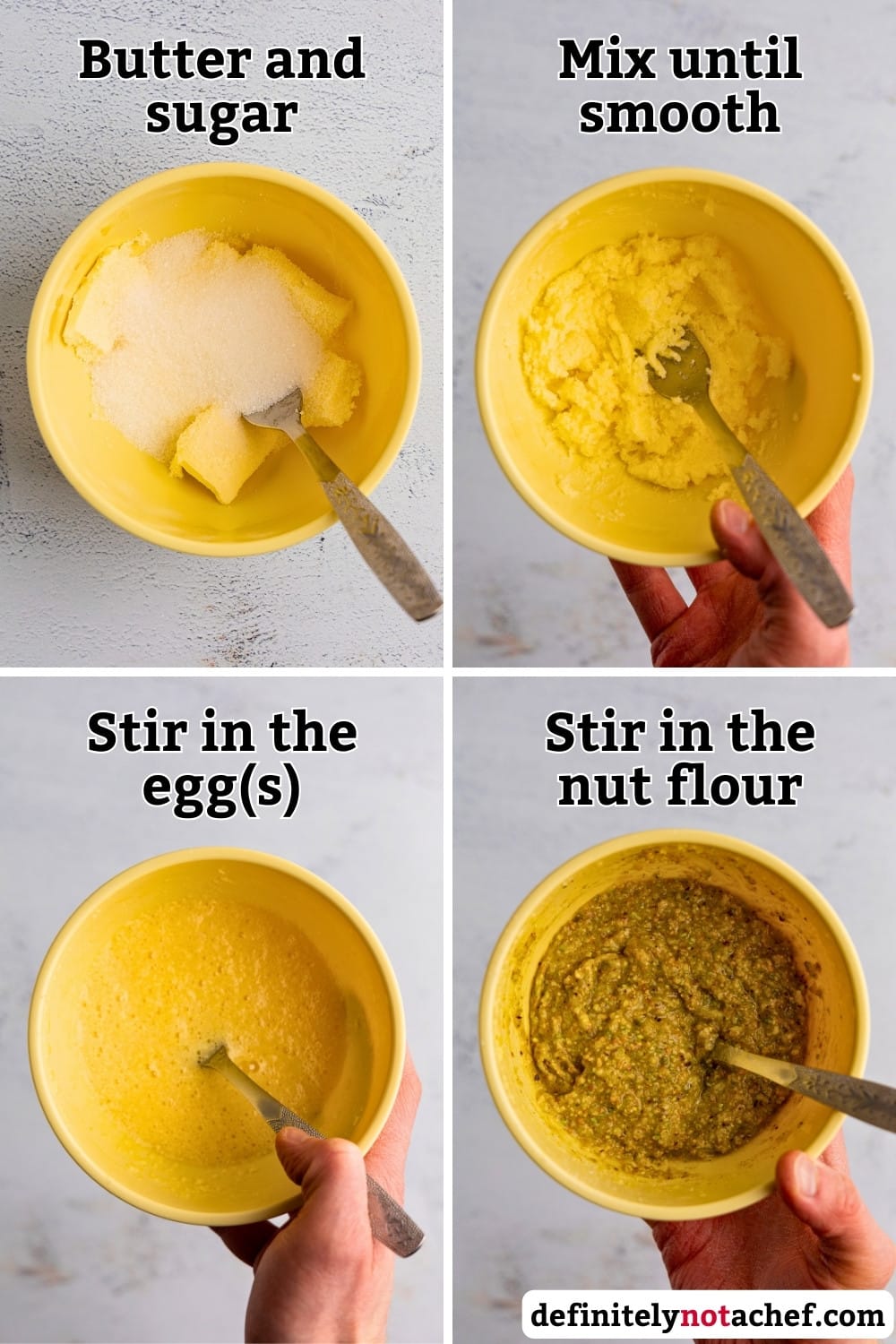
- Mix butter and sugar. Combine the butter and sugar and mix until just smooth and cohesive. You’re not creaming here — no need to incorporate air. A fork works surprisingly well and makes this step easy even if the butter isn’t perfectly softened.
- Add the egg. Stir in the egg until fully incorporated. The mixture will loosen up and become smoother at this stage. While I used to add the nut flour before the egg, adding the egg first makes the mixture much easier to combine, especially when mixing by hand.
- Stir in the nut flour. Add the nut flour, all-purpose flour (if using) and mix until evenly combined. At this point, the frangipane should be thick but spreadable, with a cohesive texture.
- Use or refrigerate. Spread the frangipane right away, or cover and refrigerate if you’re not using it immediately. Chilling will firm it up slightly, which can be helpful if you plan to pipe or shape it later.
Tips
Keep these in mind when making frangipane:
- Use a scale. For the best results, measure the ingredients by weight. A few grams off won’t ruin it, but if you’re scaling the recipe, accuracy helps.
- Chill before piping. If you plan to pipe the frangipane, chill it for about an hour to firm it up for better control.
- Use a mixer. If making a large batch, a hand or stand mixer will make the process quicker.

Flavors
These frangipane flavors are built on the same base principles outlined above, with adjusted ratios depending on the nut(s) used.
Almond (Basic Frangipane)
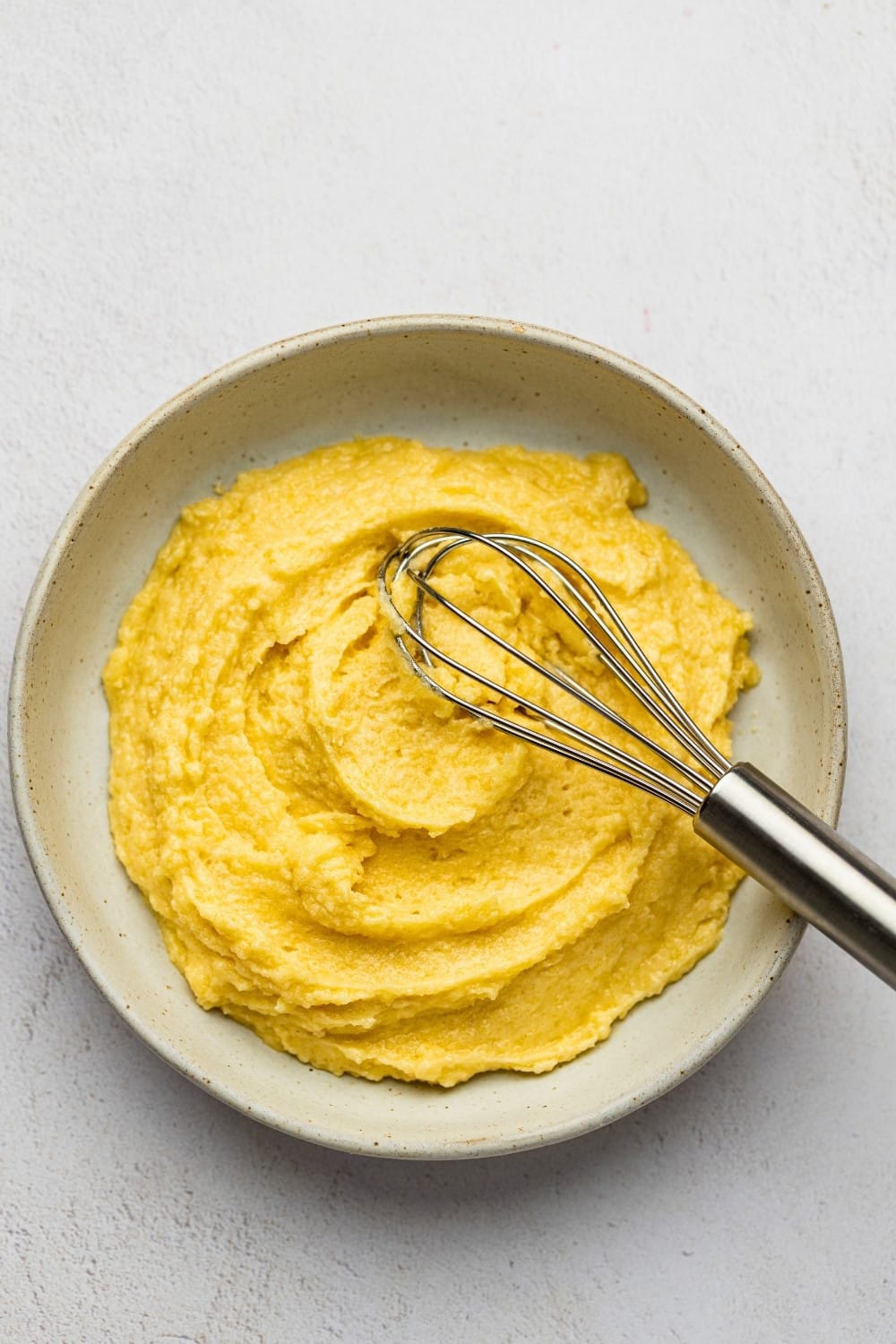
This is the most basic, no-frills version of almond frangipane, built directly on the 1:1:1:1 base formula outlined above. It uses equal weights of butter, sugar, egg, and ground almonds to create a smooth, spreadable filling that bakes up soft and tender.
Think of this recipe as the reference point for everything else in this guide — simple, balanced, and reliable, with no added flour or adjustments beyond what’s strictly needed for classic frangipane.
Equipment
Ingredients
- 3.5 tbsp unsalted butter ~50 g
- ¼ cup sugar ~50 g
- ½ cup almond flour or ground almonds, ~50 g
- 1 large egg ~50 g after cracking
Instructions
- Mix butter and sugar: Whisk together room temperature butter and sugar until smooth.3.5 tbsp unsalted butter, ¼ cup sugar
- Add egg: Stir in the egg until combined.1 large egg
- Stir in almond flour: Add almond flour and whisk until cohesive.½ cup almond flour
- Use or refrigerate: Use immediately or cover and refrigerate for later use.
Notes
- Yields enough for a thin layer in one 9-inch tart or galette.
Pistachio Frangipane
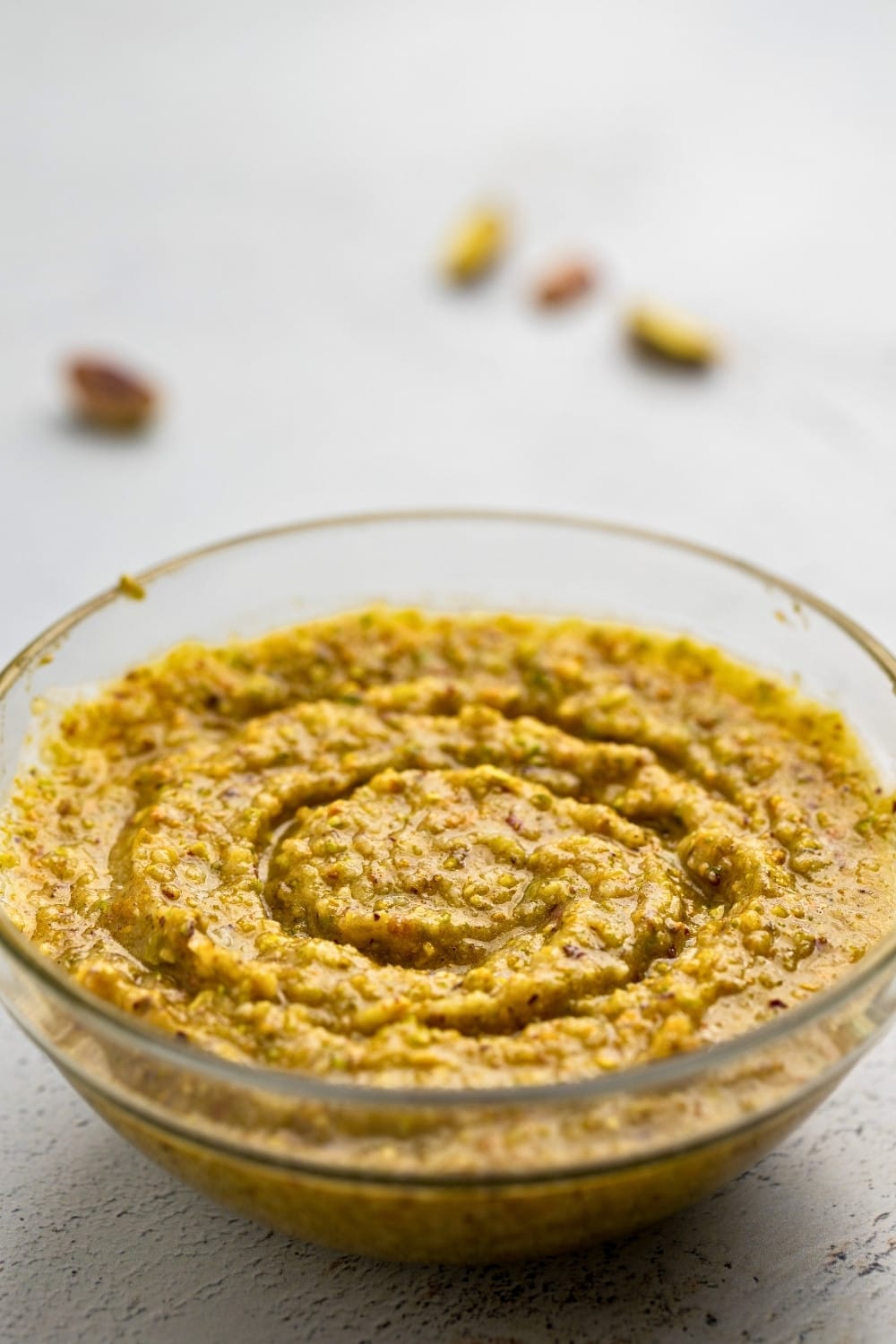
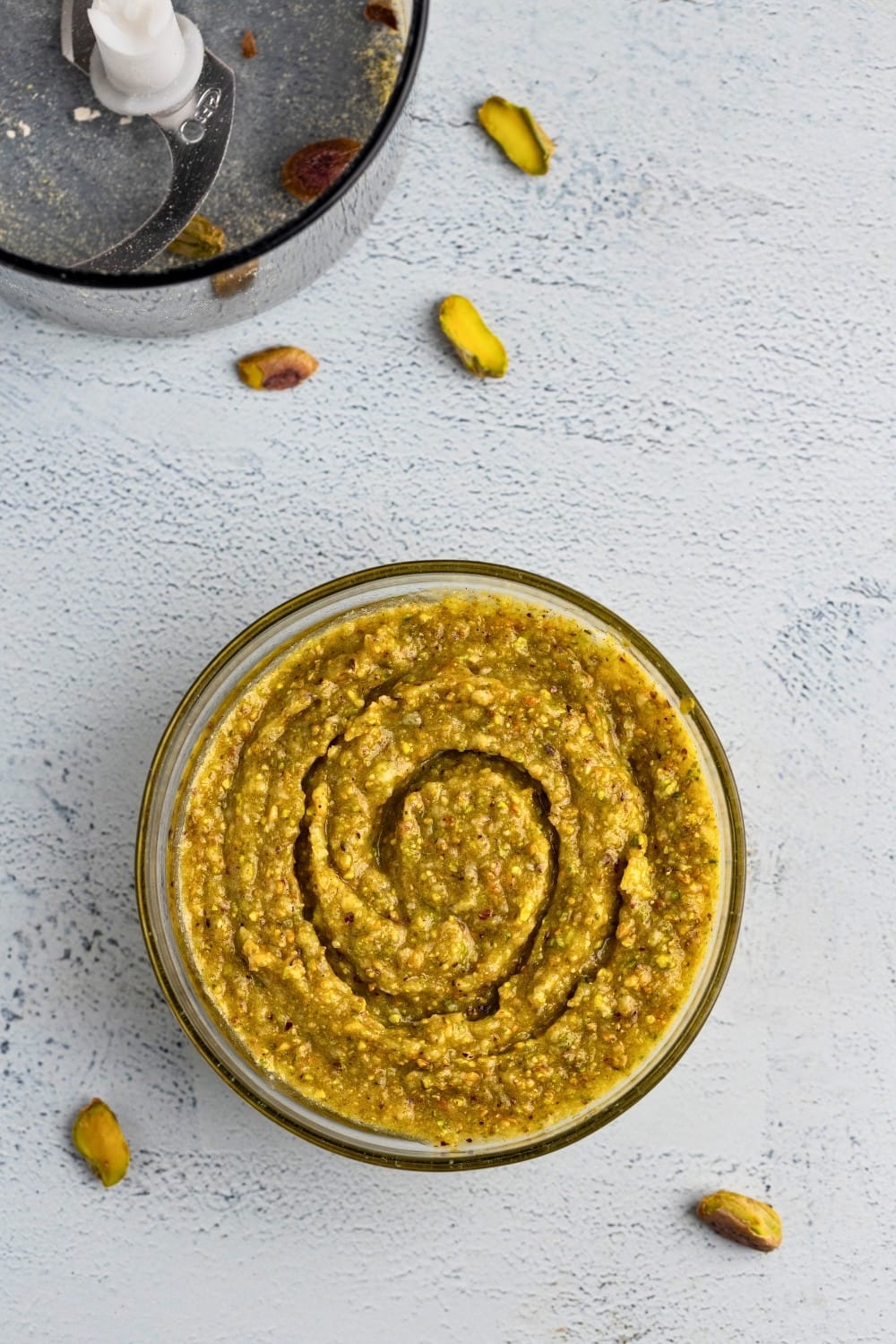
This pistachio frangipane is a direct variation on the base formula, with pistachios swapped in for almonds. Because pistachios are naturally more oily, a small amount of all-purpose flour is added to stabilize the filling and help it bake up cleanly.
The result is a rich, nutty frangipane with a slightly more cake-like structure than the classic almond version — sturdy enough for baking, but still smooth and spreadable.
Ingredients
- 3 ½ tablespoons unsalted butter ~50 g, room temperature
- cup sugar ~50 g
- ½ cup pistachio flour or ground pistachios, ~50 g
- 1 ½ tablespoons all-purpose flour 12 g
- 1 egg large, ~50 g after cracking
- ⅛ teaspoon salt add only if pistachios unsalted
Instructions
- Mix Butter and Sugar: Whisk together the room-temperature butter and sugar until the mixture is smooth and homogenous.3 ½ tablespoons unsalted butter, cup sugar
- Add Egg: Stir in the egg until fully combined and the batter is smooth.1 egg
- Stir In Flours: Add the pistachio flour and all-purpose flour, plus the salt if your pistachios are unsalted, and whisk until the frangipane comes together into a cohesive paste.½ cup pistachio flour, 1 ½ tablespoons all-purpose flour, ⅛ teaspoon salt
- Use Or Refrigerate: Use the frangipane immediately, or cover and refrigerate it for later use.
Notes
- Yields enough for a thin layer in one 9-inch tart or galette.
- Weigh the pistachios for accuracy.
- Grind whole pistachios in a food processor if you don’t have pistachio flour on hand.
Nutrition
Coconut Frangipane
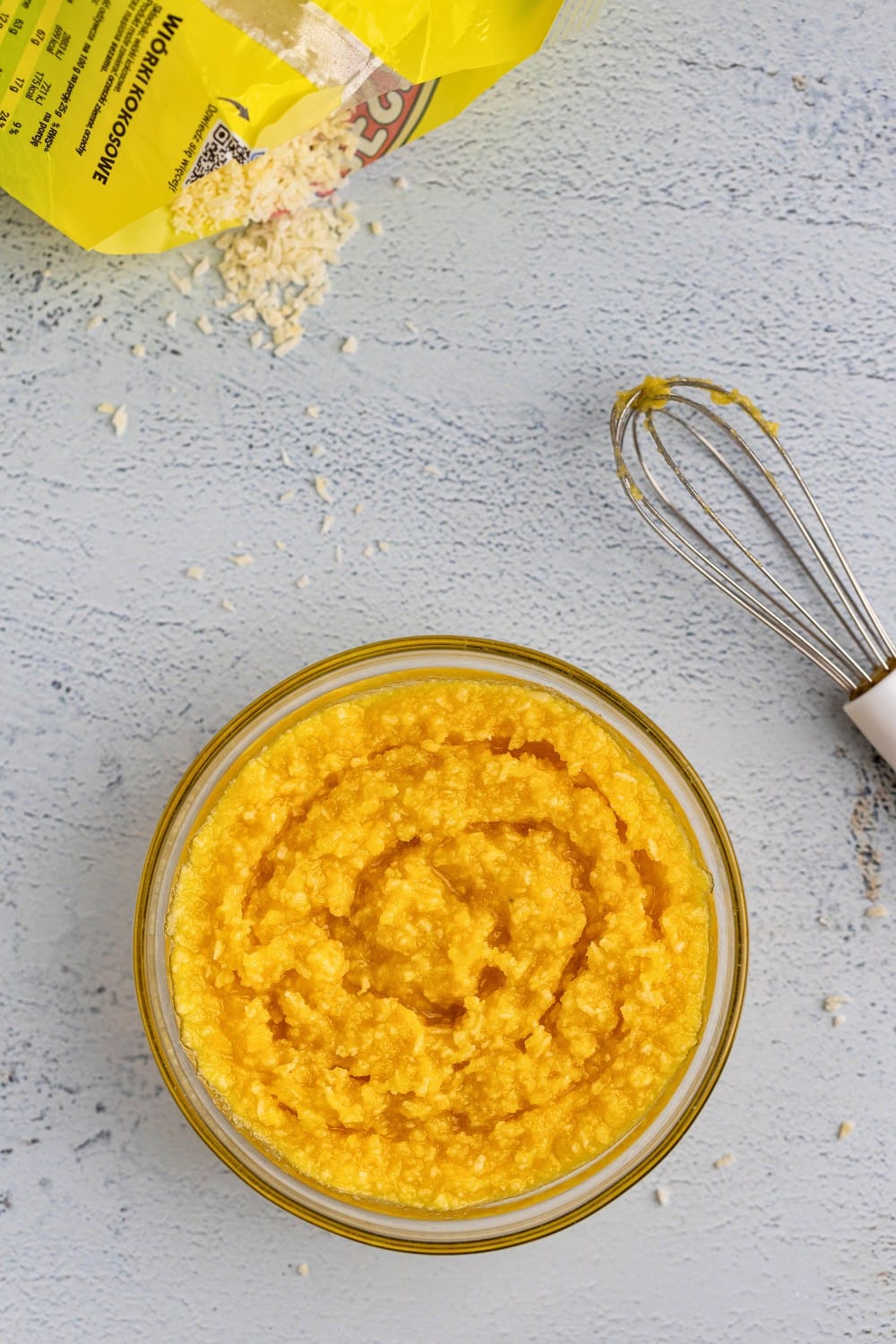
Coconut frangipane is a lighter, more aromatic and tropical twist on classic almond frangipane. Instead of replacing almonds entirely, it combines almond flour with desiccated coconut to keep the flavor balanced and avoid an overpowering coconut note.
Because coconut is naturally more oily than almonds, a small amount of all-purpose flour helps stabilize the cream, so it bakes up soft, cohesive, and easy to work with in tarts, galettes, and fruit-forward desserts.

Ingredients
- 3 ½ tablespoons unsalted butter ~50 g, room temperature
- ¼ cup sugar ~50 g
- ⅓ cup almond flour or ground almonds, ~33 g
- 3 ½ tablespoons desiccated coconut ~18.5 g
- 1 tablespoon all-purpose flour 8 g
- 1 piece egg large, ~50 g after cracking
- ⅛ teaspoon salt
Instructions
- Mix Butter and Sugar: Whisk together room temperature butter and sugar until smooth.3 ½ tablespoons unsalted butter, ¼ cup sugar
- Add Egg: Stir in the egg until combined.1 piece egg
- Stir In Flours: Add almond flour, desiccated coconut, all-purpose flour, and salt, and whisk until cohesive.⅓ cup almond flour, 3 ½ tablespoons desiccated coconut, 1 tablespoon all-purpose flour, ⅛ teaspoon salt
- Use or Refrigerate: Use immediately or cover and refrigerate for later use.
Notes
- Yields enough for a thin layer in one 9-inch tart or galette.
- Weigh the almonds and coconut for accuracy.
- If you don’t have almond flour, grind blanched whole almonds or slivered almonds in a food processor until very fine.
Nutrition
How to Use Frangipane
Frangipane is most often used as a baked filling, where it sets into a soft, cohesive layer that adds richness and structure beneath fruit or other toppings. Because it’s butter- and egg-based, it needs to be baked — it’s not meant to be eaten raw.
Fruit Galettes (Best Starting Point)
Frangipane works especially well in fruit galettes, where it’s spread directly onto the dough before adding fruit. As the galette bakes, the frangipane absorbs excess juices from the fruit while providing a rich, nutty base that keeps the crust from turning soggy.
If you’re new to using frangipane, galettes are the easiest place to start. Here’s my complete guide to fruit galettes, including how and when to add frangipane for best results.
Other Common Uses
You’ll also find frangipane used in:
- Fruit tarts
- Puff pastry and croissants
- Classic bakes like Bakewell-style tarts
These applications follow the same principles outlined in this guide and will be covered in more detail as this guide expands.
FAQ
How to Store Frangipane?
Frangipane cream can be stored in the fridge for 3 to 4 days. Just make sure to seal it tightly so it doesn’t absorb any odors.