
How to Make Fruit Compote: Easy Recipes for Any Fruit
Learn how to turn any fruit into a quick, cozy topping perfect on pancakes, yogurt, or ice cream.
Fruit compote sounds fancy, but at its core, it’s just fruit gently cooked down with a bit of sugar until soft, syrupy, and bursting with flavor.
This guide walks you through everything you need to know to make a good compote — the kind that tastes bright, not overly sweet. You’ll learn the basic setup that works with almost any fruit (fresh or frozen), how to tweak it for texture and flavor, and a bunch of ways to use it.
Here for the how-to? Start from the top.
Just want to explore recipes? Click here to jump straight to the recipe section.
Editor’s Note: I spent 9+ hours putting this guide together (and that’s not counting testing recipes or shooting photos). My goal was to make this your one-stop resource for anything compote-related: the ingredients, the method, and how to get the compote you want. Bookmark it, use it, and if there’s anything else you’d love to see added, drop a comment below — I’ll keep updating this guide as the compote library grows.
Base Recipe: How to Make Fruit Compote
Here’s a simple, high-level guide to making fruit compote using any fruit that makes sense for it. We’ll start with the ingredients and basic method, then cover a few tips that’ll help you control texture and flavor every time.
Ingredients
- Fruit of choice
- Water — just enough to keep the fruit from burning
- Pinch of salt — enhances flavor, balances sweetness
- Sugar – white or brown
- Lemon juice (or another acid that suits your fruit)
- Spices or herbs that pair well with your fruit
Method
- Prep the fruit. Wash, peel, and core (if needed). Cut into slices or bite-sized pieces.
- Start cooking. Add enough water to the pan to barely cover the bottom — just enough to prevent scorching. Add the fruit, a small amount of sugar (you can adjust later), a pinch of salt, and any spices or herbs you want to cook with. Stir, then cook over medium heat, stirring occasionally.
- Simmer and reduce. Once the mixture starts to bubble, lower the heat and let it simmer gently. The goal here is for the fruit to soften and for the liquid to thicken slightly. Timing depends on your fruit: apples need longer than strawberries, and ripe, juicy fruit releases more liquid than firm or underripe ones. For a thicker, saucier compote, you’ll need to cook a bit longer.

- Adjust flavor. When the fruit is soft and the consistency looks right, remove the pot from heat. Taste and adjust: add lemon juice for brightness, more sugar if needed, or a pinch of salt to sharpen flavors. (If using delicate herbs or extracts, add them now rather than during cooking.)

- Serve or store. Use warm right away, or cool and refrigerate for up to 4 days..
With the basics out of the way, let’s move on to a few tips that’ll help you fine-tune texture, sweetness, and acidity for any fruit you use.
Compote Tips & Tricks
The method above covers the basics. I kept it simple on purpose — no unnecessary steps or “chef-only” tricks.
These tips are optional add-ons you can use depending on your fruit, time, or texture goals.
Scaling Your Batch (2x, 3x, or More)
Compote scales beautifully. Just multiply your ingredients and use a larger pot or pan so the fruit has room to cook evenly. Expect a longer cook time — both for the fruit to soften and for the liquid to evaporate. Everything works the same, it just needs a bit more patience.
Thicken the Sauce with Cornstarch
A typical compote is mostly fruit, with just a bit of syrupy sauce. But what if you actually want more sauce — or your fruit releases so much water (looking at you, berries) that reducing it would leave you with just a few spoonfuls?
That’s when cornstarch comes in handy.
Here’s how to do it:

- Cook the fruit until soft. Get the texture right first — we’ll only cook for a short time after thickening.
- Adjust the flavor. Take the pot off the heat, taste, and tweak sugar, lemon juice, or spices until it’s where you want it.
- Mix a cornstarch slurry. Combine 1 tablespoon cornstarch with 2 tablespoons cold water in a small bowl until smooth.
- Add gradually. Return the pot to medium heat and stir in about ½ teaspoon of slurry. Mix until it thickens, then repeat as needed until the compote is just slightly thinner than your ideal texture (it’ll thicken more as it cools). Stir the slurry well each time before adding, and make more if needed.
- Cook for one more minute. Once the consistency looks right, cook for another minute while stirring constantly — that gets rid of the cornstarch taste.
How to Reduce Liquid Faster

Some fruits release a lot of water — ripe pears, for example. Cooking all that liquid away can take ages and leave you with mushy fruit.
If your fruit is already soft (or is going to be soon) but there’s still way too much liquid, you’ve got four good options:
- Strain the liquid. Carefully pour off some of the excess liquid, then continue cooking. You’ll lose a bit of sugar and spice flavor, but you can easily adjust after.
- Reduce just the liquid separately. Once most of the fruit has softened and given up most of its water, strain it out and set it aside, then pour the liquid into a pan and simmer it on its own for 5–10 minutes. Because you’re only reducing the syrup, it goes fast, and you keep all the flavor you’d otherwise pour down the drain — just stir the fruit back in once the liquid has thickened.
- Switch to a wider pan. If you started in a pot, transferring the compote to a large skillet or sauté pan exposes more surface area. That extra room helps moisture evaporate faster and makes it easier to judge the texture as you reduce.
- Stir more often near the end. Once the compote starts forming large bubbles on top, stirring frequently helps trapped steam escape faster. It won’t fix everything, but it can speed up that final 10–20% of evaporation.
Add Crunch for Texture
Compote doesn’t have to be all soft. If you want some texture contrast, reserve a portion of your fruit and add it late in the cooking process.
- For soft, ripe fruits (like strawberries or pears), stir in some cubes or slices after you’re done cooking — the residual heat will warm them through.
- For firmer fruits (like apples or plums), add them when you’re about 60% done cooking. That gives them time to soften slightly without turning mushy.
Just note that any fruit added late will release a bit of water, so you may need to cook for a few extra minutes to bring the consistency back.
Use Frozen Fruit When Needed
Frozen fruit works wonderfully in compote—often with no extra steps required.
The easiest method is simply this: Add the fruit to your pot straight from frozen and cook as usual.
A few things to know:
- Frozen fruit softens immediately as it defrosts. You don’t need to wait for it to “cook until tender”—once thawed, it’s already soft enough to use.
- Expect extra liquid. Freezing ruptures the fruit’s cells, so frozen fruit releases more water than fresh. This usually means:
- a longer cook time to evaporate the excess, or
- using a large, wide pan to speed up reduction, or
- adding a thickener (like a cornstarch slurry) if you want to keep the cooking short.
When fruit is out of season—or when you just want something quick—frozen is often the most convenient and consistent option.
Add Spices (at the Right Time)
Spices behave differently depending on how long they cook. That’s why you’ll sometimes see a recipe add them at the start, and other times only at the end. It’s usually not random (if the recipe’s author knows what they’re doing).
General rules:
- Whole spices (like cinnamon sticks, cardamom pods, or star anise) should go in early so they have time to infuse flavor. Remove them after cooking.
- Ground spices (like cinnamon or ginger powder) are often best added after cooking. The residual heat is enough to bloom their aroma without dulling them.
This small timing difference makes a big impact on the final flavor.
Ingredients Deep Dive
This section explains how each ingredient works, why you add it when you do, and how to tweak it for your own fruit combinations.
If you want to understand the “why” behind the recipe — or start experimenting with new flavors — this is the one to read.
Sugar
Compote should be sweet, but how sweet is entirely up to you. Start small (about 1 teaspoon per apple is a good baseline), then taste and adjust toward the end. Add too much early on, and you’re stuck with a sugary sauce that hides the fruit.
Why we add it early: sugar helps draw water out of fruit, which speeds up softening and creates that syrupy sauce.
Which sugar to use:
- White sugar is the all-purpose choice — clean and reliable.
- Brown sugar adds warmth and depth, especially for apples, plums, and pears.
- Maple syrup or honey work well in small amounts for a more aromatic, “natural” sweetness (just add them near the end so they don’t lose flavor).
Salt
Salt is your quiet MVP. Just a pinch deepens flavor and sharpens sweetness — it makes apples taste more like apples and berries taste brighter.
Use fine table salt, sea salt, or kosher salt so it dissolves evenly.
Lemon Juice (or Other Acid)
Acid is what keeps compote from tasting flat. Sugar alone gives you “sweet”, sugar + acid gives you balanced and interesting.
Add it near the end of cooking — high heat dulls citrus flavor.
How to use:
- Add a small splash, stir, and taste before adding more.
- Lemon juice is the go-to: it brightens apples, pears, and most berries.
- Orange juice works well for plums or cherries.
- Lime juice can complement mango or tropical fruit compotes.
Spices & Herbs
A bit of spice is often what takes a good compote to a great one. And it doesn’t have to be complicated — a touch of cinnamon in your apple compote can be all it takes.
That said, not every fruit needs the extra help. Some, like ripe berries, taste incredible on their own.
For most home cooks, ground spices are enough. They’re easy to measure, blend quickly into the sauce, and still give great flavor. Whole spices (like cinnamon sticks or cardamom pods) can add more depth if you’re feeling fancy, but they’re by no means required. I rarely bother unless I want to go the extra mile or test something.
Finally, spices (and herbs) are also how you can shift the vibe of a compote. They don’t just add flavor — they change it. For instance:
- Pears with cinnamon feel cozy and autumny.
- Pears with cardamom feel lighter, more citrusy and floral.
That’s the fun part: the base recipe stays the same, but a small spice change can make the compote fit a completely different season or dessert.
Uses
Compote is one of those things you make once and suddenly start putting on everything. It’s simple, keeps well, and instantly upgrades breakfasts and desserts that would otherwise be plain.
Here are the most common ways to use it.
Breakfast Upgrade

This is where compote really shines — it turns basic staples into something special (or at least much more appealing):
- Oatmeal: add a spoonful on top for cool contrast and natural sweetness (see our massive oatmeal guide here). Fruit oatmeal typically tastes much better if you make the compote separately and spoon it on top instead of cooking the fruit with the oats.
- Overnight oats, chia puddings, yogurt, or cottage cheese bowls: layer compote on top for a quick fruity topping that’s usually much less sugary than store-bought ones. See our guides for examples: overnight oats 101, chia pudding mega guide, yogurt bowl guide.
- Pancakes, crepes, waffles, or French toast: replace syrup or jam with a spoon of warm compote. Make sure it’s on the thicker side so it doesn’t run all over the plate.
Dessert Topping

Compote doubles as a filling or topping for all kinds of desserts, and it’s one of the most flexible fruit preps you can make:
- Cheesecake cups or panna cotta: spoon on top right before serving for color, flavor, and acidity.
- Ice cream or sorbet: pour warm compote over cold scoops for an instant “homemade sundae” feel.
- Cakes and cupcakes: use as a topping for anything that feels a bit too plain to serve. Make sure the compote is thick enough (add a touch of cornstarch mentioned in the tips section) so you’re not pouring fruit soup on top.
- Tarts, pies, and galettes: turn any fruit compote into a pie filling by reducing it until it’s quite thick or mixing in some cornstarch — it’ll thicken beautifully as it bakes. Here’s my guide to fruit galettes if you’re curious.
Best Fruits for Compote (Compote Flavors)
Now that you know the basic compote formula, it’s time to talk about concrete recipes.
Below are a few recipes to get you going (I’m adding new ones as I test recipes). They’re easy to make, cover various “vibes” (cozy, fresh, and rich), and teach you almost everything you need to know before experimenting with other fruits.
Apple Compote

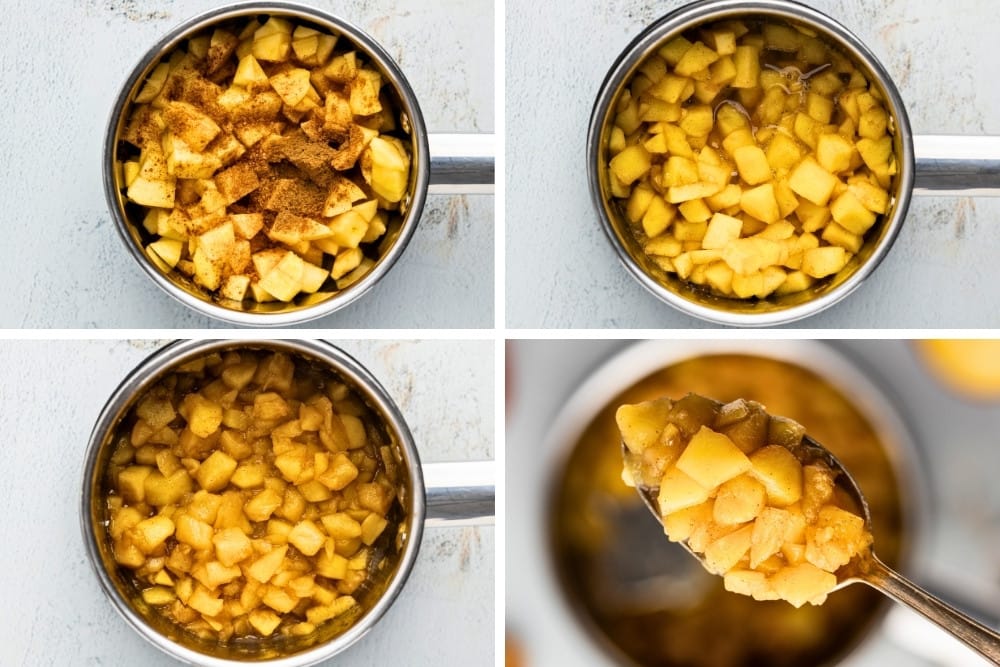
Apple compote is the best place to start your compote journey: it’s simple to make, endlessly versatile, and filled with the comforting flavors of fall and winter.
Use any apples you have on hand, or mix a few varieties for the best balance of sweetness and tartness.
Apple Cranberry Compote

Apple and cranberry are a classic cold-weather pairing, giving you that perfect balance of sweet and tart during the fall and winter months.
When it comes to cooking, apple cranberry compote is a bit different from other fruit compotes. It uses orange juice instead of water to tame the cranberries’ sharpness and add a clear citrus note. And because cranberries are quite tart, it also needs more sugar than other fruit mixes so you can balance the acidity.

Ingredients
- 1 apple medium, cubed (about 1 cup after cubing)
- 2 teaspoons white sugar 9 g, more to taste
- ⅓ cup cranberries 35 g, fresh or frozen
- pinch salt
- 1 tablespoon orange juice 15 g
- orange zest from ¼ orange, optional
Instructions
- Prep Apples and Cranberries: Wash, peel, and chop the apples into cubes, and wash and sort the cranberries, discarding any soft or damaged berries.1 apple, ⅓ cup cranberries
- Cook the Fruit: Add the orange juice, sugar, salt, and orange zest to a pot with the prepared apples and cranberries, stir to combine, then set over medium heat and bring to a boil, stirring soften until the apples begin to release water.1 tablespoon orange juice, 2 teaspoons white sugar, pinch salt, orange zest
- Reduce and Simmer: Once the mixture boils, lower the heat to low and cook until the apples are soft, cranberries have burst, and much of the liquid has evaporated, stirring every minute or two and more often near the end to prevent scorching; remove from heat when it's a bit thinner than you want, as it will thicken while cooling.
- Finish and Adjust: Carefully taste the compote and stir in additional sugar a little at a time until the sweetness is right (i.e., it's delicious). Add a splash more orange juice if you want a touch more tartness or brightness.
- Cool and Store: Let the compote cool to room temperature, then use it immediately or refrigerate in a covered container.
Notes
- We’re aiming for a 3:1 apples-to-cranberries ratio (apples weighted after cubing). Use a 4:1 ratio if you want a less tart compote.
- Use orange juice for the best flavor. I tested water and orange zest, and the flavor wasn’t as good.
- Adjust added sugar to taste. This compote needs much more sugar than other ones to taste great. Plus, the amount needed depends on the apples you use.
Nutrition
Apple Berry Compote

This apple berry compote pairs juicy berry tartness with gentle apple sweetness so it tastes fresh and balanced. It’s ideal in the summer when berries are in season, but also tastes amazing on a cold winter day.
As for the berry mix, you can use a pre-packaged mix, or make one yourself with the berries you have on hand. Either way, it’ll taste delicious.
Cranberry Compote

Cranberry compote with orange juice and zest is a lovely tangy-sweet quick topping for desserts, breakfasts, and holiday meals.
It leans bright and tart, but orange juice softens the cranberries’ sharp edge and adds a round citrus note. That’s a roundabout way to say: make sure you use OJ not water when cooking this one.
Also, because cranberries are highly acidic, it requires noticeably more sugar than your regular fruit compote. Keep that in mind when tasting this one.

Ingredients
- 2 ½ cups cranberries 250 g
- 5 tablespoons white sugar 70 g, more to taste
- ⅛ teaspoon salt
- 3 tablespoons orange juice 45 g
- orange zest from 1 orange, optional
Instructions
- Prep cranberries: Wash and sort through the cranberries and discard any soft ones.2 ½ cups cranberries
- Cook cranberries: Into a pot add cranberries, orange juice, sugar, salt, and orange zest; stir, then put over medium heat and bring to a boil, stirring every so often. Keep an eye on it at first until the cranberries release water.3 tablespoons orange juice, 5 tablespoons white sugar, ⅛ teaspoon salt, orange zest
- Reduce and thicken: Once the water boils, reduce to low and cook until the cranberries soften and burst and most of the water has evaporated, stirring every minute or two. Stir more often near the end so it doesn’t scorch. Take off the heat when it’s a bit thinner than you’d like — it will thicken as it cools.
- Finish and adjust: Carefully taste and assess. It will probably need more sugar; stir in enough until the flavor is just right. Add more orange juice if it needs a tad of tartness or is too thick.
- Use or refrigerate: Let the compote cool, then use it or refrigerate it for later.
Notes
- Cranberry compote thickens faster than many other fruits — watch closely while it cooks to avoid over-thickening.
- Use orange juice rather than water as it gives a much better flavor.
Nutrition
Pear Compote

Pear compote pairs bright lemon and gentle cardamom with soft, cooked pears. Use white sugar for a clean flavor or swap in brown sugar and cinnamon for a cozier, more autumnal twist.
Blueberry Compote

Blueberry compote has a bright, sweet-tart flavor with floral notes and bursts of fruit. Rather than slow reduction (which would evaporate like 3/4 of it), we thicken it with cornstarch.
It’s a great choice for a weekend brunch or a quick dessert finish any time of year, as frozen berries work just as well as fresh ones.
Strawberry Compote

Strawberry compote is the definition of summer in a spoon. It’s quick to make, tastes delicious, and adds instant color to any breakfast or dessert. Keep it simple with just sugar and lemon juice, or add vanilla to make it taste like melted strawberry ice cream.
Raspberry Compote

Raspberry compote is one of those toppings that just works everywhere — pancakes, waffles, cheesecakes, yogurt, oatmeal, and anywhere in between. And because frozen raspberries work perfectly here, it’s something you can make year-round without overthinking it.
My version skips long reductions and uses a cornstarch slurry instead. It’s faster, keeps the raspberry flavor bright and fresh, and actually leaves you with a proper amount of compote, not a tiny pot after 30 minutes on the stove.
Cherry Compote

Cherry compote is rich and more complex — a little tart, a little indulgent. It’s perfect for cheesecakes, ice cream, or anything chocolate. Fall and winter favorite.
Mango Compote

A mango compote gives you a bright, tropical sweetness with a little acidity from the lime. It’s great in spring and summer or whenever you want a fresh-tasting topping for a dessert, and it keeps well in the fridge for quick breakfasts add-on.
Frequently Asked Questions
What’s the Difference Between Compote, Coulis, and Pie Filling?
All three use fruit, but the texture and method make them quite different:
- Compote is chopped fruit cooked with sugar and flavorings until the fruit softens and most of the liquid evaporates. It’s chunky, saucy, and rustic.
- Coulis is made by blending fresh fruit (usually berries) with sugar and a bit of lemon juice, then straining out the skins and seeds. It’s smooth, glossy, and fresh-tasting — basically a liquid fruit sauce.
- Pie filling doesn’t follow one strict method. Sometimes it’s just chopped fruit tossed with sugar and cornstarch, baked until thickened. Other times, it’s cooked on the stove first to reduce excess liquid and make sure the filling sets properly so the pie slices cleanly.
How to Store and Reheat Compote?
Store cooled compote in a sealed container in the fridge for 3 to 4 days.
If you need to reheat it, warm it gently on low heat while stirring often. Add a splash of water as needed so it doesn’t burn or thicken too much.
Can You Can Compote?
I’m not a canning expert by any stretch of the imagination, but the short answer is: no.
These compotes are designed to be fresh, quick fruit toppings, not long-shelf-life preserves. Traditional jams and jellies are cooked with much more sugar and sometimes pectin, which allows them to be safely canned and stored for months. Compote doesn’t have that sugar or acid level, so it’s best kept in the fridge and used within a few days.