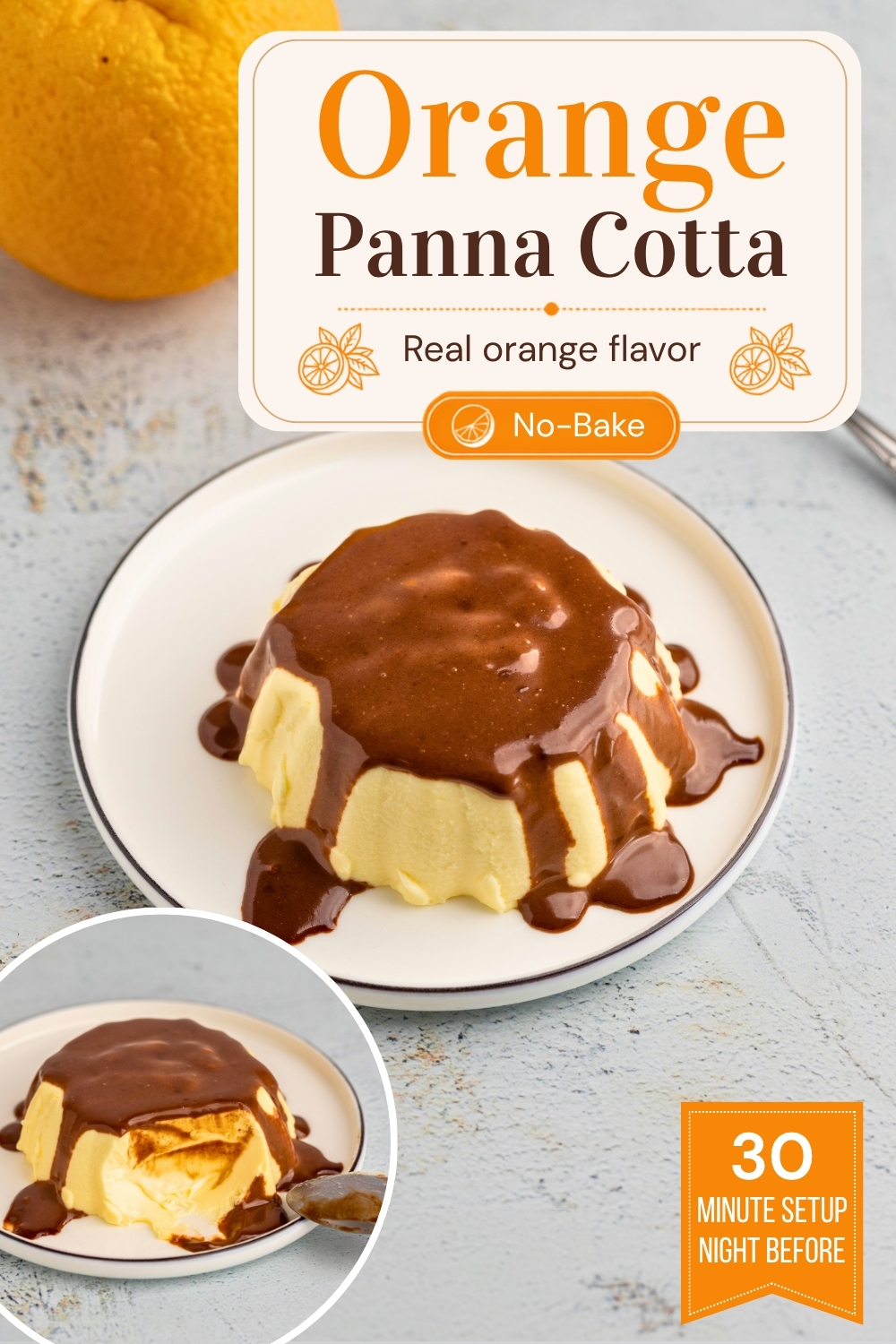
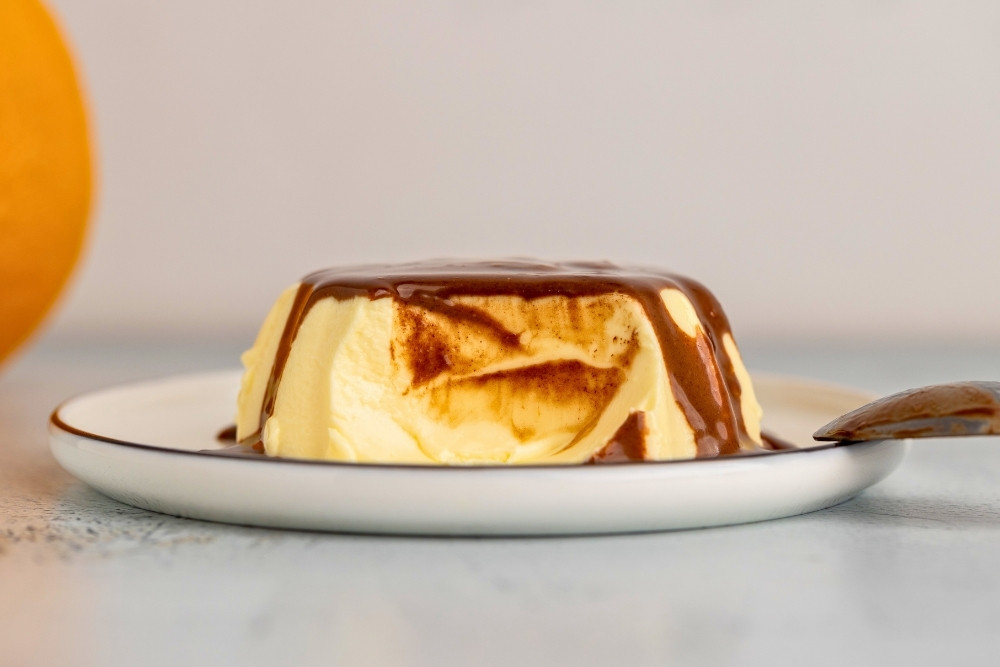
Easy Orange Panna Cotta — Creamy, No-Bake, Made with Real Orange
Silky, just-set, and genuinely orange — the kind of no-bake dessert you can prep the night before guests arrive.
Orange panna cotta is what you make when you want a dessert that looks like effort but isn’t. It’s one of the easiest Italian desserts going: no baking, just ten minutes at the stove, then the fridge does the rest. Cool, creamy, and set just enough to wobble.
Like most make ahead desserts, it’s at its best the night before guests come over. Start it early and it’s ready when you are. It’s also a good way to use up the oranges in your fruit bowl. The one catch is the chilling: you need at least 4–6 hours, ideally overnight, so it’s not a same-day thing.
And if you’ve had an orange dessert that tasted vaguely of nothing, this one’s different. Reducing the juice first concentrates the flavor, so it actually tastes like orange instead of just sweet cream. It’s earned its spot among the no bake dessert recipes I keep coming back to. A little dark chocolate on top and you’re set.
Why You’ll Love This Recipe
- Just a handful of ingredients. Cream, milk, sugar, gelatin, and an orange — no special equipment beyond a saucepan and a fine sieve.
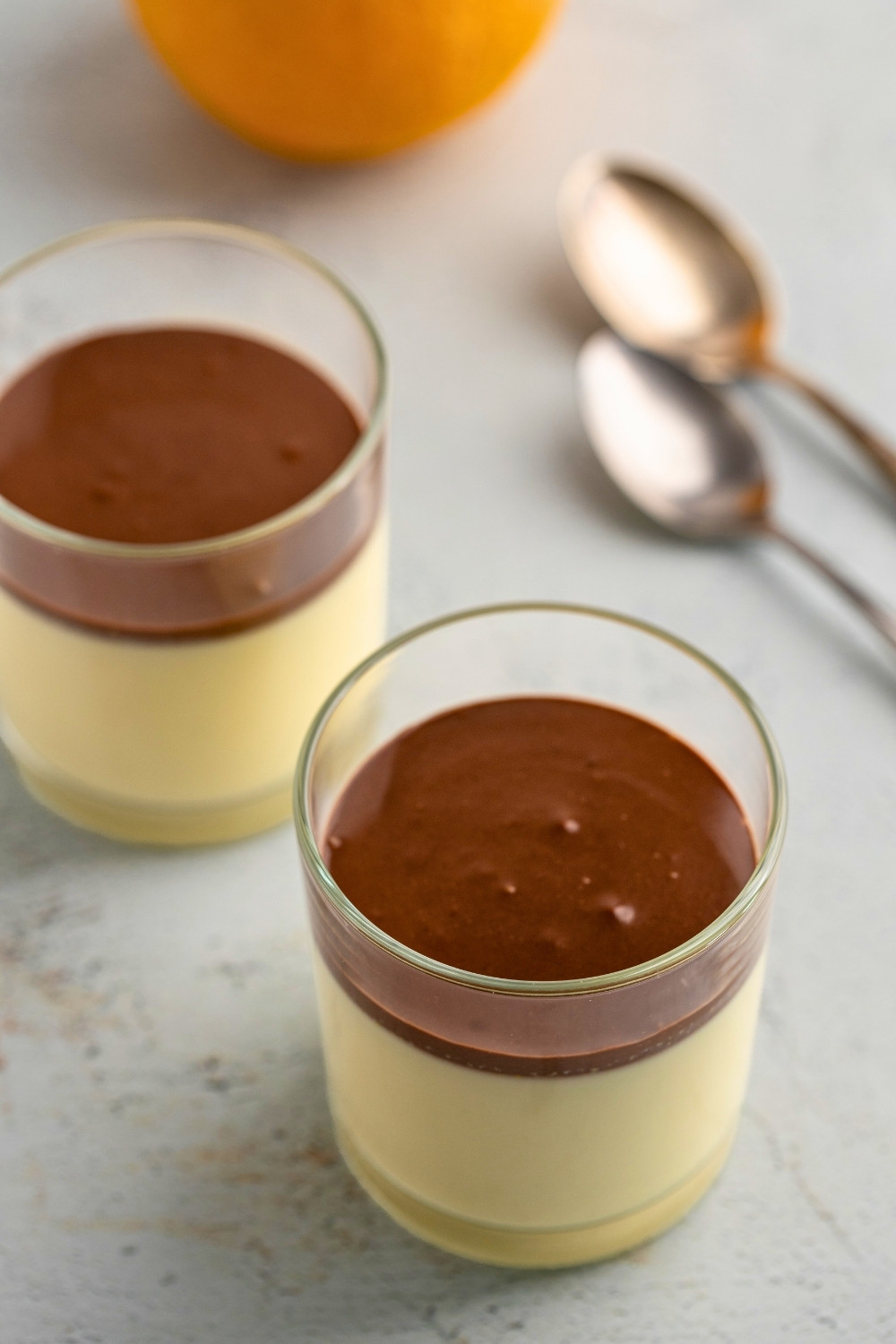
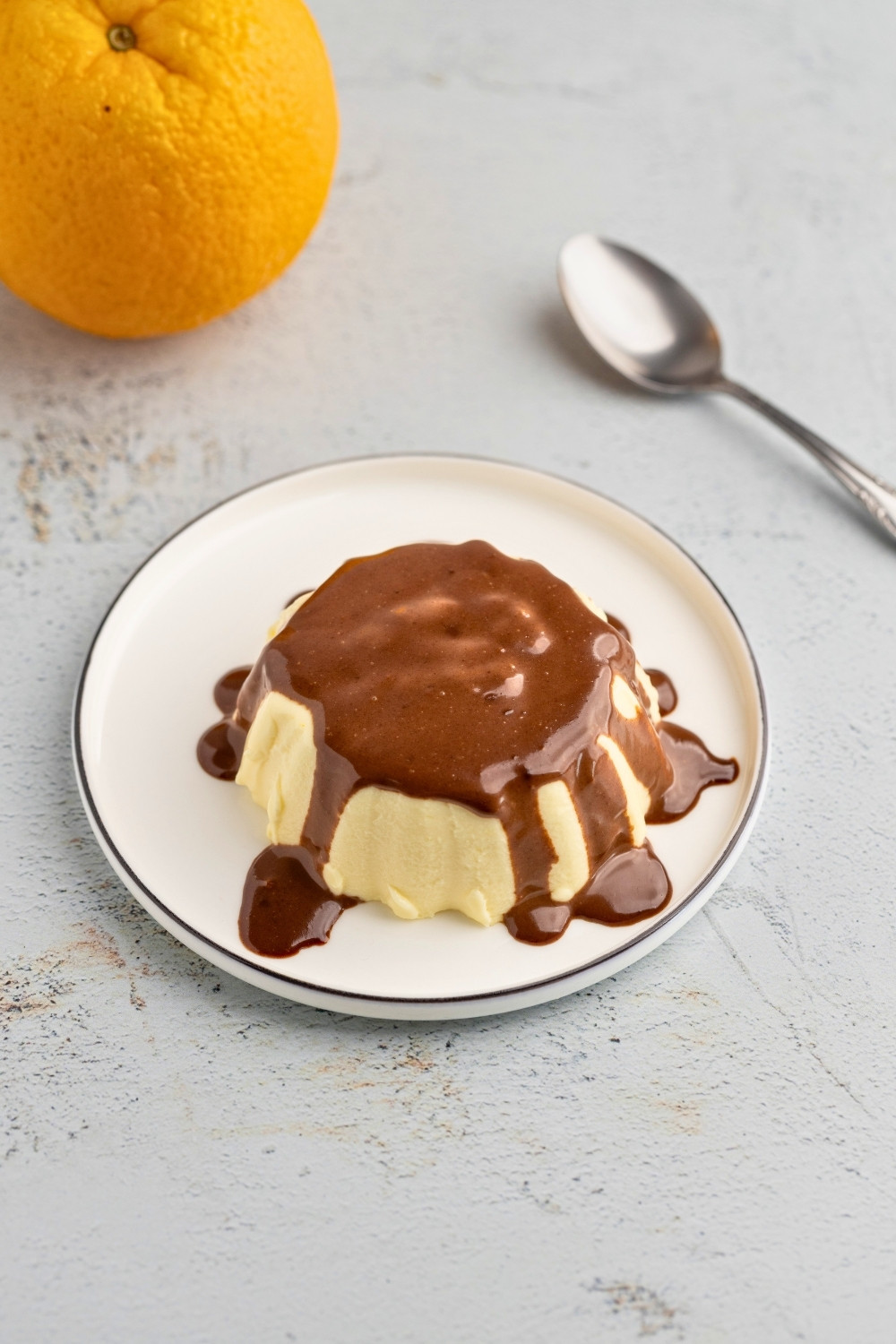
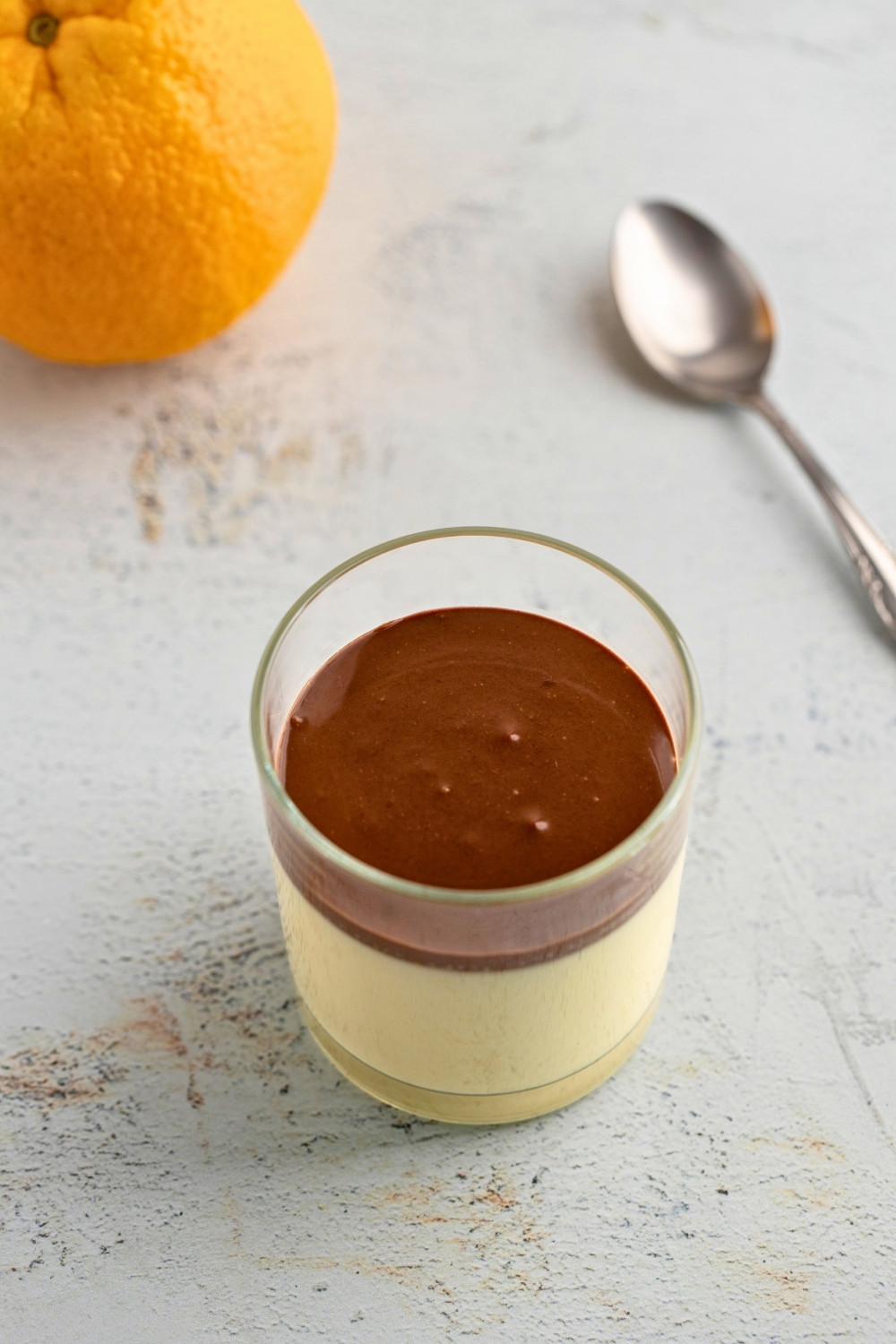
- You can serve it however you like. Set it in glasses for a zero-fuss spoon dessert, or pour it into molds and unmold onto a plate for something that looks dinner-party worthy.
- Easy to make your own. Finish with dark chocolate ganache, a spoon of compote, or some candied orange — and a splash of orange liqueur in the base turns it into a grown-up version.
Ingredients and Substitutes
- Heavy cream. The base of that rich, silky texture. Use full-fat (around 30-36%).
- Whole milk. Lightens the cream so the panna cotta isn’t too heavy. Stick with full-fat; skim makes it watery.
- Granulated sugar. Just enough to sweeten without burying the orange. Start with the amount listed and adjust to taste once everything’s combined.
- Powdered gelatin. What gives panna cotta its just-set wobble. One envelope (7 g) is what you need here.
- Orange. You’ll use both the zest and the juice from fresh oranges — the zest for aromatic oils, the juice (reduced down) for concentrated flavor. Zest before you juice, and grate only the orange part, not the bitter white pith.
- Vanilla extract. Rounds out the citrus so it tastes warm rather than sharp. A small amount goes a long way.
- Salt. A pinch sharpens the orange and keeps the cream from tasting flat.
- Orange liqueur. Optional, but it adds a candied-orange depth that fresh juice alone doesn’t reach. Cointreau, Grand Marnier, or Triple Sec all work. Leave it out and the recipe still holds together fine.
Step-by-Step: How to Make Orange Panna Cotta
👉 For an in-depth guide to panna cotta along with tips about unmolding, see the vanilla panna cotta recipe.
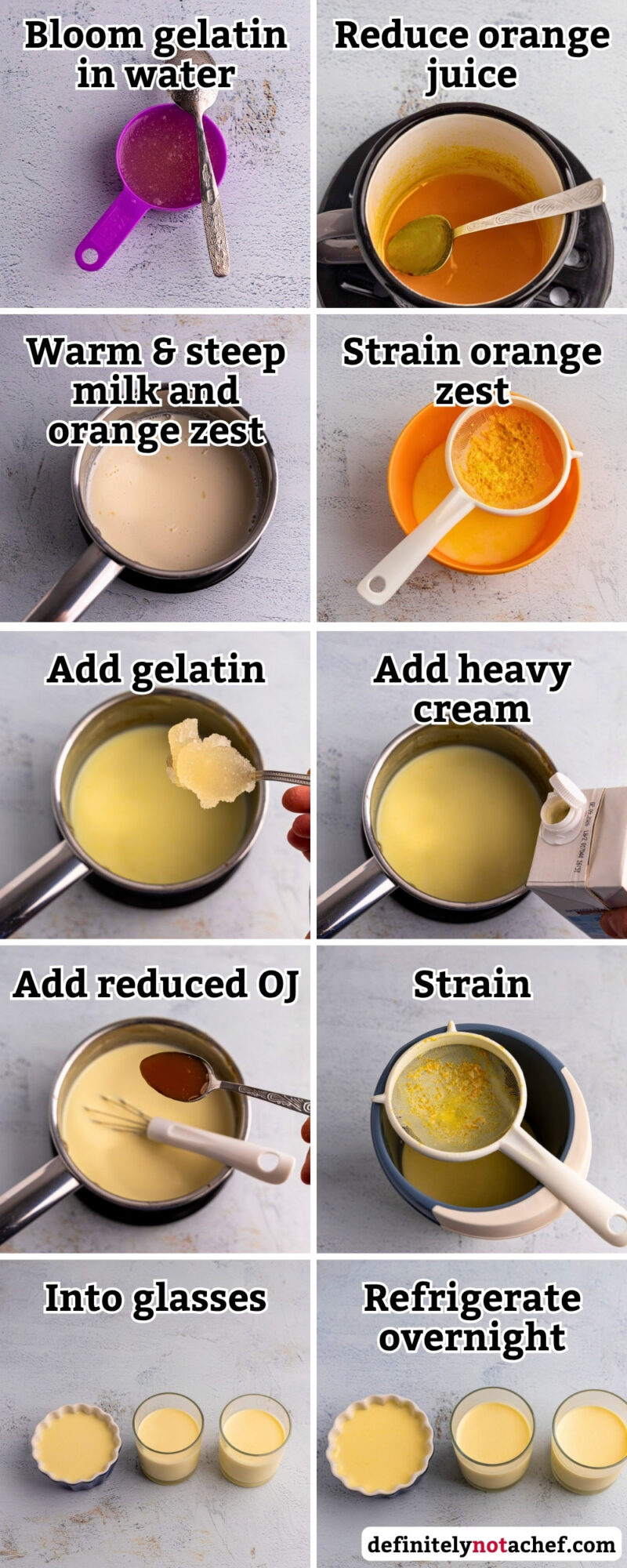
- Bloom the gelatin. Sprinkle the gelatin evenly over the cold water in a small bowl, give it a quick stir, and let it sit for 5–10 minutes until it soaks up the water and looks like wet, wrinkled sand. Set aside.
- Reduce the orange juice. Pour the fresh juice into a small pan and simmer gently over low heat until it reduces to less than half its original volume and turns slightly syrupy. This is the step that makes it taste like orange, so don’t rush it. Set aside to cool.
- Infuse the milk. Combine the milk, sugar, salt, and orange zest in a saucepan. Warm over medium-low heat, stirring now and then, until it’s steaming and almost boiling.
- Steep. Take it off the heat, cover, and let the zest steep for 15–20 minutes. This pulls the aromatic oils out of the zest and into the milk.
- Strain. Pour the milk through a fine mesh sieve to remove the zest, then return it to the pan. If it’s cooled below steaming, warm it gently for a few seconds — it needs to be warm enough to melt the gelatin.
- Dissolve the gelatin. Scrape the bloomed gelatin into the warm milk and stir until it’s completely dissolved and smooth, with no visible specks or strands.
- Add the cream. Pour in the cold cream and stir to combine. Adding it cold now cools the whole mixture down fast, so it’ll set sooner in the fridge.
- Flavor it. Stir in the vanilla and the cooled reduced juice, plus the orange liqueur if you’re using it.
- Taste and adjust. Taste the mixture and dial it in — a little more sugar if it needs sweetness, a pinch more salt to sharpen it, or a touch more orange juice for brightness.
- Pour into molds. Divide between small glasses, ramekins, or silicone molds (around 120 ml each).
- Chill. Let them cool on the counter for 15–20 minutes, then cover and refrigerate at least 4–6 hours, ideally overnight, until fully set.
- Top and serve. Eat straight from the glass or unmold onto a plate. A spoon of dark chocolate ganache over the top works beautifully.
Tips for Success
- Run the juice and the milk at the same time. The juice reduction and the milk steep both take 15–20 minutes, so do them side by side on the stove. Reduce the juice in one pan while the zest infuses the milk in another, and the whole thing comes together faster.
- Don’t skip reducing the juice. Concentrating it down to about 30–40% of its starting volume is what makes the panna cotta actually taste like orange. It also cuts the amount of liquid the gelatin has to set, so the texture stays clean.
- Let the reduced juice cool before adding it. Pouring hot juice into the mix can affect how evenly the gelatin sets. Give it a few minutes off the heat first.
- Watch the gelatin, not the clock. It should fully dissolve into the warm milk with no specks. If you see strands, the liquid was too cool — warm it gently and keep stirring.
Storage
Keep the panna cotta covered in the fridge and it’ll hold for 3 to 4 days. If you’re setting it in glasses, a little plastic wrap or a lid over each one keeps it from picking up other fridge smells.
If you can, hold off on the topping until just before serving. The panna cotta itself keeps fine, but ganache, compote, or candied orange look and taste best added fresh rather than sitting on top for days.
Ingredients
- 1 cup heavy cream ~240 g, full-fat
- 3/4 cup whole milk ~180 g, full-fat
- 1/4 cup granulated sugar ~50 g, more to taste
- 1 envelope powdered gelatin ¼ oz / 7 g
- 2 1/2 tbsp cold water for blooming the gelatin, ~37 g
- 1 orange orange zest, finely grated from 1 medium orange, no white pith
- 1/3 cup orange juice ~80 g, fresh preferred; about 1 medium orange
- 1/2 tsp vanilla extract
- 1 pinch salt
- 1 tbsp orange liqueur optional, 15–20 g; Cointreau, Grand Marnier, or Triple Sec
Instructions
- Bloom the gelatin. Sprinkle the gelatin evenly over the cold water in a small bowl, give it a quick stir, and let it sit for 5–10 minutes until it soaks up the water and looks like wet, wrinkled sand. Set aside.1 envelope powdered gelatin, 2 1/2 tbsp cold water
- Reduce the orange juice. Pour the fresh juice into a small pan and simmer gently over low heat until it reduces to less than half its original volume and turns slightly syrupy. This is the step that makes it taste like orange, so don’t rush it. Set aside to cool. Tip: run this at the same time as the milk steep below.1/3 cup orange juice
- Infuse the milk. Combine the milk, sugar, salt, and orange zest in a saucepan. Warm over medium-low heat, stirring now and then, until it’s steaming and almost boiling.3/4 cup whole milk, 1/4 cup granulated sugar, 1 pinch salt, 1 orange orange zest, finely grated
- Steep. Take it off the heat, cover, and let the zest steep for 15–20 minutes. This pulls the aromatic oils out of the zest and into the milk.
- Strain. Pour the milk through a fine mesh sieve to remove the zest, then return it to the pan. If it has cooled below steaming, warm it gently for a few seconds — it needs to be warm enough to melt the gelatin.
- Dissolve the gelatin. Scrape the bloomed gelatin into the warm milk and stir until it’s completely dissolved and smooth, with no visible specks or strands.
- Add the cream. Pour in the cold cream and stir to combine. Adding it cold now cools the whole mixture down fast, so it’ll set sooner in the fridge.1 cup heavy cream
- Flavor it. Stir in the vanilla and the cooled reduced juice, plus the orange liqueur if you’re using it.1/2 tsp vanilla extract, 1 tbsp orange liqueur
- Taste and adjust. Taste the mixture and dial it in — a little more sugar if it needs sweetness, a pinch more salt to sharpen it, or a touch more orange juice for brightness.
- Pour into molds. Divide between small glasses, ramekins, or silicone molds (around 120 ml each).
- Chill. Let them cool on the counter for 15–20 minutes, then cover and refrigerate at least 4–6 hours, ideally overnight, until fully set.
- Top and serve. Eat straight from the glass or unmold onto a plate. A spoon of dark chocolate ganache over the top works beautifully.
Notes
- Yields 4 servings of ~120 ml each.
- Macros are calculated on heavy cream at ~36% fat and exclude the optional orange liqueur.
Nutrition
Recipes You Might Like
- Other panna cotta flavors. If you liked this one, the same silky base works with vanilla, strawberry, Biscoff, or pistachio.
- Want something even simpler? Possets skip the gelatin entirely and set on their own — try the orange version for the same citrus hit, or go sharper with lemon.