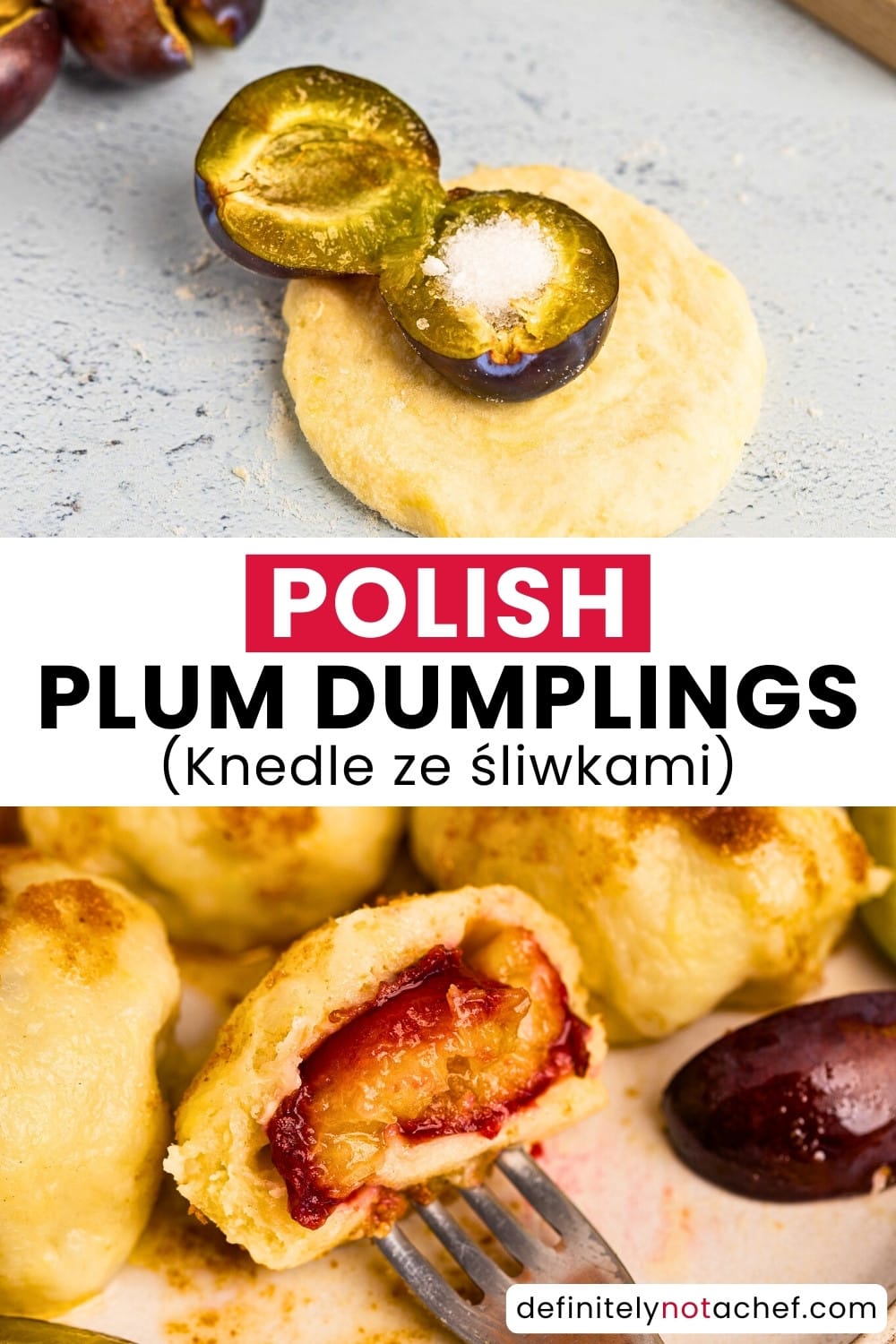
Polish Plum Dumplings (Knedle ze Śliwkami)
Traditional Polish sweet dumplings made with potato dough and seasonal plums.
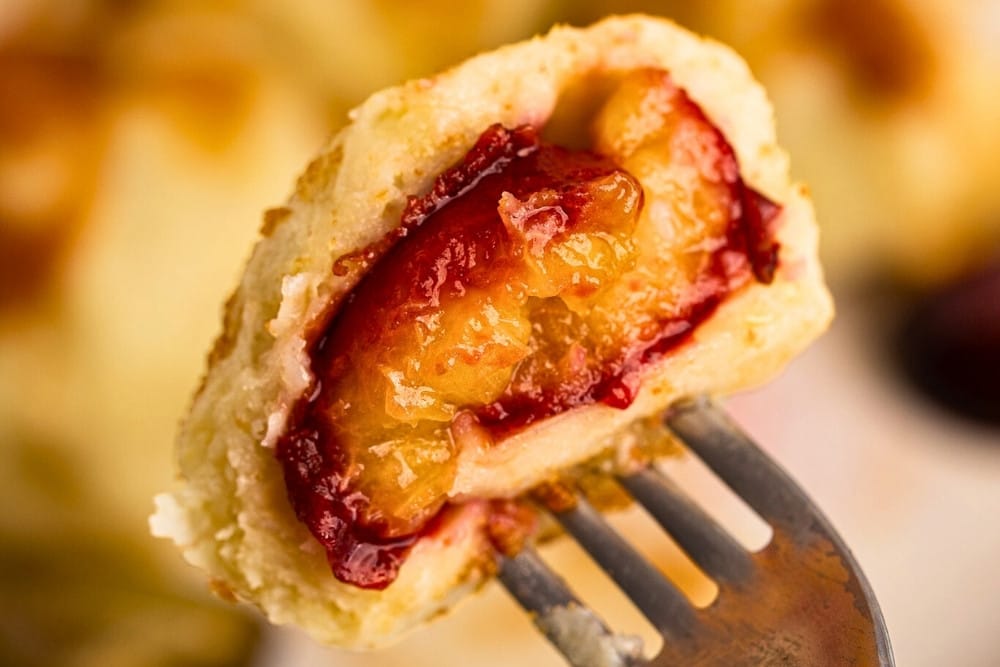
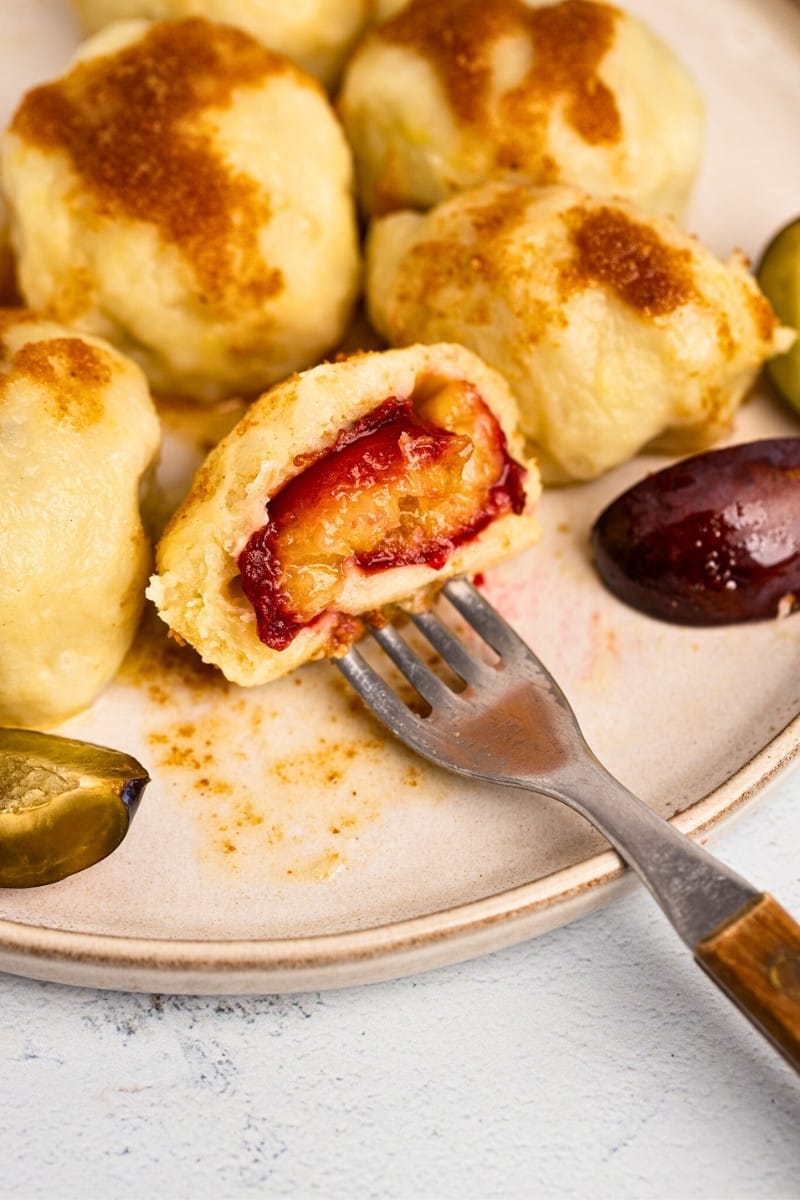
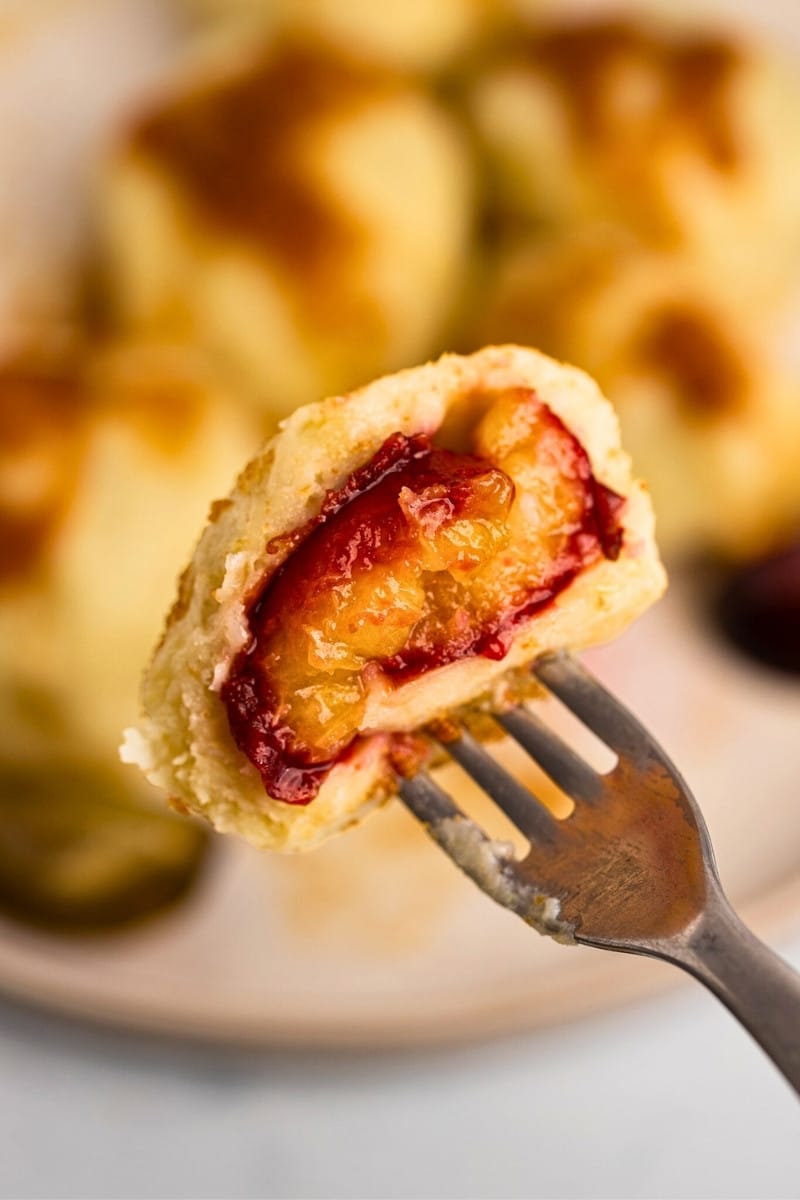
Polish plum dumplings are tender potato dumplings filled with whole sweetened plums and boiled until soft. In Poland — where they’re known as knedle ze śliwkami — they’re a classic late-summer sweet dinner made when plums are abundant and cheap.
The dough is made from mashed potatoes, flour, starch, and egg. It’s softer and stickier than pierogi dough, so shaping involves scooping portions into well-floured hands, forming a ball, flattening it, enclosing a sugared plum, and sealing it quickly. It’s messier than making pierogi, but once you understand the texture, it’s completely manageable.
If you’re looking for a traditional Polish sweet meal that highlights seasonal plums and puts leftover cooked potatoes to good use, this is it.
Why You’ll Love This Recipe
- A true Polish classic. Known as knedle ze śliwkami, these dumplings are a traditional late-summer sweet dinner.
- Seasonal and practical. They’re best when plums are abundant — and they’re a great way to use up leftover cooked potatoes.
- Simple ingredient list. Just pantry staples plus fresh plums.
- Realistic and doable. The dough is softer and stickier than pierogi dough, but with floured hands and quick shaping, it’s completely manageable.
Ingredients Notes and Substitutes
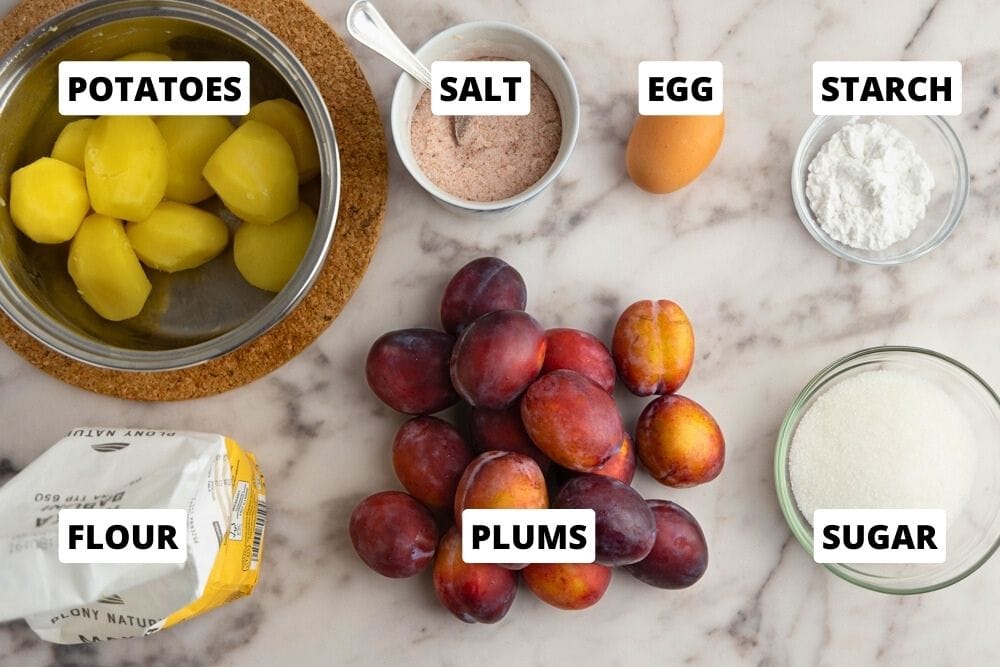
- Potatoes. Use medium- to high-starch potatoes (such as russets). Starchier potatoes produce a lighter, less sticky dough that’s easier to handle. Waxy potatoes contain more moisture and can make the dough stickier, which means you’ll rely more on flouring your hands during shaping. If possible, cook and mash the potatoes ahead of time — cooled potatoes are easier to work with.
- Egg. Helps bind the dough and adds structure.
- All-purpose flour. Provides structure to the dough. Start with the measured amount — adding too much flour will make the dumplings dense and heavy.
- Potato starch. Lightens the dough and improves texture. It helps keep the dumplings tender rather than gummy. You can substitute cornstarch in the same amount if needed.
- Plums. Italian prune plums or damson plums are ideal because they’re smaller, firmer, and not overly juicy. Freestone varieties are easiest to work with since you’ll need to remove the pit. Larger plums (such as Japanese varieties) can work, but you’ll likely need to use halves instead of whole fruit.
- Sugar. Used to lightly sweeten the plums and balance their tartness.
- Salt. Seasons both the dough and the cooking water. Even in sweet dishes, salt improves overall flavor balance.
Step-By-Step Instructions
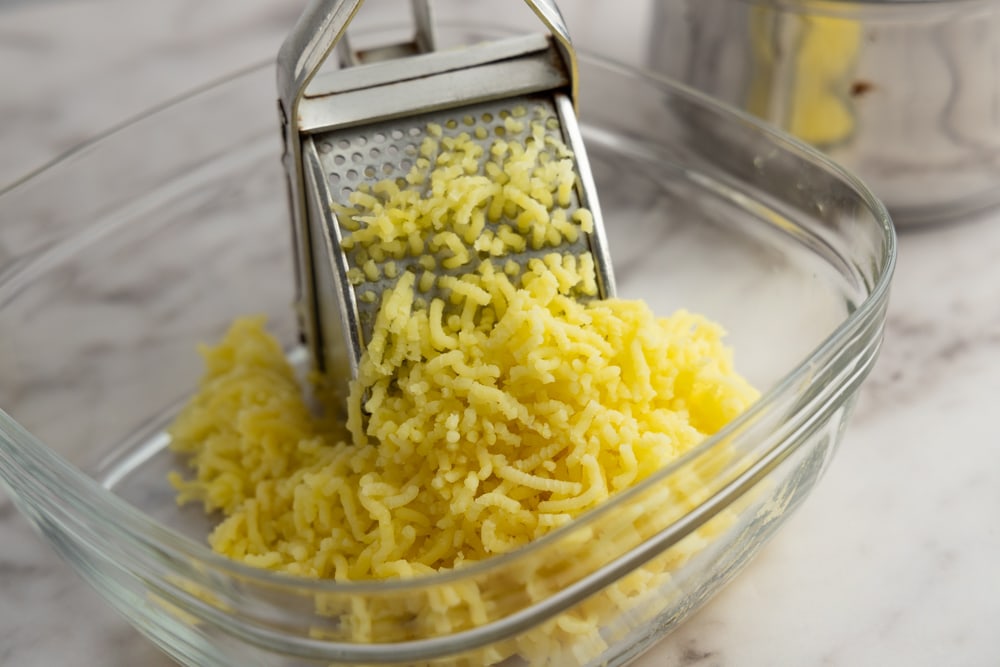
- Cook and mash the potatoes. Cook the potatoes in salted water (I add 1 tsp salt per 1 quart water) until soft, typically 20 to 30 minutes. Drain well, then mash (or rice) until smooth. Let the potatoes cool slightly if using right away — warm potatoes make stickier dough.
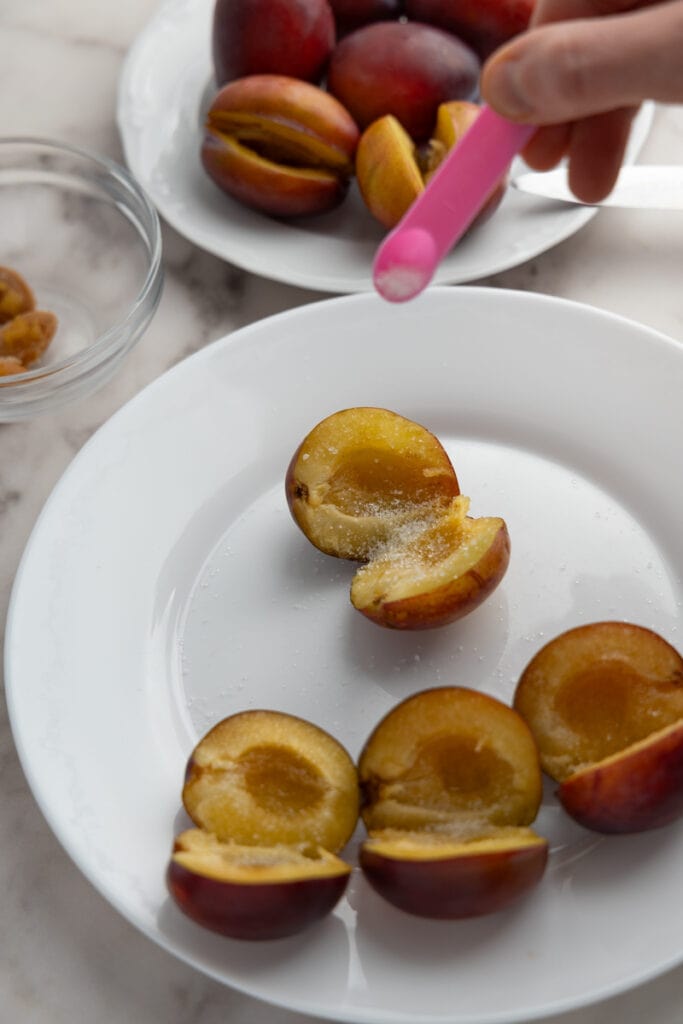
- Prepare the plums. Wash and pit the plums. Cut around the seam, remove the pit, and keep the plum mostly intact. Sprinkle about 1/4 tsp of sugar inside each plum to balance tartness.
- Make the dough. Combine mashed potatoes, flour, potato starch, and egg. Mix with a spoon, then switch to hands and knead gently until a cohesive, sticky dough forms. Don’t add extra flour to the dough.
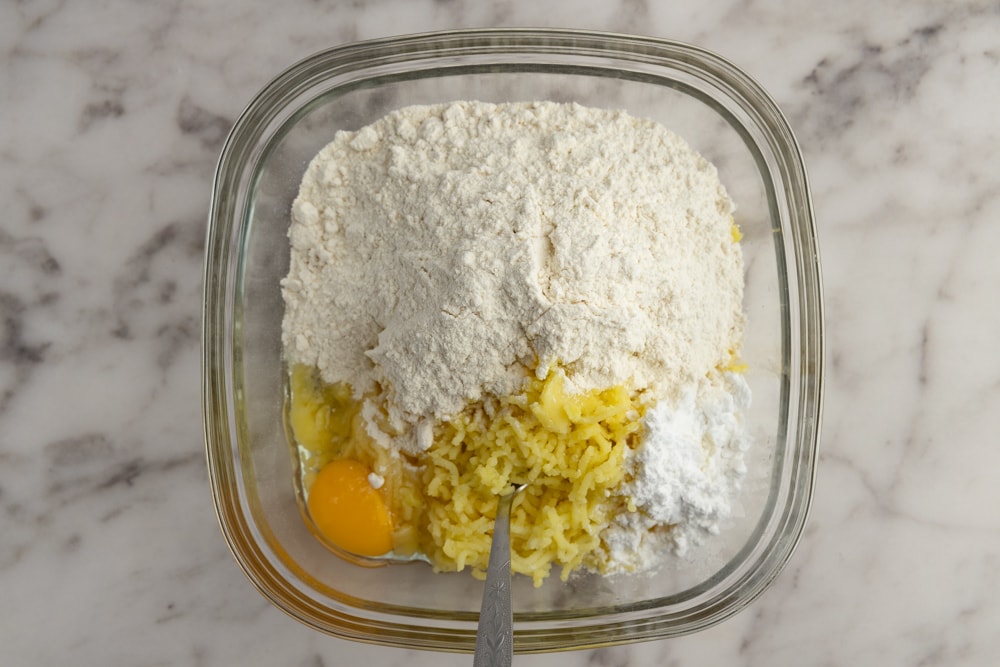 Ingredients
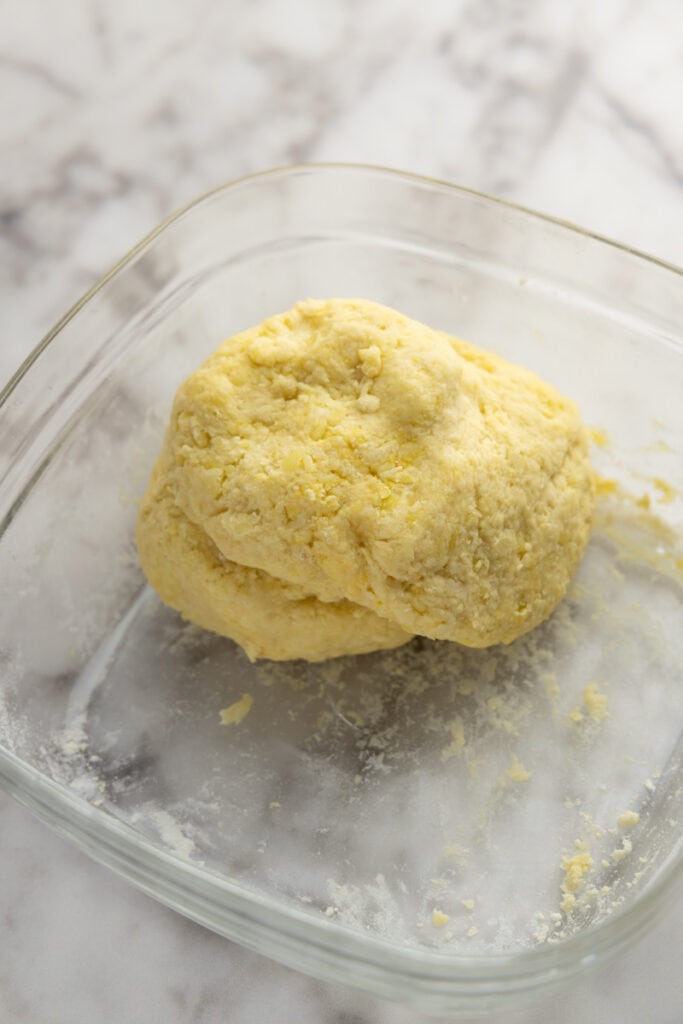 Combined
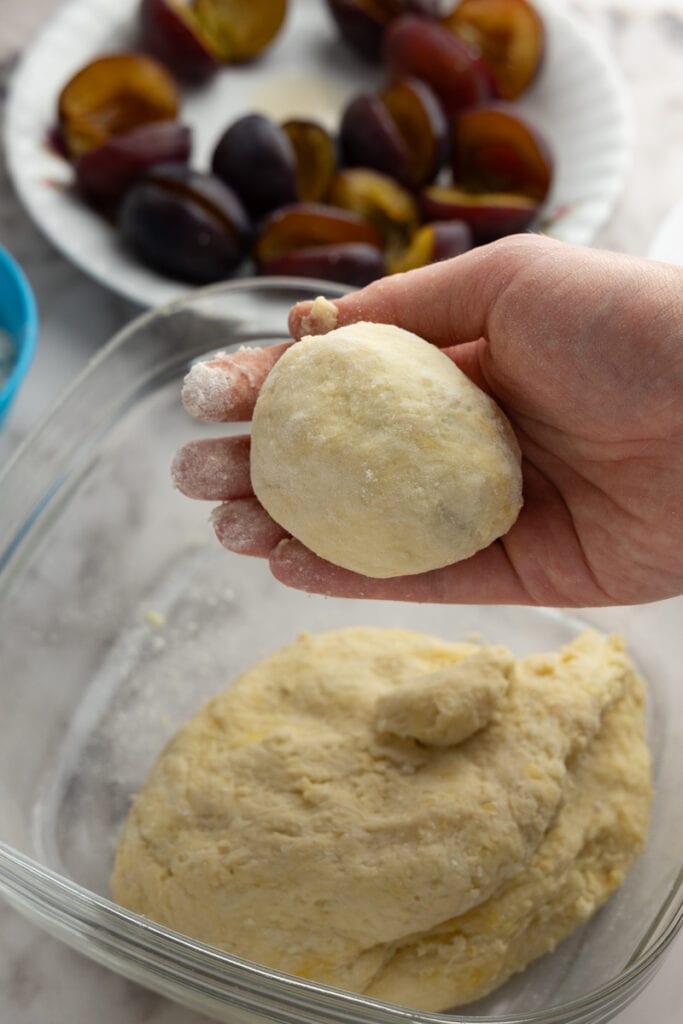
- Form the dumplings. Flour your hands well. Scoop a portion of dough into your palm (a large spoon works well), roll it into a ball, then flatten into a disc. Place a sugared plum in the center, wrap the dough around it, and pinch the seam closed. Roll gently to smooth the surface and even out the thickness. Set the dumplings on a well-floured surface and keep them from touching. Re-flour your hands as needed
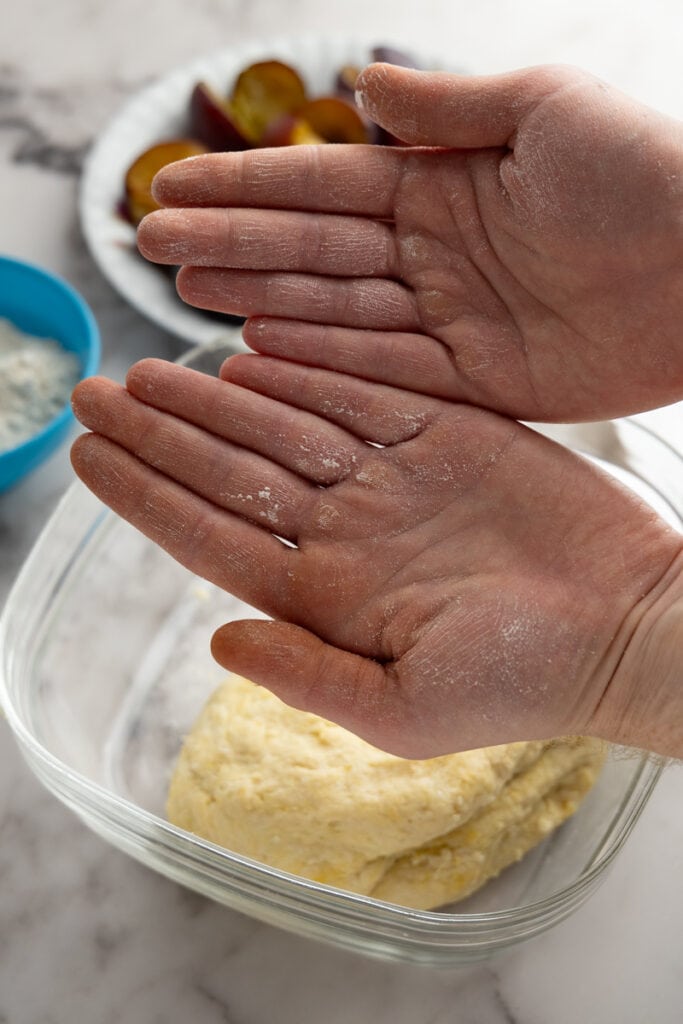 Well-floured hands
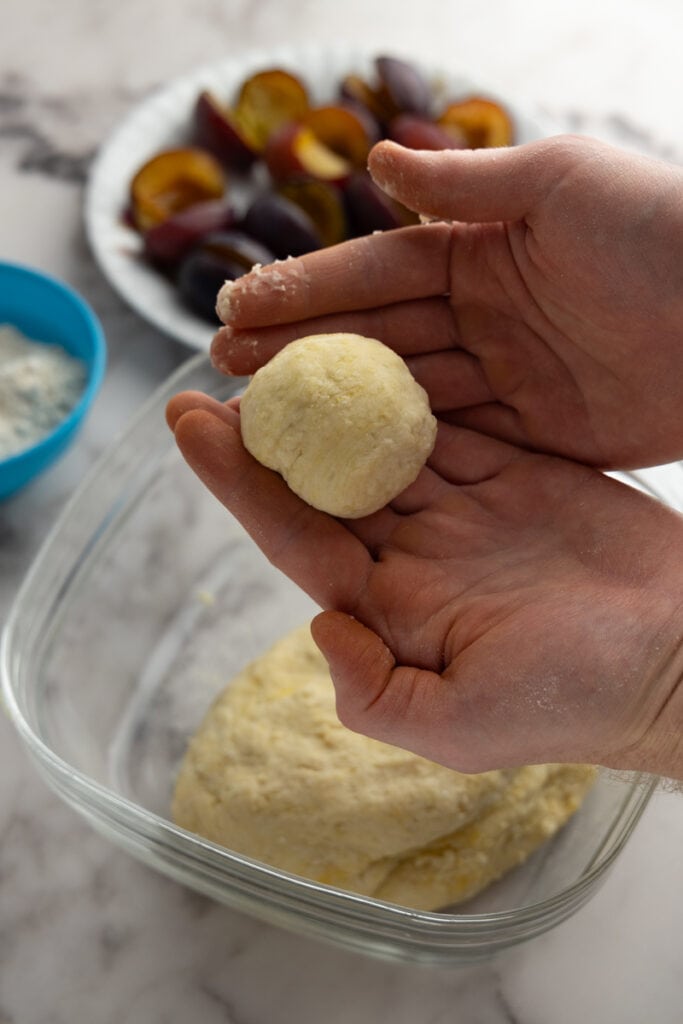 Small dough ball
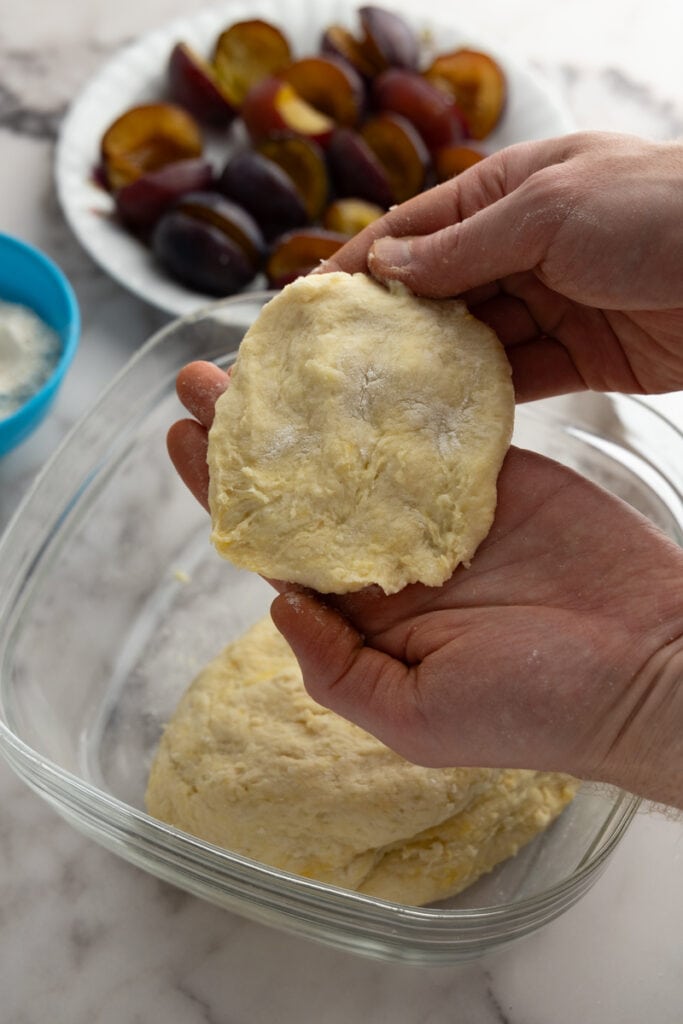 Dough flattened
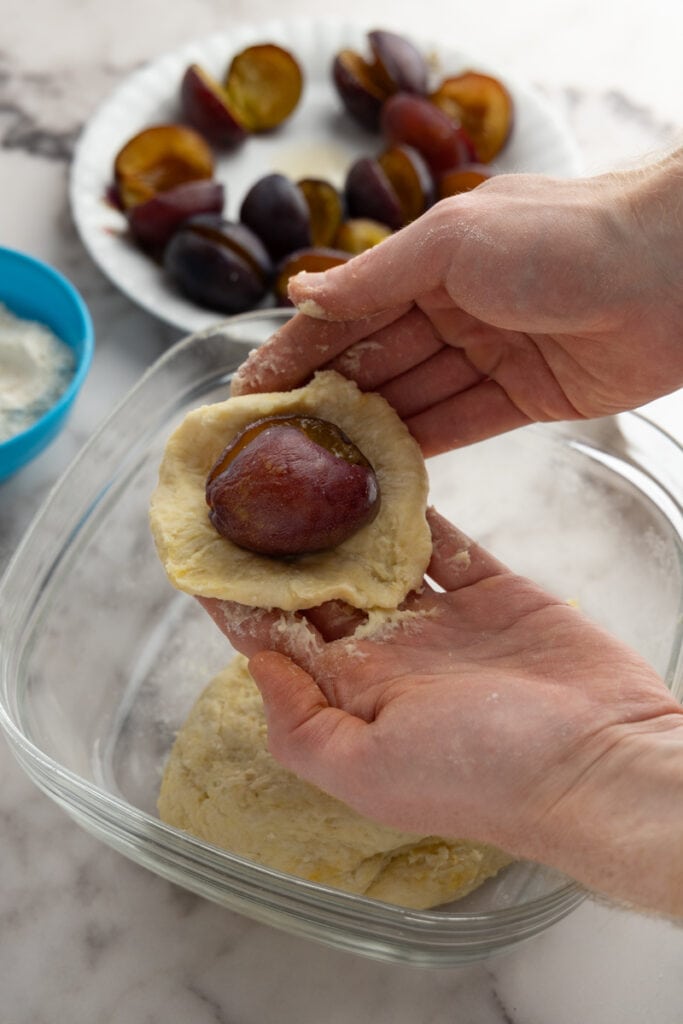 Place the plum
 Wrap
Wrap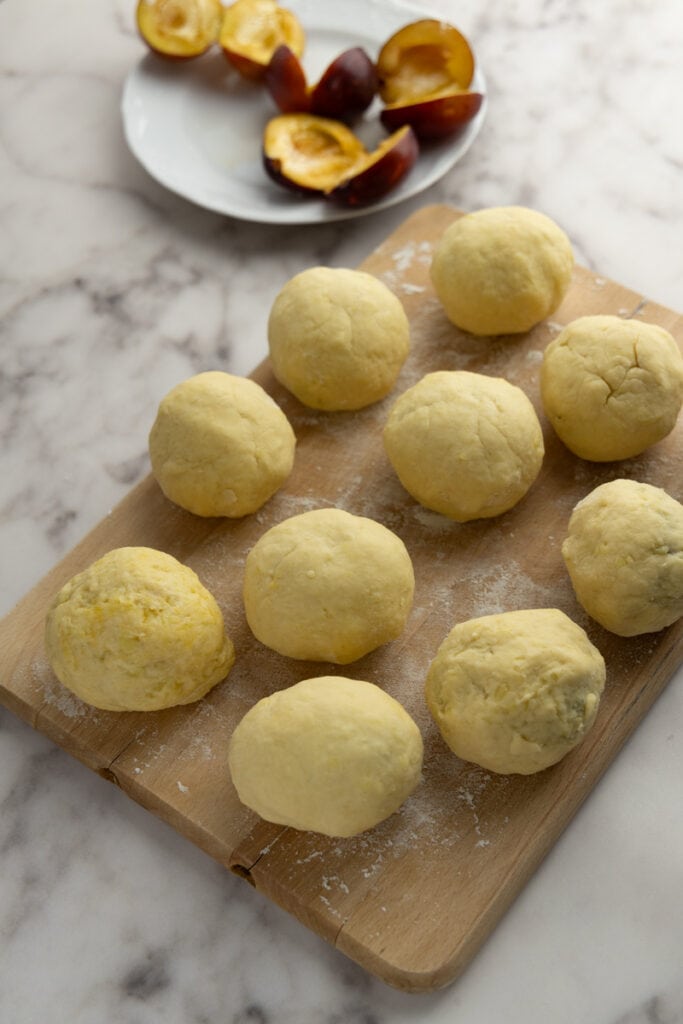 Put on a well-floured surface
- Boil the dumplings. Bring a large pot of salted water (I use 1 tsp salt per quart water) to a boil. Lower the heat to a gentle boil, then add dumplings in batches (don’t crowd the pot). Stir after adding so they don’t stick to the bottom. Cook until they float, about 3 to 5 minutes, then simmer for another 4 to 5 minutes. Remove with a slotted spoon and drain.
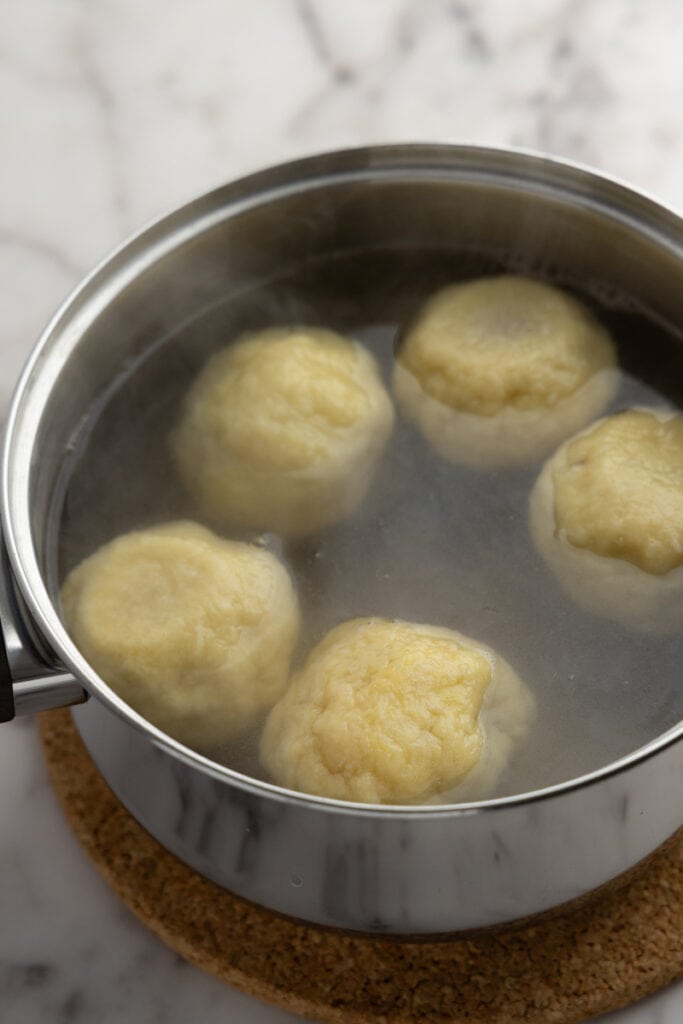 Cook until the dumplings resurface
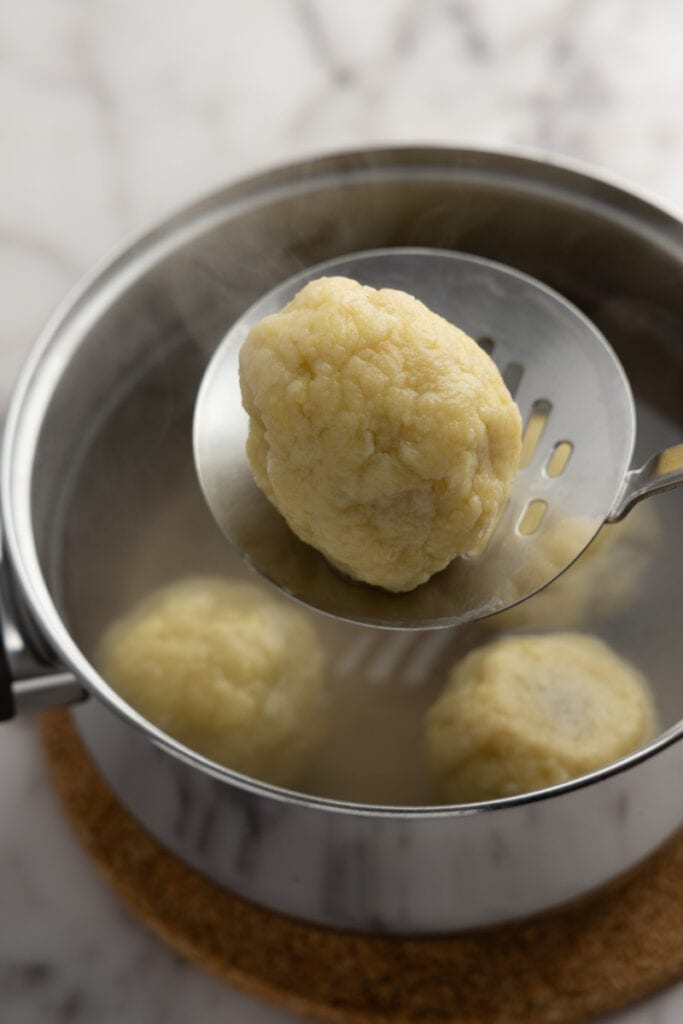 Then simmer for 4 to 5 minutes and strain
- Serve. Serve warm, right away.
Tips for Making Plum Dumplings
- Start boiling the water early. A large pot of water takes time to come to a boil. Put it on the stove once the dough is mixed and the plums are ready so you can cook the dumplings immediately after shaping.
- Use cooled potatoes. Cool mashed potatoes make noticeably less sticky dough. If possible, cook and mash the potatoes a few hours ahead (or even the day before) and refrigerate them.
- Flour your hands — not the dough. This dough is softer and stickier than pierogi dough. Keep your hands well-floured and re-flour as needed while shaping. Avoid adding extra flour directly to the dough, as that can make the dumplings dense.
- Work quickly when shaping. The longer the dough sits in your hands, the stickier it becomes. Scoop, flatten, seal, and set aside without overhandling.
- Other fruits work, too. While plums are traditional, you can fill the dumplings with other fruits if needed. See the variations section below for ideas.
Variations
While plums are traditional, other fruits can work as well. The shape may be less uniform than with whole plums, but the flavor will still be excellent.
- Apples. Use cooked, lightly sweetened apples rather than raw slices. Prepare them the same way you would for apple pierogi — softened and sweetened on the stove.
- Blueberries. You can use fresh or frozen blueberries. Add a spoonful of berries, a small pinch of sugar, and a bit of cornstarch inside each dumpling. Keep in mind that berries release more juice during cooking, so sealing the dough well is especially important. The same applies to raspberries.
- Strawberries. Use whole strawberries instead of plums. I suggest cutting them in half and adding a bit of sugar in between if they aren’t particularly sweet.
If using other fruits, aim for fillings that aren’t overly watery. Excess moisture makes sealing harder and increases the risk of leaks during boiling.
How to Serve Plum Dumplings
These dumplings are typically served warm as a sweet main meal. Here are a few classic and practical options:
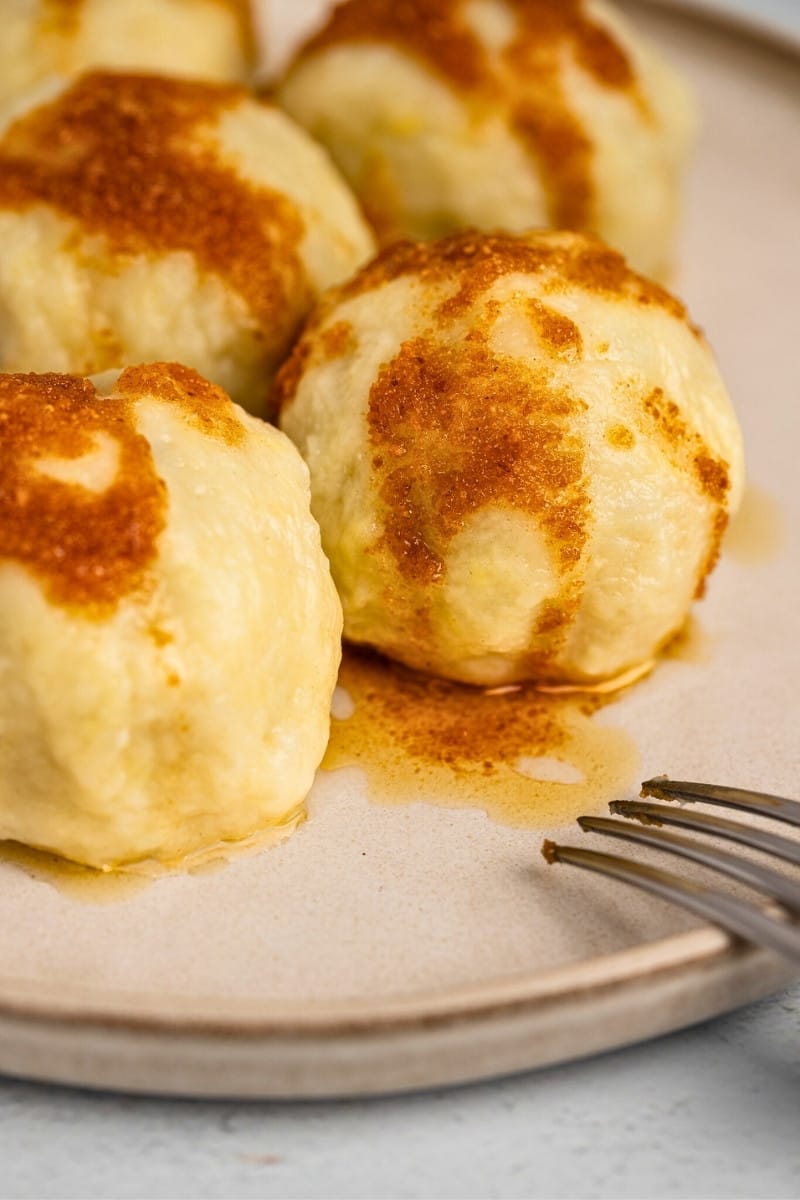
- Butter and sugar (traditional). Melted butter with a sprinkle of sugar or powdered sugar is the most common way to serve them. Start lightly and adjust based on how sweet your plums are.
- Honey or maple syrup. A drizzle of liquid sweetener works well if you prefer something smoother than granulated sugar.
- Berry sauce or sour cream. Blend berries with a little sugar and lemon juice for a simple sauce, or serve with lightly sweetened sour cream or Greek yogurt for contrast. The slight tang balances the sweetness of the plums.
If you’re looking for more ideas, many toppings that work for sweet pierogi — such as browned butter or fruit sauces — pair well here too. Check out my guide on pierogi toppings for inspiration.
Storage
Let the dumplings cool completely on a flat surface (e.g., plate), making sure they aren’t touching. After 10 to 20 minutes, flip them so both sides can dry slightly — this helps prevent sticking.
Once fully cooled (about 30 to 45 minutes), transfer to an airtight container. Store in the refrigerator for up to 3 to 4 days.
If stacking, separate layers with parchment paper or coat the dumplings with a bit of neutral oil to prevent sticking.
How to Reheat
- Heat a skillet. Place a nonstick skillet over medium heat and add a small knob of butter or another neutral cooking fat.
- Warm and brown. Add the dumplings in a single layer and cover with a lid if possible. Covering helps them heat through evenly and prevents drying out. Cook for 5 to 7 minutes, until warmed through and lightly browned on the bottom. Flip and cook for another 5 to 8 minutes on the other side. Browning adds flavor and texture, but simply heating them through is sufficient.
- Serve. Serve warm.
Tip: You can use the same method immediately after boiling if you prefer browned dumplings. Transfer them straight from the pot to the skillet and brown on both sides before serving.
Ingredients
- 1 pound cooked potatoes
- 1 egg
- 1 1/2 cups all-purpose flour about 190 grams
- 2 tablespoons potato starch or cornstarch
- 13 to 20 plums depending on size
- sugar
- salt
Instructions
- Potato prep. Boil potatoes in salted water (I like 1 tsp salt per quart) until soft, then mash smoothly.
- Plum prep. Wash and half-pit plums, ensuring they stay connected, and sprinkle 1/4 tsp sugar on each.13 to 20 plums, sugar
- Make dough. Mix mashed potatoes, flour, starch, and egg. Begin with a spoon and transition to hand-kneading until a cohesive, slightly sticky dough forms.1 pound cooked potatoes, 1 1/2 cups all-purpose flour, 2 tablespoons potato starch or cornstarch, 1 egg
- Make dumplings. With floured hands, tear dough, form a ball, and flatten into a circle. Encase a sugared plum, adjusting dough as needed, and roll in hands to even out.
- Boil. In boiling salted water (1 tsp salt/quart), cook dumplings until they float, then simmer for an additional 4-5 minutes. Use a slotted spoon for removal and draining.salt
- Serve. Serve hot and enjoy with optional sweet toppings like sugar, honey, or a berry sauce.